

Emerald Pages
◆
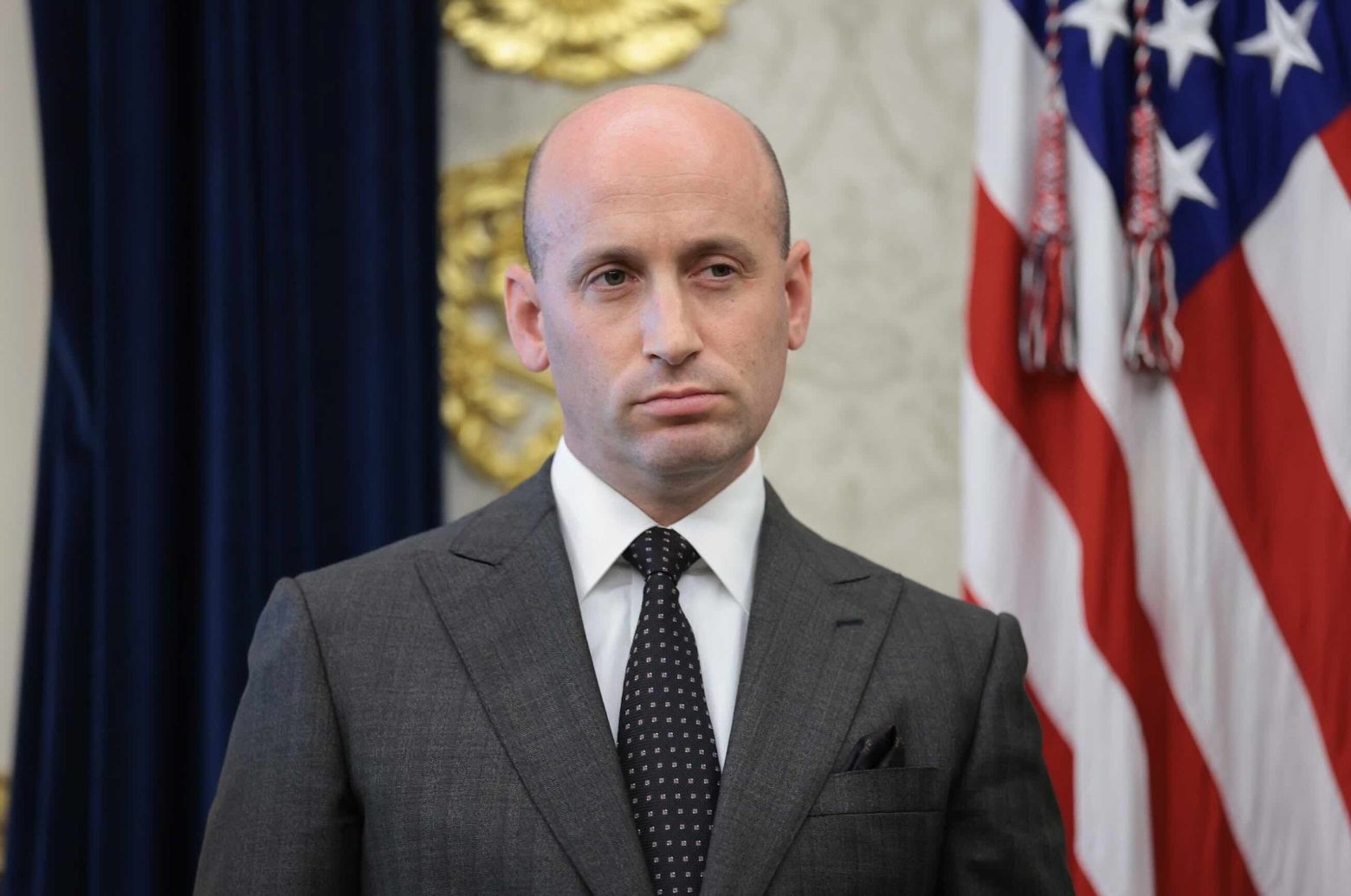
White House Chief of Staff Stephen Miller | Photo: Getty Images
When Donald Trump named Stephen Miller as his new White House Chief of Staff on Friday, November 6, 2026, the reaction from civil rights organizations was immediate and unequivocal. The NAACP, the Congressional Black Caucus, and prominent Black political leaders described the appointment as one of the most dangerous personnel decisions in modern American history—not merely because of who Miller is, but because of the immense, largely unchecked power the position commands.
Miller officially takes over on Monday, November 9, succeeding Susie Wiles, who resigned following significant Republican losses in the 2026 midterm elections. Wiles will reportedly transition to managing Trump's outside political operations. According to official announcements, the president said he "wanted to make a change" after the results, which saw Democrats regain control of Congress.
But while Wiles was widely viewed as a stabilizing force who managed the president's more impulsive tendencies, former administration officials and political analysts warn that Miller represents something entirely different: an "accelerant" rather than a gatekeeper. Former aides like Sarah Matthews have warned that elevating Miller could leave the president entirely un-reined, leading to rash, unvetted executive actions.
For Black communities, this distinction is not academic. It is the difference between a White House that filters harmful policies through legal and political review—and one that fast-tracks them.
The Power of the Position
The White House Chief of Staff is widely considered one of the most powerful positions in the federal government. Because the role does not require Senate confirmation, its authority isn't strictly defined by law—instead, its power is derived directly from the president's absolute trust and willingness to delegate control. The position effectively functions as the "co-pilot" of the executive branch.
The Chief of Staff controls the flow of people and information into the Oval Office, managing the president's daily schedule and filtering which memos, intelligence briefs, and policy papers reach the president's desk. By controlling what the president sees and hears, they heavily shape the executive decision-making process.
They oversee the Executive Office of the President, with sweeping managerial authority to select, hire, and supervise senior White House personnel, organize the entire staff system, and mediate fierce policy disputes between Cabinet secretaries and advisors before they ever escalate to the president. They direct, manage, and implement all policy development—turning the president's vision into executive orders, regulations, and legislative priorities. And they serve as the primary liaison and negotiator with Congress, Cabinet secretaries, and outside political entities, speaking with the full authority of the president.
Having already run a daily 10 a.m. priority call with senior federal officials as Deputy Chief of Staff for Policy, Miller now commands the official bureaucratic machinery required to enforce administration compliance across every federal agency. His existing influence over policy will expand drastically.
A Documented Record of Harm
The case against Miller is built not on speculation, but on a documented policy record spanning nearly a decade—memos, executive orders, legal filings, and internal communications published by investigative journalists and civil rights organizations. Civil rights organizations, legal scholars, and political opponents point to specific actions that disproportionately harmed Black and Brown communities:
- 2017–2021 – Policing and Protest Response: Miller supported and scripted Trump's "law and order" rhetoric during Black Lives Matter demonstrations, advocating for federal agents against protesters and framing racial-justice activism as "domestic extremism"—reinforcing militarized policing and federal overreach that targeted Black-led protests.
- 2018 – Rescinding Fair Housing Rules: Miller was an internal advocate for eliminating the "Affirmatively Furthering Fair Housing" rule, which had required local governments to address racial segregation in housing. Its repeal weakened enforcement of anti-segregation measures that had long benefited Black communities.
- 2019 – Ending Diversity Visa and Affirmative Action: Miller advanced drafts and talking points for restricting the diversity visa lottery, which benefited thousands of African immigrants each year, and pushed anti–affirmative-action legal strategies later mirrored by conservative judicial actions.
- 2020 – Opposition to Racial Equity Language: Miller personally edited early drafts of executive orders opposing "critical race theory" and federal diversity training, framing DEI efforts as "divisive" and setting the stage for broader rollbacks of equity programs in government and education.
- 2020–2021 – Targeting Black-Led Movements: Emails and internal communications revealed Miller's coordination with conservative media to discredit Black activists, portraying them as "violent" or "anti-American"—contributing to an atmosphere of state hostility toward racial-justice advocacy.
- 2025 – Dismantling DEI: Miller was identified as a behind-the-scenes architect of Trump's 2025 executive orders dismantling DEI programs and federal affirmative-action enforcement, with his network through America First Legal filing lawsuits to restrict race-conscious policies across federal agencies.
Civil rights organizations, including the Southern Poverty Law Center and the Anti-Defamation League, have explicitly labeled Miller a white nationalist, citing leaked 2015–2016 emails in which he promoted white nationalist publications such as VDARE, referenced anti-immigrant conspiracy theories like the "Great Replacement," and recommended a racist, dystopian French novel, The Camp of the Saints. Miller, the White House, and his conservative allies strongly reject the label, calling it a politically motivated smear and arguing his policies are rooted in "America First" nationalism, border security, and a "colorblind" philosophy in which individuals are judged by merit rather than race. But the record says otherwise.
What His New Role Means for Black Ccommunities
With his new authority to manage the Executive Office of the President, the negative impacts on Black communities will manifest through several direct levers of power:
- Weaponizing Federal Agencies: As Chief of Staff, Miller can place ideologically aligned officials at the head of key agencies—like the Department of Justice, the Department of Housing and Urban Development, and the Department of Labor—potentially halting enforcement of voting rights, fair housing laws, and workplace discrimination protections.
- Dismantling Economic Protections: Given his work with America First Legal, expect Miller to use executive orders to systematically dismantle minority business grants, federal procurement goals for minority-owned businesses, and equity programs that have helped close the wealth gap for Black entrepreneurs and farmers.
- Enforcing Harsh Unilateral Policies: Without the "guardrails" of more moderate advisors, there is deep concern that Miller will fast-track aggressive executive actions on immigration enforcement and domestic policing that disproportionately subject Black immigrants and Black communities to increased surveillance, profiling, and federal overreach.
- Echo-Chamber Decision Making: Because the Chief of Staff controls the calendar and the desk, Miller will use his gatekeeper authority to block out moderate voices, legal experts, or Cabinet officials who disagree with him—creating an ideological echo chamber that produces poorly designed policies that fail under legal scrutiny or spark severe public backlash.
Civil rights groups have previously raised alarms over Miller's policy ideas—such as exploring the suspension of habeas corpus to fast-track deportations or utilizing the military for domestic law enforcement. Critics argue that using the machinery of the White House to aggressively test constitutional boundaries erodes democratic norms and civil liberties. Organizations like the Black Immigrant Advocacy Network have historically warned that aggressive ICE raids and expanded detention systems lead to increased profiling and higher rates of detention and deportation for Black immigrants, particularly Afro-Latino and Black immigrant populations from the Caribbean and African nations.
An "Extremist" as Chief of Staff
The appointment drew sharp condemnation from Democratic leaders and civil rights organizations. According to reports from The Washington Post, Senate Democratic leader Chuck Schumer called it a "horrible choice," while House Democratic leader Hakeem Jeffries described Miller as an extremist. NAACP President and CEO Derrick Johnson strongly condemned the promotion, warning that elevating someone with Miller's ideological history to the highest levels of executive power threatens Black communities by normalizing exclusionary and divisive governance and pushing the needs, safety, and representation of Black Americans out of federal policy discussions.
The appointment also sparked internal friction, with some House Republicans erupting in criticism over Miller's elevated influence following the midterm losses. Observers note that placing a deeply polarizing figure at the head of the West Wing effectively closes the door on bipartisan cooperation, potentially causing legislative stalemates, budget deadlocks, and government shutdowns—a particular risk given that Democrats are preparing to take control of Congress.
A Threat Second Only to the President
The hierarchy of influence is clear: Donald Trump provides the populist mandate, the public platform, and the ultimate constitutional authority to enact sweeping changes. Stephen Miller provides the specific bureaucratic expertise, the legal strategy, and the focused determination to turn that political vision into permanent, structural reality across federal agencies.
This is why the NAACP, the Congressional Black Caucus, and prominent civil rights leaders view the combination as the most significant systemic challenge to Black Americans in modern political history—placing Miller second only to the president himself in the threat he poses. The political force sets the direction; the policy engineer builds the machine.
Because the White House Chief of Staff controls the machinery of the entire executive branch, Miller's placement in this role effectively weaponizes the presidency against decades of civil rights advancements. This structural alliance is why opponents see the next phase of this administration as an unprecedented threat to the economic, legal, and social safety of Black communities.
The debate is no longer just about Miller's historical influence as an advisor. With his elevation to Chief of Staff, it is about his direct command over the entire federal bureaucracy—and whether the guardrails that once contained his most aggressive impulses will remain in place. For the communities most exposed to those policies, the answer to that question will define the next two years.
No Ads. By Us. For Us.
This article was made possible by readers like you. We hope it inspired you to support Emerald Book, so we can continue producing content like this.
We will never show you ads, sell your data, or require a subscription to consume our content. Your gift helps us keep the truth accessible.
Click the Support button to give a gift of any amount today.
Thank you for making this work possible.