

Emerald Pages
◆
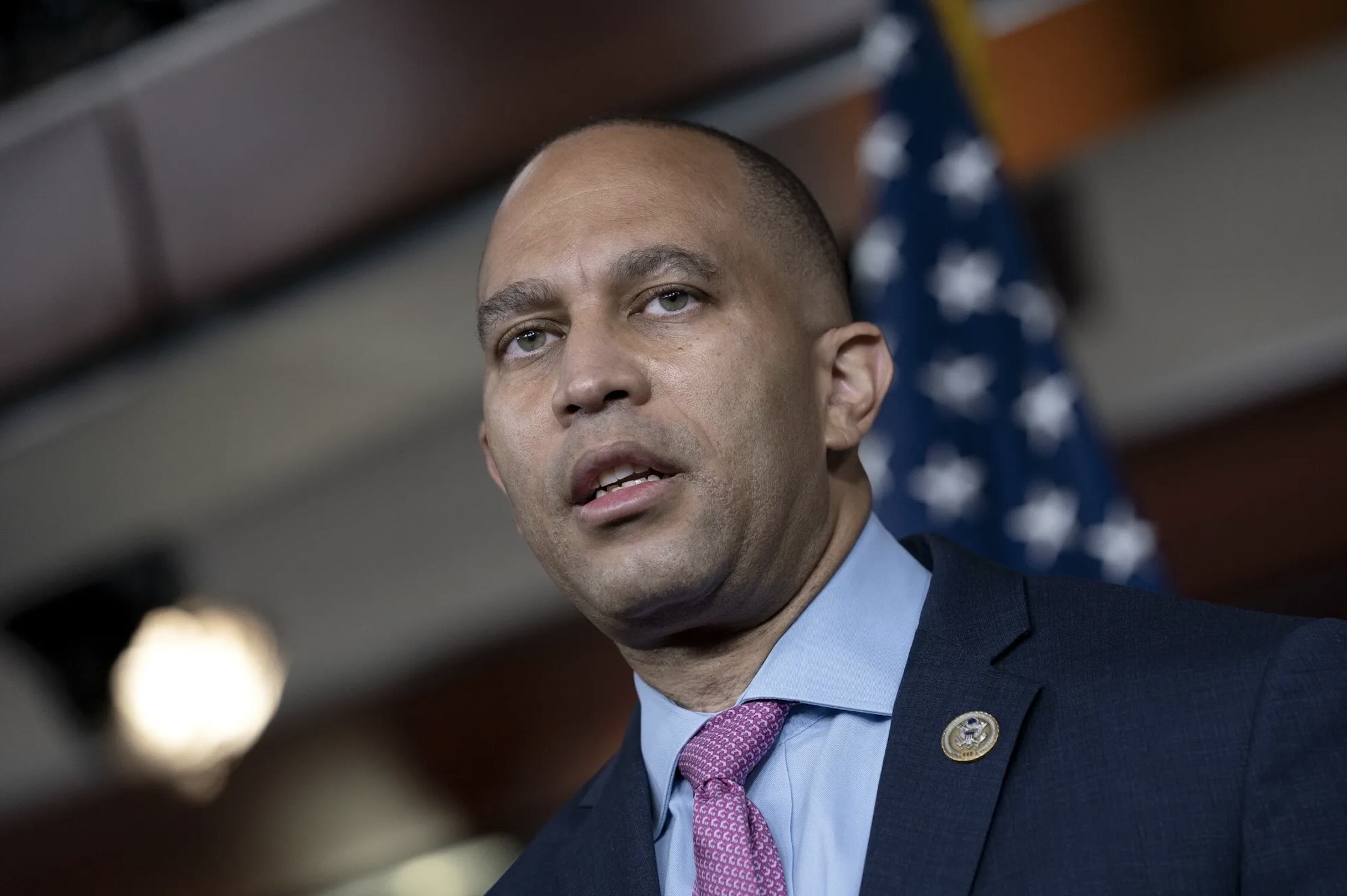
Photo: Bloomberg
When House Democrats clinched a decisive 244-seat majority in the November 2026 midterms, the party's progressive wing wasted no time launching a revolt. A Change.org petition titled "House Democrats: CHOOSE A NEW SPEAKER" has surged past 880,000 signatures. It will soon cross the one-million mark. The campaign, launched by Democratic content creator Nicole Whitted, demands that incoming members of the 120th Congress reject Hakeem Jeffries when the House convenes on January 3, 2027, and instead hold an open, competitive leadership election.
The petition has drawn amplification from high-profile figures like actor Mark Ruffalo and singer Eric Benét, and it reflects genuine grassroots anger over Jeffries' ties to AIPAC and corporate donors, his conciliatory posture toward the Trump administration, and a private August meeting with Jared Kushner that critics say reeks of backroom dealmaking. But here's the uncomfortable truth for the petition's backers: it cannot stop him.
The Math Is Not on Their Side
The Speakership is not decided by popular vote, online signatures, or media momentum. It is decided by a roll-call vote of the 435 elected members of the House of Representatives. To win the gavel, a candidate typically needs a simple majority of members present and voting—usually 218 votes.
Following the 2026 midterms, House Democrats hold 244 seats. That margin is so wide that Jeffries can afford to lose a handful of progressive holdouts and still comfortably cross the threshold. Even if every signatory of the Change.org petition lived in a competitive Democratic district—which they don't—the petition carries no formal legal or procedural authority over Congress.
For a rebellion to succeed, challengers must unite behind a viable alternative candidate. As reported by Politico, no alternative candidate has stepped forward to challenge Jeffries. While progressive voters may float names, no sitting Democratic member of Congress has launched a campaign against him.
The reason is simple: a leadership rebellion is a massive political risk with almost zero chance of succeeding. Party leaders control committee assignments, legislative priorities, and millions of dollars in campaign funding. Any lawmaker who launches a challenge and loses would likely be stripped of their committee influence and isolated within the caucus. Knowing they lack the numbers to win, potential challengers see no reason to take the risk.
Institutional Support Is Overwhelming
Jeffries enjoys deep, unified support across the vast majority of the House Democratic Caucus. The New Democrat Coalition, a centrist group that makes up over half of the caucus seats, fully backs him. So does the Congressional Black Caucus, which has long championed his historic path to becoming the first Black Speaker in U.S. history. Former Speaker Nancy Pelosi has explicitly endorsed him as the rightful heir to the gavel.
Jeffries has spent the last four years leading House Democrats in the minority. Mainstream lawmakers across the party strongly credit his deliberate strategy and fundraising efforts for successfully flipping control of the House back to the Democrats in 2026. Because he delivered a winning majority, the vast majority of the caucus feels a strong sense of loyalty to him and believes he earned the right to the gavel.
The formal process is structured to favor the established party leader. On November 18, 2026, House Democrats will gather behind closed doors to nominate their choice for Speaker. Jeffries only needs a simple majority of his own caucus to win this nomination, which he is locked in to secure.
Once nominated by the party, representatives are historically expected to vote for their party's nominee during the public roll-call vote in January. Defying the party nominee on the floor can cost lawmakers their committee assignments and funding, meaning even frustrated lawmakers rarely defect on the final vote.
What the Petition Can Actually Do
This is not to say the petition is meaningless. While it cannot block Jeffries' path to the gavel, a one-million-signature milestone acts as a symbolic tool for political leverage. Progressives will likely use that massive number to demand key committee seats for progressive lawmakers, pointing to the signatures as evidence that their base is deeply alienated. They will also pressure Jeffries into holding votes on specific progressive bills, such as healthcare reform or corporate donor transparency rules, and force transparency regarding corporate donations and special interest influence moving forward.
Perhaps most importantly, the petition serves as a warning to moderate Democrats: if they ignore the left flank's priorities, they could face well-funded progressive primary challengers in 2028. Because Democrats secured a large majority, Jeffries does not strictly need the progressive flank's votes to pass the 218-vote floor threshold. However, he still needs a unified caucus to actually pass legislation over the next two years. That gives progressive leaders like Representative Pramila Jayapal just enough leverage to negotiate for concessions—even as a minority faction.
The Change.org petition is a remarkable display of grassroots energy and a clear signal of the ideological rift between the Democratic Party's progressive base and its establishment leadership. But it is not a mechanism for changing the outcome of the Speaker's election.
Hakeem Jeffries remains virtually guaranteed to become the next Speaker of the House—and the first Black lawmaker to hold the gavel—when the 120th Congress convenes in January 2027. The petition's realistic impact will be felt afterward: it gives the progressive wing a clear metric of public support to use as leverage when pushing Jeffries on policy concessions, committee assignments, and corporate donor transparency during the upcoming legislative session. The gavel, however, is already his.
No Ads. By Us. For Us.
This article was made possible by readers like you. We hope it inspired you to support Emerald Book, so we can continue producing content like this.
We will never show you ads, sell your data, or require a subscription to consume our content. Your gift helps us keep the truth accessible.
Click the Support button to give a gift of any amount today.
Thank you for making this work possible.