

Emerald Pages
◆
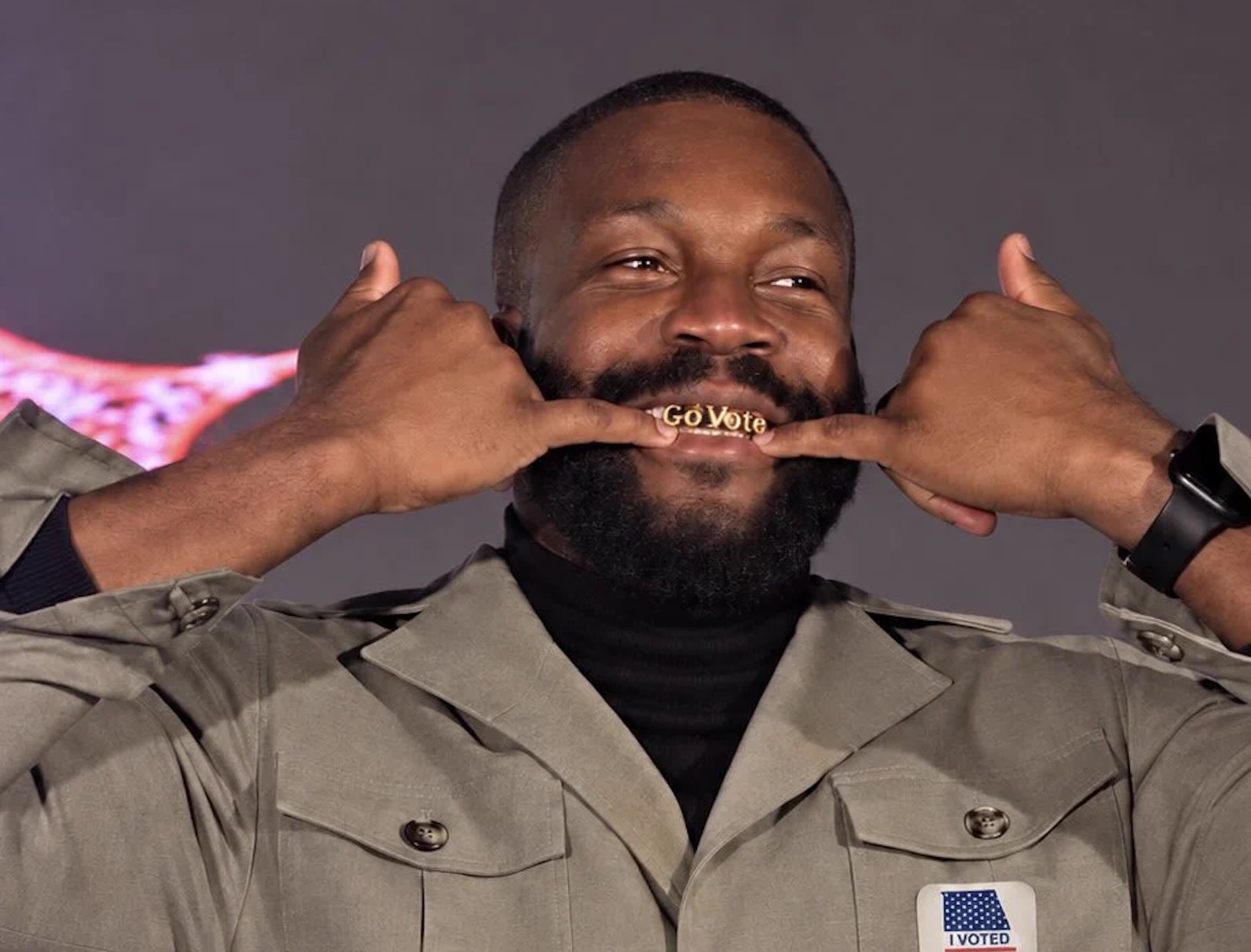
Photo: Randall Woodfin | X
On the night of October 28, 2026, during Magic City Classic Week in Birmingham, Alabama, Mayor Randall Woodfin walked onto the stage at the Green Carpet Affair at the Birmingham Museum of Art. Houston rapper Paul Wall was performing his 2005 hit "Grillz." Woodfin smiled, danced, and flashed a custom set of gold grillz. By the next morning, footage of the moment had flooded social media, and a city's cultural celebration had become a national referendum on what a leader is supposed to look like.
The reaction split cleanly in two. Supporters praised Woodfin for authentically embracing the culture that shaped him and for showing up to a major HBCU-adjacent celebration as himself. Critics argued the display lacked the decorum expected of a mayor—that a city's top official should maintain a more conservative image, even off the clock. The fact that the debate happened at all is the point. It exposed a fault line that runs through American political life: the persistent, unspoken belief that Black leaders must sanitize their cultural identity to be considered serious.
Woodfin's grillz were not a lapse in judgment. They were a deliberate, public rejection of respectability politics—the generations-old bargain that promised minorities could earn acceptance by dressing, speaking, and presenting themselves as closely as possible to the traditional white elite. That bargain was never real. It was a tax, paid in authenticity, and Woodfin refused to pay it.
The Connotation Is the Point
In the upper echelons of power and professional life, grillz carry a heavy connotation. They are associated with the streets, with hip-hop counterculture, with a specific kind of urban defiance. Corporate and political "success" has historically been defined by an institutional, Eurocentric standard—suits, ties, clean-cut smiles—and anything outside that mold has been pathologized as unprofessional or unfit for leadership. Entering the upper echelons has long required a strict code of conformity, smoothing out cultural edges so that traditional power structures feel comfortable.
That is exactly why Woodfin's move mattered. By wearing a symbol that institutional power has spent decades telling people to hide, while holding the highest office in the city, he exposed the arbitrariness of the standard. What counts as "professional" is not an objective truth; it is a social construct that shifts over time. For centuries, the ruling class wore powdered wigs and silk stockings to signal power and intellect—a look we now find absurd. Grillz are simply a modern cultural status symbol. Treating them as evidence of incompetence is a choice, not a fact.
The connotation is the point. When a mayor breaks that barrier, it forces a collision between institutional gatekeeping and authentic cultural expression. It proves that a person can manage a multi-million-dollar city budget while still understanding, valuing, and wearing the symbols of the culture that raised them. The gold in his mouth did not erase his administrative record—it sat alongside it.
The Sanitized Version Is Not Representation
Highly polished, hyper-curated Blackness is not representation. It is a compromise with the status quo—an assimilation tax. When institutions only accept a version of Black identity stripped of its rawest cultural markers, they send a clear message: you can enter these spaces of power, but only if you leave your community's flavor, aesthetics, and vernacular at the door. That is tokenism with a dress code.
The dynamic creates a sharp distinction between superficial inclusion and true representation. A sanitized leader allows institutions to claim diversity without ever having to sit with, understand, or respect the authentic culture of the people they serve. The power structure remains unchanged while a demographic box gets checked. Worse, the message reaches the community loud and clear: you cannot come as yourself. If a young person looks at the Black leaders in power and sees only a monolith of rigid, corporate perfection, they internalize the idea that their natural self, their neighborhood's style, and their culture are fundamentally incompatible with success.
True representation requires the freedom to exist as a multi-dimensional person rather than a curated caricature designed to make traditional institutions comfortable. It breaks the monolith. It shows that Black leadership is not one thing—a leader can be an Ivy League academic, a corporate executive, or someone who proudly rocks a custom gold grill at a Southern HBCU celebration, and all of them are equally valid, competent, and worthy of power.
- Respectability politics rejected: Woodfin separated appearance from competence, proving a leader can wield executive power while fully participating in his culture's aesthetic.
- Code-switching refused: Flashing a grill as an active mayor signals there is no need to hide elements of Black Southern culture to be deemed worthy of office.
- The monolith broken: All forms of Blackness can now be represented in leadership—not just the version curated for institutional comfort.
- Accountability redefined: Instead of answering to the sensibilities of traditional gatekeepers, Woodfin prioritized connection with the actual community.
The Emotional Tax of Permanent Polish
There is a difference between situational awareness—knowing how to navigate different spaces—and living in a permanent state of performance. A leader who is forced to be polished 24/7 is never actually off the clock as a human being. The constant curation breeds distrust, because people instinctively sense when someone is hiding behind a corporate veneer. And for minority professionals, the cost is steeper: an invisible emotional tax of constantly policing tone, hair, clothing, and vernacular out of fear that any slip will confirm a negative stereotype.
Lifting that burden matters. When a leader allows the polish to drop, it frees up energy that would otherwise go into self-monitoring—energy that can go into the actual job. It also builds genuine trust with voters who are increasingly tired of the hyper-sanitized, media-trained politician who never says a word out of place or shows a shred of raw personality.
None of this means there is no time and place for formality. True competence means knowing when to deploy different registers—a tailored suit to negotiate city infrastructure funding, a gold grill on stage at a cultural festival. Wearing a grill to a formal state dinner might clash with diplomatic protocol. But wearing it to an HBCU football classic, surrounded by hip-hop culture and the exact community that elected you, is the perfect alignment of time, place, and people. The problem is not having a dress code for different rooms. The problem is demanding polish all the time, in every room, as the price of being taken seriously.
Modern Leadership Is Fluidity, Not Performance
The old guard of politics relied on a manufactured image of perfection—leaders who were rigid, hyper-polished, and disconnected from the everyday culture of the people they served, all to project authority. Modern leadership flips that script. It replaces rigid conformity with fluidity, emotional intelligence, and raw authenticity. It understands that an effective 21st-century leader must be a bridge-builder who can navigate different worlds without losing their soul.
Woodfin had the political capital to do this because his record backed him up. First elected in 2017, he won a second term in 2021 with 64 percent of the vote, then secured a historic third consecutive term in August 2025, dominating a crowded field with nearly 75 percent. That landslide is not incidental to the grillz moment—it is the precondition. True representation often requires political freedom. A leader who has just been overwhelmingly reaffirmed by his constituents does not have to play the safe, calculated game that candidates afraid of alienating voters must play. He can be entirely himself.
The results are what should anchor the judgment. Woodfin has managed a city budget, expanded tuition-free college programs for local students, and earned repeated confidence from Birmingham voters. He achieved those things while being a person who loves hip-hop culture and wears a grill. Judging competence by an arbitrary dress code is a relic of an old era. Shifting the focus to a leader's actual impact—crime rates, economic growth, education, community trust—is how institutions become truly inclusive.
By stepping on that stage, Woodfin claimed space for a segment of the culture that the political world has historically told to stay in the background. He moved the conversation from "allowing" diverse leaders into these spaces to letting those leaders redefine the spaces themselves. He proved that a leader can be unapologetically tied to their community's culture and still be entirely capable of running a city—not in spite of who they are, but as who they are.
That is not a scandal. That is the epitome of representation. Judge leaders by the budgets they balance, the schools they fund, and the lives they improve—not by an arbitrary standard of professionalism designed to keep people who look like them out of the room. When all forms of Blackness can be represented, the entire landscape of leadership changes. And that is a future worth smiling about—gold grill and all.
No Ads. By Us. For Us.
This article was made possible by readers like you. We hope it inspired you to support Emerald Book, so we can continue producing content like this.
We will never show you ads, sell your data, or require a subscription to consume our content. Your gift helps us keep the truth accessible.
Click the Support button to give a gift of any amount today.
Thank you for making this work possible.