

Emerald Pages
◆
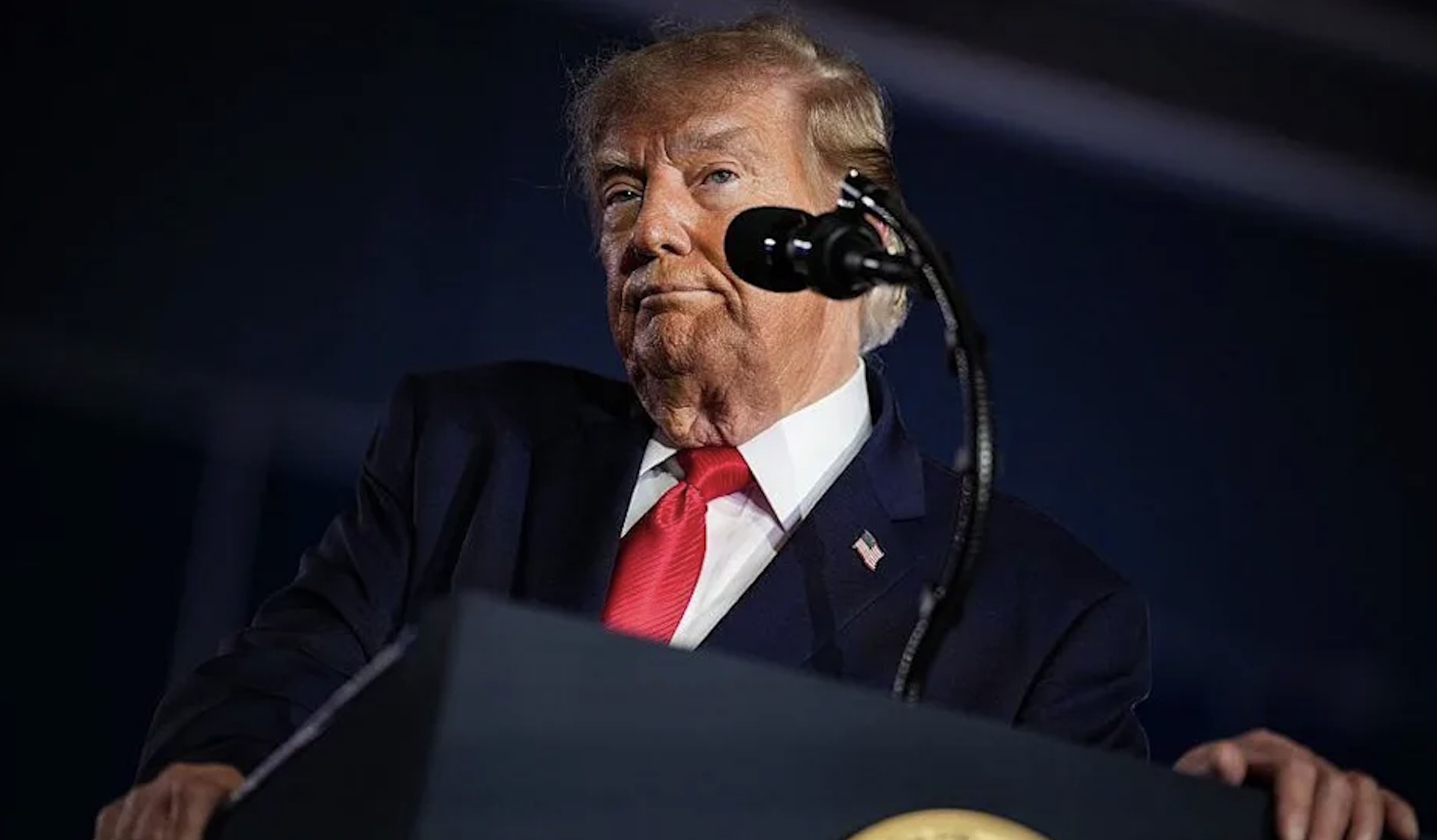
Photo: Getty Images
In the annals of American political history, midterm elections have long served as a referendum on the sitting president. But the Democratic sweep of November 4, 2026—capturing both chambers of Congress and flipping key Republican strongholds across state governments—represents something far more consequential than a typical midterm correction. It represents a verdict rendered on a presidency that was defined by unnecessary conflict abroad, self-inflicted economic pain at home, and the spectacular collapse of a coalition the president had assumed was his to keep.
According to projections from NBC News, The Associated Press, and other major outlets, Democrats secured roughly 255 House seats—well beyond the 218 needed for a majority—while breaking the Republican 53-47 Senate advantage with a net gain of four seats. In Texas, one of the deepest red strongholds in the nation, Gina Hinojosa ousted Republican Governor Greg Abbott, who was seeking a fourth term. The gubernatorial map wasn't a clean sweep, but the message was unmistakable: voters across the political spectrum rejected the administration's leadership.
The question now dominating political analysis is not whether the Democrats won—that is settled fact—but how completely Donald Trump's own decisions engineered the collapse. While political scientists note that midterms almost always punish the party in power, the scale and scope of this defeat point to specific, avoidable failures that compounded into a national wave.
The War That Wasn't Necessary
The administration's decision to enter into armed conflict with Iran stands as perhaps the single most consequential policy choice leading to the Democratic landslide. Critics have pointed to a glaring contradiction at the heart of the war: the United States' own intelligence community consistently assessed that Iran was not actively developing a nuclear weapon and had halted its structured weaponization program back in 2003.
Then-Director of National Intelligence Tulsi Gabbard faced intense Senate questioning in March 2026 over her official written threat assessment, which explicitly stated that Iran had made no effort to rebuild its uranium enrichment capacities following the June 2025 airstrikes. That finding directly undermined the White House's justification that Iran posed an imminent nuclear threat requiring preemptive military action. The day before Gabbard's testimony, Joe Kent resigned as Director of the National Counterterrorism Center, publicly stating that he did not believe Iran posed an active nuclear threat and that the administration was driving the country into an unnecessary war.
President Trump and his defenders dismissed these assessments, arguing that Iran's existing stockpiles of enriched uranium and advanced centrifuges meant it could break out and build a bomb within weeks if left unchecked. But to voters, the contradiction was stark: the president had taken the nation to war while his own intelligence professionals said the threat wasn't there. The conflict destabilized a major energy-producing region, and the consequences were felt almost immediately at home.
The Economic Fallout
The war's most tangible domestic impact came in the form of soaring gas prices. A conflict in a region that produces a significant share of global oil naturally disrupts energy markets, and the administration's decision to escalate tensions into a hot war produced exactly the economic ripple effects that critics had warned about. Inflationary pressures followed, squeezing household budgets and turning what might have been a manageable political environment into a full-blown crisis for incumbent Republicans.
Trump and Vice President JD Vance privately and publicly acknowledged that voter backlash over the economic toll—and the spike in gas prices tied to the war—acted as a massive drag on the party. Republican candidates in competitive districts found themselves unable to escape the nationalized nature of the election. The president's decision to focus on policies that appealed to his most loyal supporters rather than broadening his coalition left moderate incumbents exposed, and the result was a wave that swept through districts and states that had been considered safe Republican territory for a generation.
- House: Democrats captured roughly 255 seats, well clear of the 218 needed for a majority.
- Senate: Democrats flipped seats to break the 53-47 Republican advantage and secure outright control.
- Governors: Democrats flipped key Republican-held seats, including Texas, where Gina Hinojosa defeated Greg Abbott.
The Latino Base Collapses
If the war and the economy were the structural forces behind the Democratic wave, the collapse of Donald Trump's Latino support was the earthquake that turned a bad night into a historic wipeout. Political strategists are calling the shift a massive political "earthquake" that completely reversed a decade of steady Republican gains among Hispanic voters in a single night.
The numbers are staggering. In the 2024 presidential election, Trump won an unprecedented 40% to 48% of the national Hispanic vote, including over half of Latino men. In the 2026 midterms, that support plummeted, with roughly 60% to 67% of Latino voters nationwide backing Democratic candidates for the House, Senate, and governor. According to The New York Times Voter Trends analysis, young Hispanic men—who had heavily favored Republicans in 2024—swung back toward Democrats by an astonishing 50 percentage points.
Nowhere was this more evident than in the Texas border regions like the Rio Grande Valley. Two years ago, Trump won Starr County with 58% of the vote; on Tuesday, Democrat James Talarico won that same county with 77%, powering his victory over Republican Ken Paxton. This massive leftward swing among Texas Hispanics also propelled Gina Hinojosa to defeat Greg Abbott, making her the state's first Latina governor.
Post-election polling points to a mix of intense economic frustration and policy backlash as the primary drivers. Millions of Latinos voted for Trump in 2024 because he promised to lower the cost of living on Day 1. Instead, voters felt the administration's policies and the economic toll of the war in Iran actually made things worse—leaving 70% of Hispanic voters reporting that Trump's policies actively harmed economic conditions. At the same time, the heavy-handed, highly visible tactics of ICE during the administration's national immigration crackdown deeply alienated Latino communities. Republicans entered the midterm assuming their 2024 Hispanic gains were permanent, but the results proved that these voters remained highly volatile swing voters who were ready to punish the administration for perceived broken promises.
What Comes Next: "Mr. Veto"
The structural ramifications for the Trump presidency are severe. With Democrats controlling both chambers, the White House shifts into a purely defensive stance. Trump has already leaned into his role as "Mr. Veto," stating that he plans to use his constitutional veto power to reject what he calls "insane" bills sent by the incoming Democratic majorities. But vetoes cannot build anything—they can only block. And the Democratic-led Senate now has the power to slow down or outright block Trump's choices for future Cabinet posts, federal judges, and ambassadors, taking away his ability to reshape the judiciary and federal agencies.
Perhaps most consequentially, committee chairs in both chambers gain subpoena power and are expected to launch sweeping investigations into the administration's handling of the war, its immigration enforcement policies, the dismantling of federal programs, and potential conflicts of interest among high-level appointees. The intelligence dispute over Iran—where the White House alleged an urgent threat while its own professionals stated otherwise—is already a primary target. The next two years will be defined by high-stakes oversight and a tug-of-war over executive power.
The evidence from this election is difficult to ignore: an unnecessary war, a predictable economic shock, an immigration crackdown that alienated the very voters he had courted, and a president who refused to broaden his coalition all combined to deliver a defeat of historic proportions. Trump dug himself into this hole, and on November 4, 2026, the American electorate made clear that they had no intention of helping him out of it.
No Ads. By Us. For Us.
This article was made possible by readers like you. We hope it inspired you to support Emerald Book, so we can continue producing content like this.
We will never show you ads, sell your data, or require a subscription to consume our content. Your gift helps us keep the truth accessible.
Click the Support button to give a gift of any amount today.
Thank you for making this work possible.