

Emerald Pages
◆
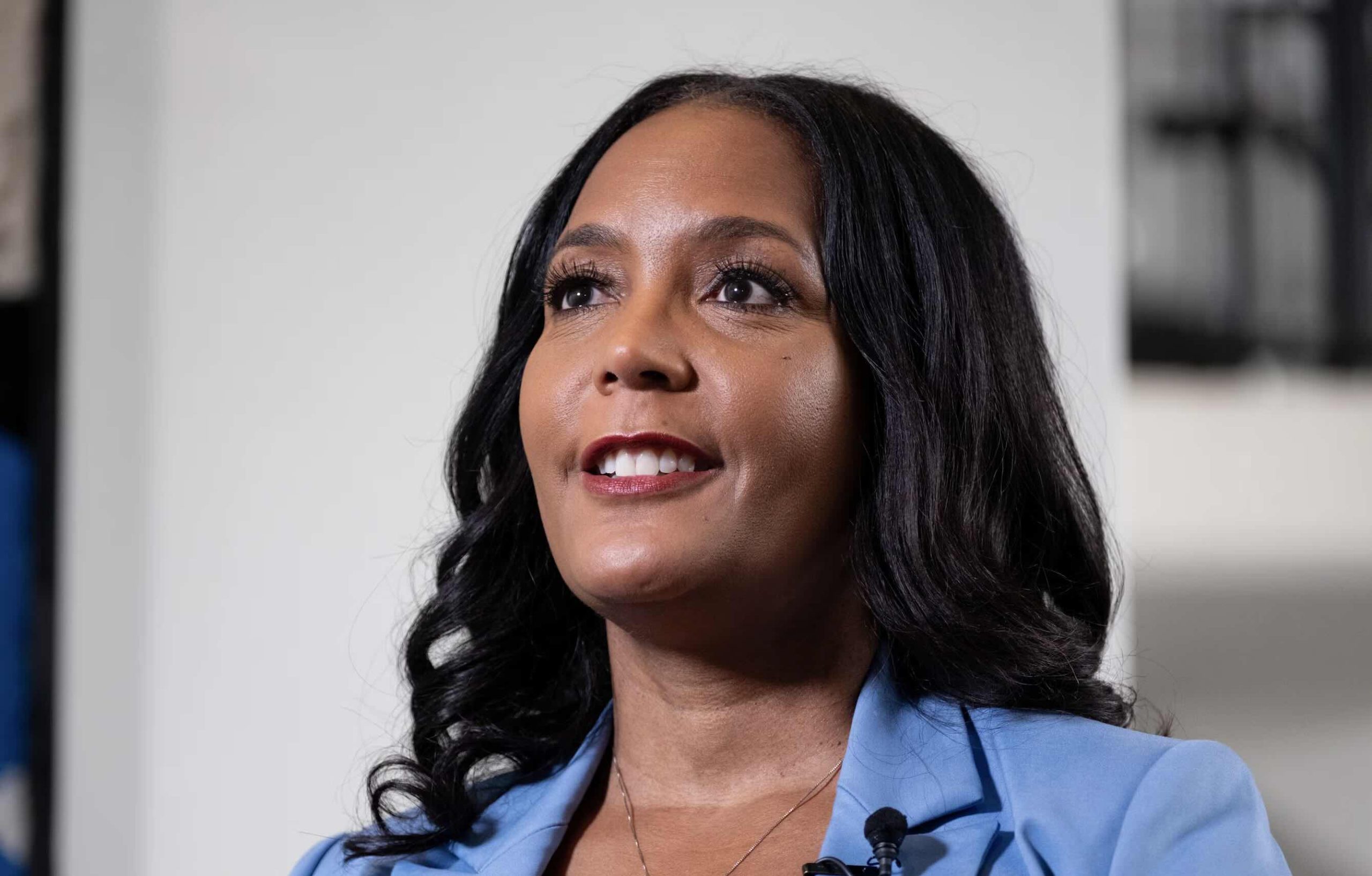
Photo: AJC
Keisha Lance Bottoms is the first Black female governor in United States history — and she is the first Black person to serve as governor of Georgia. According to race calls on November 3, 2026, by The Associated Press and NBC News, the Democrat and former Atlanta mayor has won the 2026 Georgia gubernatorial election, decisively defeating Republican Rick Jackson. Her victory also marks the first time Georgia has elected a female governor, and the first time it has elected a Democratic governor in over 20 years.
With 78.74% of votes reporting on election night, the preliminary results show Bottoms commanding 54.77% of the vote — 1,912,796 votes — to Jackson's 45.23%, or 1,579,835 votes. Write-ins registered at 0.00%. The AP called the race at 9:47 PM, and national outlets from NPR to The Washington Post have confirmed the historic nature of the result. She blew Rick Jackson out of the water.
So how did she do it? Several key pillars drove her historic victory. Chief among them was her weaponization of the Trump connection: Bottoms aggressively used Jackson's own primary rhetoric against him. Jackson had stated he wanted to be "Trump's favorite governor," and Bottoms successfully leveraged that during the general election — highlighting Trump's declining popularity in the state — by contrasting it with her own slogan.
A Campaign Built on Unity, Economy, and Discipline
Unlike the Republicans, who endured a costly and bruising primary runoff, Bottoms unexpectedly won her Democratic primary outright with over 50% of the vote. This allowed her to immediately transition to the general election, bypass intra-party infighting, and preserve critical resources. She built deep institutional support, linking her campaign closely to popular Georgia Senator Jon Ossoff, who was also reelected. Ossoff's campaign transferred millions in cash to the state's coordinated Democratic campaign, and Bottoms deployed heavy hitters like former President Barack Obama on the trail days before the election to maximize voter turnout.
Rather than leaning entirely on the historic nature of her race, Bottoms ran a disciplined campaign focused on populist economic relief. She pledged to fully expand Medicaid, eliminate state income taxes for teachers, lower the gas tax, and eliminate local grocery and diaper taxes. That cost-of-living focus resonated with working-class families across the state.
Perhaps most striking was her ability to overcome a staggering spending gap. Jackson poured an unprecedented amount of his own wealth — over $100 million to $200 million — into his campaign, completely saturating the airwaves with attack ads focused on crime during Bottoms' mayoral tenure. Bottoms counterbalanced this financial deficit with aggressive grassroots organizing and by shifting the narrative toward business conflicts of interest, specifically targeting state data center growth.
A Historic Milestone
This victory carries immense emotional and symbolic weight, representing a profound shift in political representation — especially in the American South. No Black woman had ever served as a governor in the 250-year history of the United States until now, and no Black person had ever held Georgia's highest office. Her win shatters a profound psychological and systemic barrier, proving a Black woman can build a winning coalition in a major Southern state.
Her cornerstone promise to fully expand Medicaid will extend healthcare coverage to roughly 500,000 low-income Georgians, closing racial health disparities; her targeted cost-of-living relief will ease the racial wealth gap; and her planned criminal justice reforms aim to reduce mass incarceration and the over-policing of Black communities. As governor, she also shifts veto power and appointment authority over state agencies, judgeships, and boards to someone with lived experience in the Black community.
From the perspective of many Democratic voters and civil rights advocates, the result is also viewed as a direct and organized political response by Black voters — particularly Black women — to the political rhetoric and policy platforms associated with Donald Trump and his allies. By organizing at the grassroots level and turning out in large numbers, voters demonstrated how electoral politics can be used to shift the balance of power.
Keisha Lance Bottoms — a former judge, Atlanta City Councilmember, 60th Mayor of Atlanta, and Senior Advisor to the President — is now the first Black female governor in U.S. history and the first Black person to serve as governor of Georgia, and the people of Georgia will be watching closely to see what she does with that power.
No Ads. By Us. For Us.
This article was made possible by readers like you. We hope it inspired you to support Emerald Book, so we can continue producing content like this.
We will never show you ads, sell your data, or require a subscription to consume our content. Your gift helps us keep the truth accessible.
Click the Support button to give a gift of any amount today.
Thank you for making this work possible.