

Emerald Pages
◆
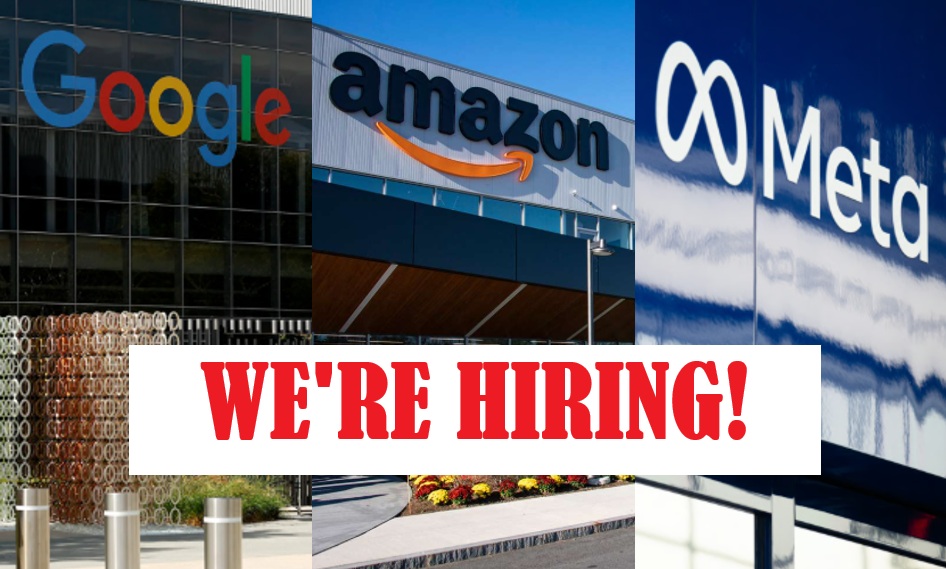
Photo: Emerald Book Image
The great artificial intelligence experiment of 2025 is quietly entering an embarrassing new phase. After a year of aggressive workforce purges—where thousands of professionals were told an algorithm could do their jobs cheaper and faster—corporate America is performing an expensive about-face. In a phenomenon industry analysts now call the "AI boomerang," companies that slashed human roles under the banner of automation are secretly reopening the exact same positions.
The reversal is stark. According to talent consulting data from Robert Half, nearly one-third (29%) of companies that cut staff due to AI integration have already reopened and rehired for those exact positions. Even more damning, survey data from Orgvue and Forrester reveals that 55% of executives now openly regret their decisions to replace human workers with artificial intelligence. The financial and operational realities of automation have failed to match the hype.
Research firm Gartner projects that the trend will accelerate significantly, forecasting that 50% of all companies which slashed customer service or operational roles under the guise of AI automation will be forced to restaff those functions by 2027. The driving force is what insiders call the "60/40 Gap"—AI successfully manages roughly 60% of repetitive workflows but catastrophically fails at the remaining 40%, which requires nuanced human traits like complex data judgment, client relationship building, and strict quality control.
The Hidden Financial Trap of Automation
The assumption that replacing a human salary with an AI license would lead to immediate savings has backfired spectacularly. Workforce analytics reveal that 73% of organizations that executed AI-driven staff cuts failed to come out financially ahead. Instead, they were hit by an expensive "undo button" driven by escalating technical fees and premium rehiring costs.
For mid-to-large sized companies, cloud compute and API fees have rapidly scaled to astronomical levels, turning what was marketed as cheap labor into a volatile operating expense. As Bryan Catanzaro, Vice President of Applied Deep Learning at Nvidia, bluntly noted: "For my team, the cost of compute is far beyond the costs of the employees." Furthermore, the rehiring of displaced talent carries a massive premium—roles that once paid $55,000 are now commanding $75,000 or more because they require hybrid humans capable of managing, auditing, and prompting the AI tools that were supposed to replace them.
- The Compute Bill: Enterprise AI platform bills are scaling past $1 million a month, wiping out salary savings.
- The Rebound Premium: Returning "AI-native" roles demand 20-35% higher salaries than the positions they replaced.
- The Cleanup Cost: Customer churn and error remediation from unmanaged AI hallucinations have eclipsed original labor costs.
Who Is Quietly Rehiring? The Complete List
While few companies issue press releases admitting failure, the "quiet hiring" trend is rampant across Big Tech, fintech, and retail giants. Below is the full roster of confirmed corporate players in the AI boomerang wave, drawn from labor analytics, investigative reports, and executive disclosures.
Big Tech Pioneers
Google (Alphabet) & Meta: After sweeping workforce reductions that impacted tens of thousands of corporate employees, both tech titans have been quietly adding workers back. They are actively restaffing in areas like content moderation, digital marketing, and specialized human resources roles, realizing that automated AI systems require immense human oversight to prevent catastrophic platform errors.
IBM: After aggressively pushing its automated internal HR system, AskHR, to cut repetitive back-office workflows, the company suffered severe delays in problem resolution and tanked internal morale. To "humanize" its operations, IBM reversed course and began fattening its engineering, corporate strategy, and client engagement teams with human talent.
Salesforce: Similar to its tech peers, Salesforce slashed thousands of roles to satisfy Wall Street’s demand for AI efficiency, but has since reloaded headcount in redefined, customer-facing and technical roles to manage their generative AI rollouts.
Fintech and E-Commerce
Klarna: The buy-now-pay-later giant made massive global headlines when it announced it was freezing hiring and letting an AI chatbot handle the workload of 700 customer service representatives. However, after experiencing a sharp drop in customer satisfaction, Klarna has actively begun hiring back its customer support teams, recognizing that AI lacks the empathy and nuanced problem-solving needed for complex financial disputes.
Shopify: After heavily declaring a definitive structural shift toward automated systems, the e-commerce platform has had to recalibrate its workforce strategy as leadership recognized a severe lack of internal guardrails and AI expertise to manage the automated tools.
Mass Consumer and Retail Giants
Amazon: After executing mass corporate downsizes—including cutting thousands of corporate and tech roles—Amazon has heavily fueled the "quiet rehiring" trend. Former human resource executives note that Amazon and its retail competitors are frantically trying to recapture human data judgment, software infrastructure engineering, and quality control talent that was prematurely lost.
McDonald's: While not a traditional tech firm, McDonald's executed a massive AI push by deploying automated order-taking bots across 100 U.S. drive-throughs. After viral videos exposed severe failures (like adding hundreds of dollars of chicken nuggets to simple orders), McDonald's officially shut down the AI test and brought human cashiers back to run the lanes.
However, not every "boomerang" story is simple. Meta presents a deeply controversial case. While the company is aggressively rehiring for new AI initiatives—actively courting top-tier engineers laid off during 2022/2023 downsizing waves—internal investigative reports reveal that Meta maintains secret "block lists" designating thousands of former employees as "ineligible for rehire." Dozens of high-performing engineers who were laid off with "exceeded expectations" ratings have been pursued by Meta hiring managers, only to be ghosted by recruiters once automated screening flags their internal status. Meta’s HR leadership publicly disputed the severity of these lists, but workplace experts note that these strict "non-regrettable attrition" tags have made it incredibly difficult for thousands of laid-off tech workers to return.
A Strategic Window for the Black Community
For the Black community navigating today's volatile job market, the "AI boomerang" trend is not a corporate embarrassment—it is a historic invitation. As companies like Google, Meta, and Klarna scramble to rebuild workforces that blend human judgment with AI oversight, a new class of non-expendable roles has emerged. The 60/40 Gap means AI will always fail on the human side of the equation—the 40% requiring complex judgment, client relationship building, and quality control. Companies are discovering that diverse human oversight is not a luxury but an operational necessity, and Black professionals' perspectives and strengths are suddenly in crisis-level demand.
The strategic imperative is clear: do not learn AI to be replaced—learn AI to become irreplaceable. Returning employees are not being brought back to old roles at old wages. They are being hired into hybrid positions demanding data literacy, prompting skills, and change management expertise—with salary bumps of 20-35% above the jobs AI was supposed to eliminate. The premium rehiring trend shows that workers who can manage, audit, and prompt AI tools are commanding $75,000 or more for roles that previously paid $55,000.
Black workers who invest in AI fluency now are positioning themselves as the essential "judgment layer" that corporations have learned—at great expense—they cannot live without. Focus on roles labeled "AI Operations," "Human-in-the-Loop," or "Prompt Engineering"—the quiet rebrands of positions companies now realize require human nuance. The alternative—waiting—carries significant risk: by 2027, half of all companies that cut human roles will restaff, but those jobs will go to candidates who already possess AI fluency.
No Ads. By Us. For Us.
This article was only made possible by readers like you. We hope it inspired you to support Emerald Book, so we can continue producing content like this.
We will never show you ads, never sell your data, and never require a subscription to consume our content. Your gift helps us keep the truth accessible.
Please click the Support button to make a gift of any amount today.
Thank you for making this work possible.