

Emerald Pages
◆
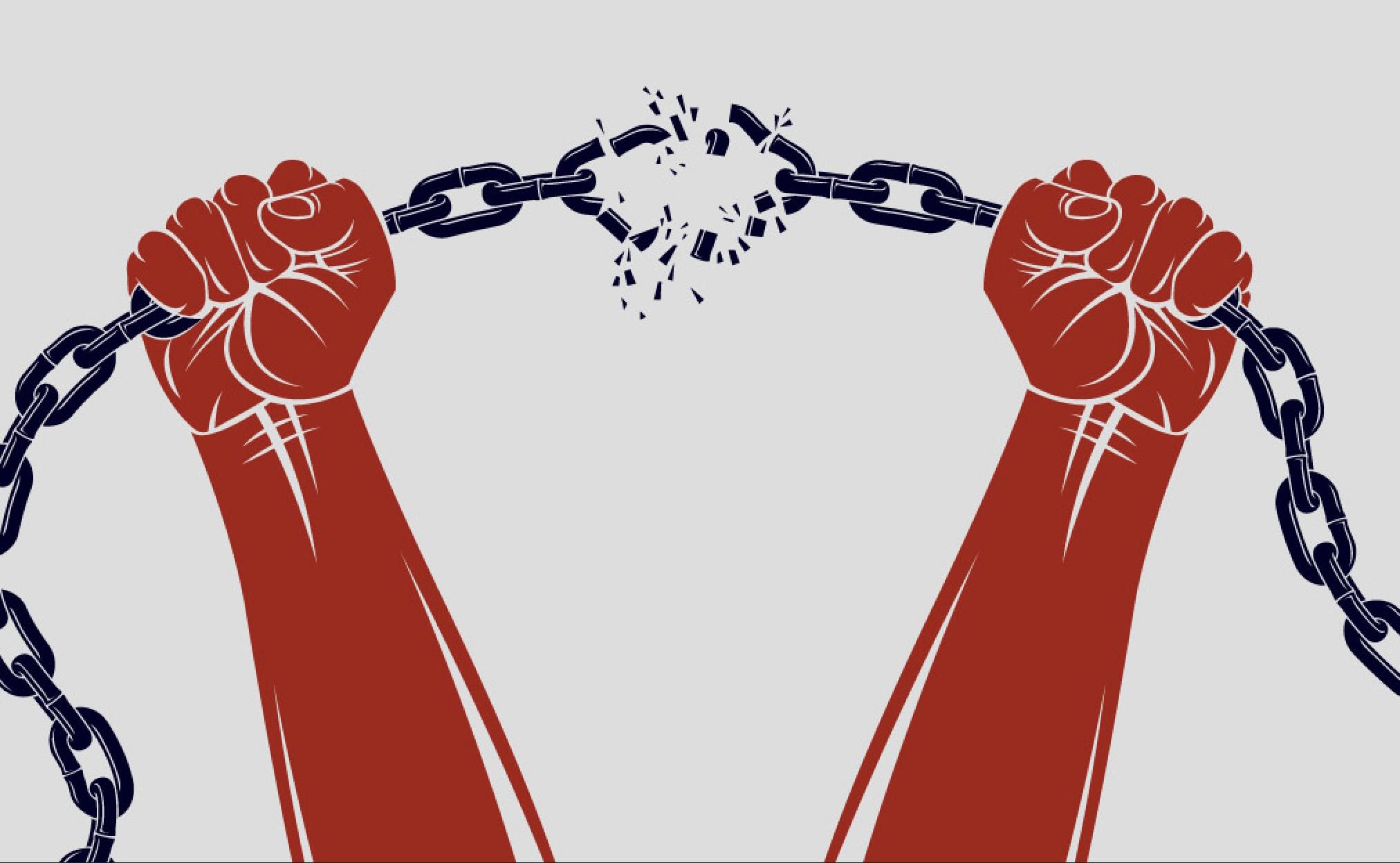
Photo: Shutterstock
The claim is often repeated with an air of scholarly finality: "Slavery was a universal institution." This single word, "universal," is used by historians to describe a practice that appeared in various forms across continents and millennia. However, this framing is a profound historical error—one that, by its sheer breadth, does more to obscure the truth than to illuminate it. When we scratch the surface, the myth of a universal and singular "slavery" collapses under the weight of its own false equivalence, serving as a subtle tool of Western historiographical bias that sanitizes the unique horrors of the Transatlantic trade.
The argument for universality often hinges on a broad, minimalist definition: the systematic control of one person by another through force, where the worker cannot walk away, and their labor is taken without consent. Under this sprawling umbrella, a war captive in ancient Rome, a debt-bonded laborer in medieval India, and an enslaved person on a Caribbean sugar plantation are all lumped together. But this is a semantic sleight-of-hand. It equates a spectrum of historical injustices, ranging from temporary servitude to total, permanent property status, under a single banner. This obfuscates the critical distinctions that define different systems of oppression.
The Myth of the "Universal" Institution
When historians speak of the "universality" of slavery, they refer to its geographical and chronological prevalence—not its uniformity. Yet, this nuance is often lost, leading to a dangerous conclusion: "Everyone did it." This narrative, while appearing to distribute blame evenly, has a distinctly Western origin. For centuries, European and American scholars, writing from the heart of empires built on enslaved labor, framed their own brutal system as simply a tragic but inevitable phase of human development. By labeling it "universal," they subtly normalized their own history, implying that the racialized, hereditary, capitalist chattel slavery they pioneered was just another chapter in an age-old story.
This perspective also conveniently dismisses the hundreds of societies that actively rejected human bondage. From the egalitarian, nomadic cultures that predate agriculture, to specific Indigenous groups in North America and the complex societies of pre-colonial Africa that had no tradition of slavery, the historical record is far from "universal." In fact, institutionalized slavery is largely a phenomenon of large, centralized empires and agricultural societies—a minority of the human experience. To call the practice "universal" because empires from Rome to the Aztecs to the Songhai practiced it is to center world history on the very imperial structures that caused the most harm.
The "Slavery" That Wasn't: A Matter of Degree and Kind
To understand why the "universal" claim is flawed, we must analyze the substance of these different systems. In many ancient and non-Western contexts, what is translated as "slavery" was often a form of dependency or servitude that was temporary, non-hereditary, and offered a path to social integration. An enslaved person in the Achaemenid Empire, for example, was often a paid laborer; in many African kingdoms, a captive might be adopted into the family, their children born free, and they could rise to become advisors or generals. This was fundamentally different from the system Europeans imposed.
- Chattel Slavery: The Western invention. Humans treated as absolute property, like a piece of furniture. This was a unique legal creation designed for mass commodification.
- Hereditary Bondage: In the Atlantic system, slavery was a permanent, inheritable curse. In most other systems, freedom was attainable, and the children of enslaved people were often born free.
- Racialization: The West invented modern white supremacy to justify the kidnapping of millions from one specific continent, creating a global racial hierarchy that persists today.
Europeans Didn't Just Practice Slavery; They Weaponized It
The historical record shows that while the desire to exploit others is an old human flaw, European empires took this base impulse and engineered it into a sophisticated, industrial-scale global crime. The Transatlantic trade was not a local or regional affair but the world's first truly global supply chain, connecting three continents in a cycle of kidnapping, torture, and mass murder. The "Middle Passage" was not a trade route; it was a method of genocide, where millions were packed into ships and worked to death on plantations designed to extract maximum profit with zero regard for human life.
The legal framework they built—chattel law—was a novel invention. It legally stripped a person of all humanity, allowing them to be used as collateral for bank loans, insured by emerging companies, and bequeathed in wills. This was not "slavery" as it had been known; it was an entirely new and devastating crime. This is why modern international courts and scholars are moving away from the term "slave trade" and adopting language like "Transatlantic Human Trafficking" and "Crime Against Humanity." These terms reflect the reality of the atrocities, not the sanitized, passive language of a neutral social institution.
The Cycle Continues: How Western Nations Fund Modern Slavery
The most damning evidence that the "universal" myth is a tool of Western comfort lies in the present day. While every country in the world has legally abolished chattel slavery, the economic engine that drove the Transatlantic trade never fully stopped; it merely transformed. Today, the global supply chains of Western corporations are directly funding modern human trafficking and forced labor across Africa and the developing world. The appetite for cheap smartphones, fast fashion, and inexpensive chocolate creates a multi-billion dollar market that thrives on exploitation.
The Democratic Republic of the Congo (DRC) holds over half of the world's cobalt reserves, a mineral essential for the lithium-ion batteries in iPhones, laptops, and electric cars. Armed militias and corrupt local entities exploit hundreds of thousands of people—including tens of thousands of children—forcing them to dig in toxic, hand-made tunnels for pennies a day. This is not a relic of the past; it is a present-day crime. When a Western consumer buys a new phone, their money often travels down a complex, layered supply chain that ultimately places cash in the hands of modern slave-drivers.
- Mining (Tech): Forced labor in Congolese cobalt and coltan mines to power smartphones and electric vehicles for Western brands.
- Agriculture (Food): Human trafficking networks in West Africa supply cocoa to the global chocolate industry, with child labor rampant on plantations.
- Garment (Fashion): Exploitative labor practices and forced cotton harvesting fuel the fast fashion industry's insatiable demand for cheap textiles.
- Extortion (Migration): In Libya, armed militias run detention camps where migrants are sold, abused, and forced into labor—a direct result of European migration policies.
Resisting Erasure: The Fight for True Language
The resistance to this "universal" myth is not merely academic; it is a crucial part of the ongoing fight for justice and reparations. The narrative that "Europeans ended slavery" is a companion myth to its "universality." In truth, the system collapsed because the people inside it refused to be broken. The enslaved fought back every single day—through revolt, sabotage, and escape. The Haitian Revolution stands as the ultimate rebuke to the myth of Western moral awakening: freedom was not given; it was violently seized.
By finally using precise language—kidnapping, torture, human trafficking, and genocide—we reject the sanitized historiography that has long excused grave crimes. We stop equating an enslaved person in Ancient Rome with a person kidnapped from West Africa and forced to die on a plantation in the Caribbean. We acknowledge that the "universal" narrative is a tool of erasure, a way to flatten history and avoid the specific, uncomfortable truth of what was done and who did it. The fight to tell this story correctly is a fight for the dignity of the millions who were not just enslaved, but were victims of an international crime against humanity.
No Ads. By Us. For Us.
This article was made possible by readers like you. We hope it inspired you to support Emerald Book, so we can continue producing content like this.
We will never show you ads, sell your data, or require a subscription to consume our content. Your gift helps us keep the truth accessible.
Click the Support button to give a gift of any amount today.
Thank you for making this work possible.