

Emerald Pages
◆
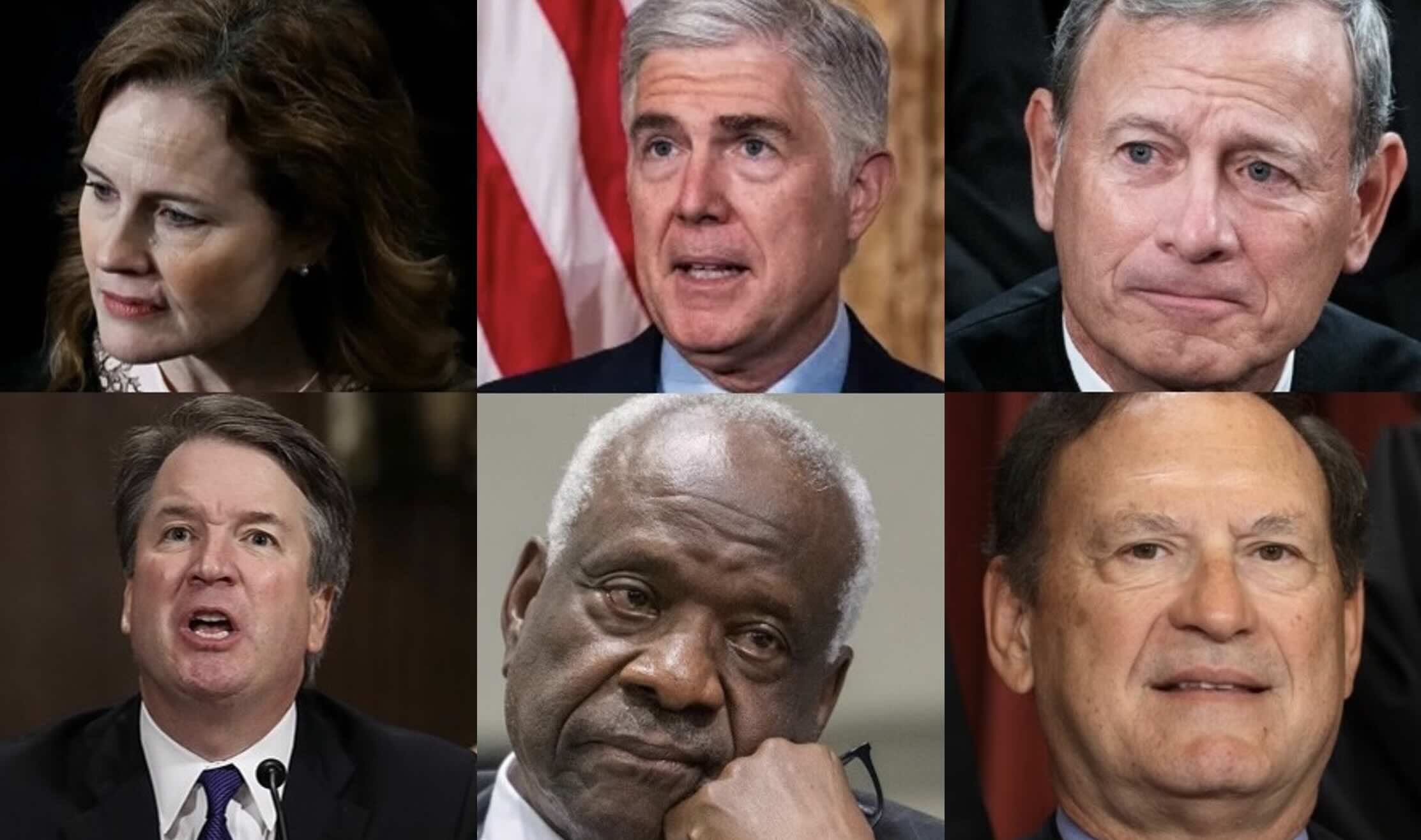
Photo: Emerald Book Image
The Supreme Court of the United States was designed to be the ultimate non-partisan institution—a refuge from the chaos of electoral politics where law, not ideology, reigns supreme. For most of American history, this vision largely held true. Republican presidents appointed liberal justices, and Democratic presidents appointed conservatives. Today, that legacy is a distant memory. By nearly every modern measure, the current Supreme Court is the most politically polarized court in American history.
The divide between the justices now mirrors the exact same partisan split we see in Congress and the country. It is a shift that has shattered public trust and redefined the court's role in American democracy.
The Death of the Cross-Over Justice
For generations, a president's party did not guarantee how a justice would vote. Republican President Gerald Ford appointed Justice John Paul Stevens, who became the leader of the court’s liberal wing. Similarly, Republican President George H.W. Bush appointed Justice David Souter, who consistently voted with the liberal bloc. These "cross-over" justices provided a buffer of independence that kept the court from descending into pure partisanship.
Today, that middle ground has vanished. The court is split into two distinct, opposing blocks: a 6-3 conservative supermajority and a 3-justice liberal minority. This perfect alignment—where every conservative justice was appointed by a Republican president and every liberal justice by a Democrat—has never happened before in U.S. history. The ideological gap between the most conservative and most liberal justices is wider today than at any point since the 1940s.
The 90% Factor: Aligning with an Agenda
The partisanship of the modern court is perhaps best quantified by its relationship with the executive branch. Independent legal trackers have found that the Supreme Court has sided with the Trump administration in roughly 90% of its high-stakes cases and emergency orders.
This staggering win rate is not an accident. It is the product of a powerful tool called the "shadow docket"—the court's emergency docket. When lower courts block a president's policy, the administration can sprint to the Supreme Court and request an immediate "emergency stay." Because the conservative majority is ideologically aligned with the administration's goals on issues like immigration and federal power, the justices have consistently voted to lift those lower court blocks, allowing policies to go into effect immediately.
- Immigration Wins: The court ratified strict border policies, allowing the administration to turn back asylum seekers and end protection programs for hundreds of thousands of migrants.
- Agency Overhaul: The court cleared the way for the administration to dismantle the Department of Education and fire federal civil servants.
- Emergency Blocks: In rapid 6-3 party-line decisions, the court has swept away lower-court blocks on border policies, freezing billions in foreign aid and reshaping the executive branch.
However, the relationship is not a rubber stamp. The conservative majority has demonstrated a clear boundary line: they will halt the administration if it tries to seize powers that explicitly belong to Congress. This was evident when the court struck down the president's emergency tariffs and refused to block nearly $2 billion in federal reimbursements to international groups.
The Forces Driving the Divide
The polarization of the court is the result of a deliberate, decades-long political war. The nomination process has become a high-stakes political battle. In the past, justices were confirmed by Senate votes of 90-0. Today, confirmations are fierce, party-line affairs—Justice Brett Kavanaugh was confirmed 50-48, and Justice Amy Coney Barrett was confirmed 52-48.
Both political parties now rely on highly organized public interest groups to vet candidates, screening them rigorously to ensure they will not "surprise" the party once they get a lifetime appointment. This has effectively eliminated the possibility of a cross-over justice emerging from the modern confirmation process.
The result is a court that the public increasingly views as politicians in robes. According to ongoing polling from the Gallup Supreme Court Trust Index, public approval of the Supreme Court has dropped to historic lows. When the court issues sweeping rulings on major social issues, the public no longer sees a legal decision—they see a political party winning a game.
The idea of an independent, non-partisan Supreme Court is a thing of the past. The data is undeniable: the court is deeply tied to the same red-versus-blue political war as the rest of the country, making it a partisan institution in every way that matters.
No Ads. By Us. For Us.
This article was made possible by readers like you. We hope it inspired you to support Emerald Book, so we can continue producing content like this.
We will never show you ads, sell your data, or require a subscription to consume our content. Your gift helps us keep the truth accessible.
Click the Support button to give a gift of any amount today.
Thank you for making this work possible.