

Emerald Pages
◆
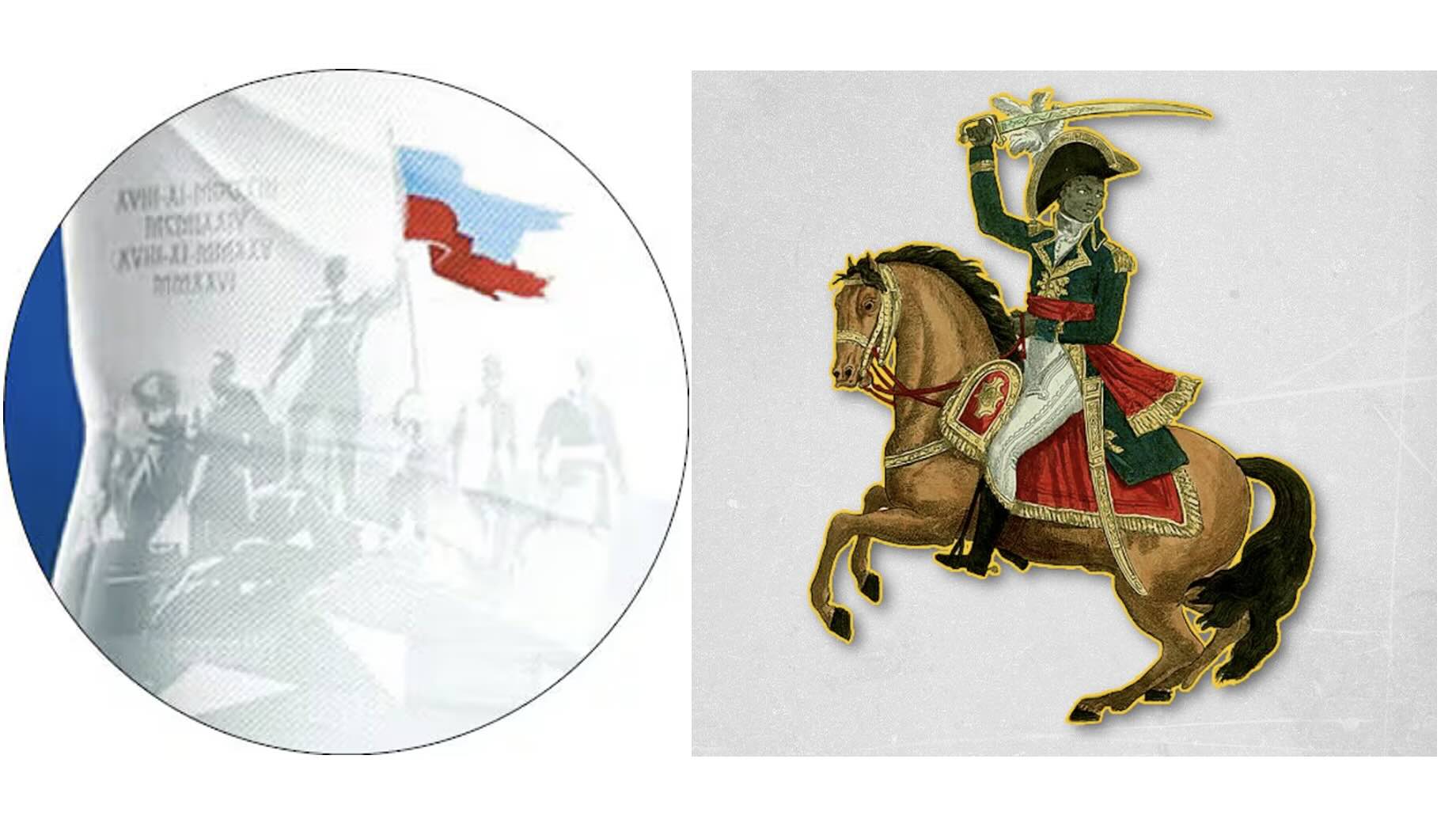
Photo: Illustration of the Battle of Vertières, the 1803 clash that ended French colonial rule in Haiti. This image was banned by FIFA.
In 2026, the world watched as two of the most powerful governing bodies in international sports—FIFA and the International Olympic Committee (IOC)—forced Haiti to alter its national uniforms. The reason? The presence of revolutionary imagery honoring the country's founders. Yet, this is not merely a case of enforcing neutral rules. It is the continuation of a centuries-old pattern of subjugation, where the symbols of European empires are deemed "heritage," and the symbols of Black liberation are deemed "political."
The bans were swift and unyielding. In February, the IOC ordered Haiti's Winter Olympic team to remove a painted portrait of Toussaint Louverture, the brilliant general who led the Haitian Revolution, from their opening ceremony parkas. Just months later, FIFA forced Haiti's soccer federation to scrub an illustration of the 1803 Battle of Vertières—the final, decisive victory over Napoleon's forces—from their World Cup jerseys. The message was clear: Haiti’s foundational history was too provocative for the global stage.
FIFA and the IOC defended their decisions by citing strict "political neutrality" rules. According to FIFA Equipment Regulations (Article 8.3), jerseys cannot feature "political or comparable symbols," specifically including war-related imagery. The IOC applies a similar blanket policy. However, these rigid rules, applied without context, create a system where wealthy, predominantly white nations are allowed to celebrate their history, while formerly colonized nations are forced to erase theirs.
A History of Silencing
To understand the outrage, one must look at the historical context. The Haitian Revolution (1791–1804) remains the world's only successful slave revolt. It resulted in the creation of the first Black republic and the first nation to permanently abolish slavery. For the global powers of the 19th century—France, Britain, and the United States—this was a terrifying precedent. They responded not with recognition, but with isolation and economic strangulation.
France, humiliated by its defeat, sent warships to Haiti in 1825 and demanded a massive indemnity of 150 million gold francs to compensate French slaveowners for their "lost property"—which included the freed people themselves. To pay this impossible sum, Haiti was forced to take out high-interest loans from French and American banks. It took Haiti 122 years to pay off this "independence debt," finally finishing in 1947. Instead of building schools, hospitals, or stable institutions, almost all of Haiti's national wealth for over a century went into foreign bank vaults. This, coupled with a strict economic embargo by the U.S. and European powers who feared the spread of revolution, crippled the nation from its very birth.
- 1804: Haiti declares independence. The U.S., Britain, and Spain impose an economic embargo to prevent the spread of revolutionary ideas.
- 1825: France forces Haiti to pay 150 million gold francs in reparations—a debt that would take over a century to repay and devastate its economy.
- 1915-1934: The U.S. military occupies Haiti, taking control of its treasury and political systems, leaving behind a legacy of instability.
- 2026: FIFA and the IOC ban Haiti's revolutionary symbols, continuing the pattern of silencing the nation's narrative of liberation.
As the anthropologist Michel-Rolph Trouillot famously argued, the silencing of the Haitian Revolution has been a deliberate strategy of the West. By refusing to acknowledge the success of a slave revolt, global powers could maintain the fiction that such an uprising was impossible. The modern sports bans are a direct extension of this historical erasure.
The European Double Standard
The rules that banned Haiti's symbols are the same rules that allow European nations to display war imagery and nationalistic symbols without consequence. Consider the following examples:
- Portugal: The national team crest features the cinco quinas (five blue shields), which represent the 1139 Battle of Ourique, where a Portuguese king defeated five Moorish kings. This is treated as cultural heritage, not a political violation.
- England: The famous "Three Lions" crest comes from the royal arms of King Richard the Lionheart, a monarch who led brutal crusades in the Middle East.
- France: The French national team wears the Gallic Rooster, a symbol of the French Revolution, and fans regularly sing La Marseillaise, an anthem filled with violent lyrics about slaughtering enemies. This is considered patriotic, not political.
When a European nation displays a symbol of a medieval king or a colonial conquest, it is viewed as a harmless tribute to history. When Haiti displays the moment it broke its chains and defeated its colonizers, it is viewed as a dangerous threat. This is the very definition of a double standard.
The disproportionate censorship of a small island nation is not a coincidence. It is a reflection of a global power structure that has, for centuries, sought to protect the feelings and reputations of former empires. By forcing Haiti to scrub its proudest moment of survival from its uniforms, FIFA and the IOC are telling the world that the celebration of freedom is only acceptable when it is done by those who have always been free.
For Haitians, these bans are not just about uniforms. In a time of profound crisis—with the country facing severe political instability and economic hardship—the memory of the revolution is a vital source of unity and resilience. Stripping those symbols away on the world stage feels like an attempt to rob the nation of its strength when it needs it most. It is a modern echo of the 19th-century embargo: an attempt to silence a people who dared to demand their freedom.
No Ads. By Us. For Us.
This article was made possible by readers like you. We hope it inspired you to support Emerald Book, so we can continue producing content like this.
We will never show you ads, sell your data, or require a subscription to consume our content. Your gift helps us keep the truth accessible.
Click the Support button to give a gift of any amount today.
Thank you for making this work possible.