

Emerald Pages
◆
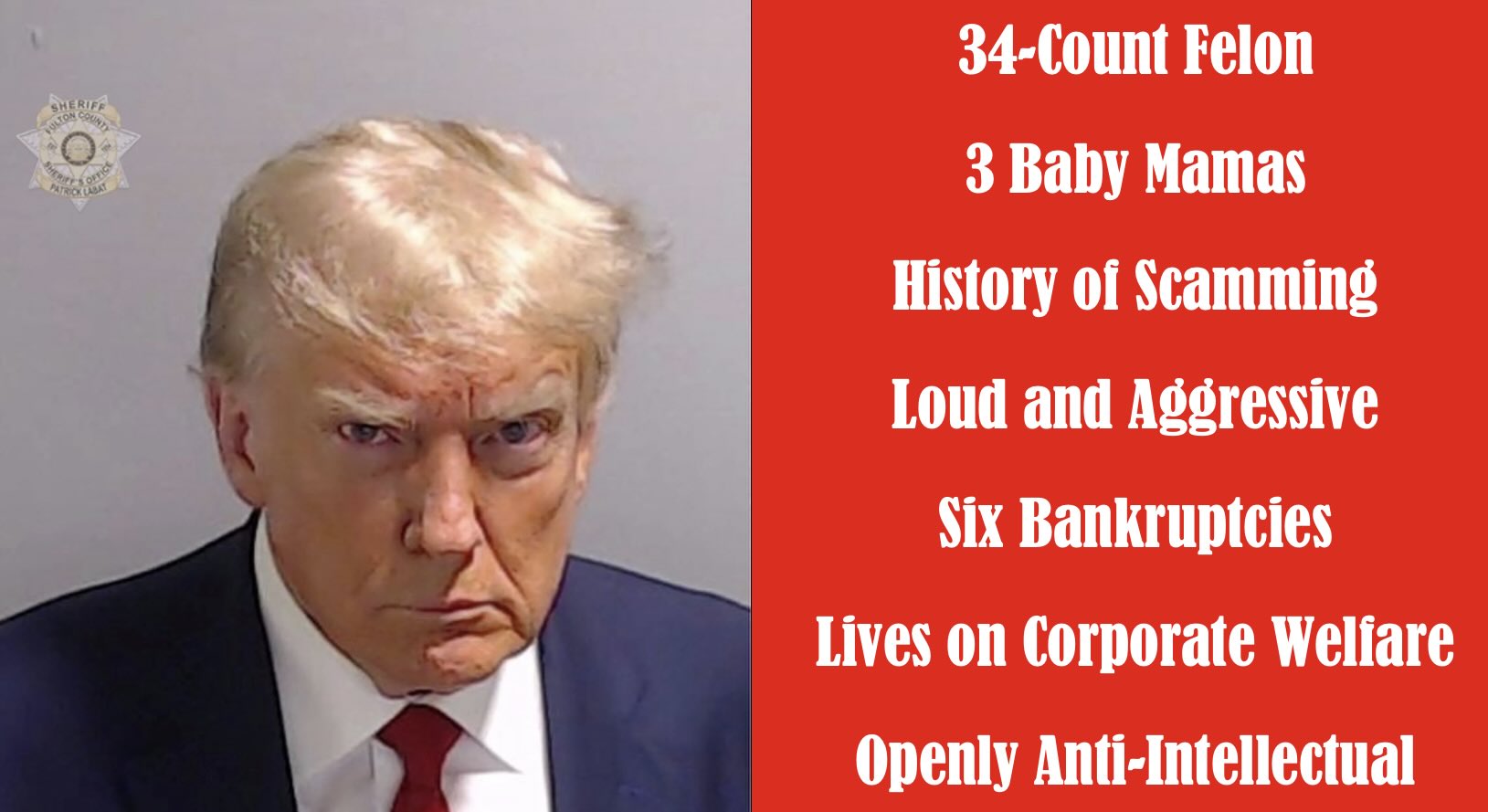
Photo: Emerald Book Image
In May 2024, a New York State Supreme Court jury found Donald Trump guilty on 34 felony counts of falsifying business records, making him the first former U.S. president to be convicted of a felony. This legal milestone, alongside a documented history of financial fraud, multiple marriages, aggressive public behavior, and a well-documented reliance on government subsidies, creates a composite profile that is remarkably similar to the social traits that conservative pundits and politicians frequently label as “ghetto” or “trashy” when exhibited by low-income minorities. Yet, this profile did not disqualify Trump from the presidency; it propelled him to it.
The paradox is not an oversight. It is a fundamental feature of how structural privilege operates in the United States. While a Black or Brown candidate with a similar background would be immediately dismissed by the political establishment, Donald Trump’s whiteness and immense wealth have sanitized these behaviors, transforming them from disqualifying flaws into markers of “authenticity” and “anti-establishment rebellion.” The very traits that the system uses to criminalize and oppress marginalized communities were weaponized by Trump to build a political coalition that ultimately returned him to the White House.
The data is clear. Trump's legal record reveals a pattern of behavior that is objectively more severe than that of most individuals who are socially ostracized for "criminality." He is a convicted felon with a criminal record that includes 34 counts of falsifying business records. He has three children from three different women, a family structure frequently cited by conservatives as evidence of moral decay. His businesses have been legally found liable for fraud, resulting in multi-million dollar settlements and bans from corporate leadership. He is loud, aggressive, and openly anti-intellectual, deriding formal education and scientific consensus in favor of "common sense" and personal instinct.
The "Blue-Collar Billionaire" as a Political Strategy
Political scientists and cultural critics point to the concept of the "blue-collar billionaire" to explain this phenomenon. Unlike traditional "old money" elites who value quiet luxury, classical arts, and understated fashion, Trump’s aesthetic—characterized by gold-plated interiors, well-done steaks with ketchup, and oversized Brioni suits—rejects elite cultural norms. This rejection is a deliberate branding tool. By appearing to share the tastes of everyday Americans, he signals to working-class voters that he has not been corrupted by the coastal establishment.
- Corporate Welfare: While Trump never used individual government assistance, his real estate empire was built on hundreds of millions in tax breaks and subsidies, including a $400 million 40-year abatement from New York City.
- Anti-Intellectualism: Trump frequently positions himself against experts, stating, "My gut tells me more sometimes than anybody else’s brain can ever tell me," a sentiment that aligns with populist distrust of the elite.
- Aggressive Rhetoric: UCLA linguistic studies show that Trump's speeches rely on simpler, highly charged vocabulary, framing disagreements as existential battles against "enemies" or "lunatics."
This branding is not accidental. It is a use of "negative partisanship." For many voters, electing a standard, polite politician has failed to improve their economic reality. Trump’s supporters do not view his 34 felony convictions, aggressive language, or messy family tree as a reflection of poor character; rather, they see him as a disruptive weapon against an establishment they distrust. His willingness to be crude and combative is viewed as proof that he will fight dirty on their behalf.
The Double Standard of Race and Class
This brings us to the critical layer of the paradox: race. In the United States, the same behaviors are interpreted radically differently depending on who exhibits them. When a low-income person of color speaks loudly, challenges authority, or has a history of legal trouble, institutional systems label them as "unprofessional," "dangerous," or "ghetto." When Trump does it, it is framed by his allies as "dominant," "strong," or "standing up to the deep state." This double standard is not an accident; it is the legacy of racism.
The concept of "respectability politics" offers a stark illustration. Candidates of color are historically forced to adhere to strict standards of decorum—they must have spotless records, elite degrees, calm demeanors, and traditional families just to be considered viable. Trump’s race grants him a level of grace and room for error that is systematically denied to minorities. This is not merely a critique; it is a fact validated by political scientists and civil rights scholars. Whiteness provides a structural shield, allowing a candidate to weaponize behaviors that the system uses to criminalize others, turning them into a winning presidential brand.
Redefining Accountability
Ultimately, the story of Trump's success is a story about power. Wealth allows a person to hire top lawyers and buy media networks, but whiteness ensures that their behavior is never used to generalize or condemn their entire race. When a low-income minority commits a crime, the media and politicians routinely use it to stereotype their entire community as "culturally broken." When Trump commits fraud or acts aggressively, it is treated as an isolated, individual choice—never as a reflection on white men as a whole.
The conversation about this paradox is happening. Cultural critics, sociologists, and political analysts have drawn the exact comparison we've made. However, it yields two completely opposite conclusions: critics view it as proof of a decline in American democratic standards, while his supporters view it as a historic and necessary dismantling of an out-of-touch political ruling class. The ultimate lesson is that in America, the difference between a "thug" and a "rebel" is not in their actions, but in the color of their skin and the size of their bank account.
No Ads. By Us. For Us.
This article was made possible by readers like you. We hope it inspired you to support Emerald Book, so we can continue producing content like this.
We will never show you ads, sell your data, or require a subscription to consume our content. Your gift helps us keep the truth accessible.
Click the Support button to give a gift of any amount today.
Thank you for making this work possible.