

Emerald Pages
◆
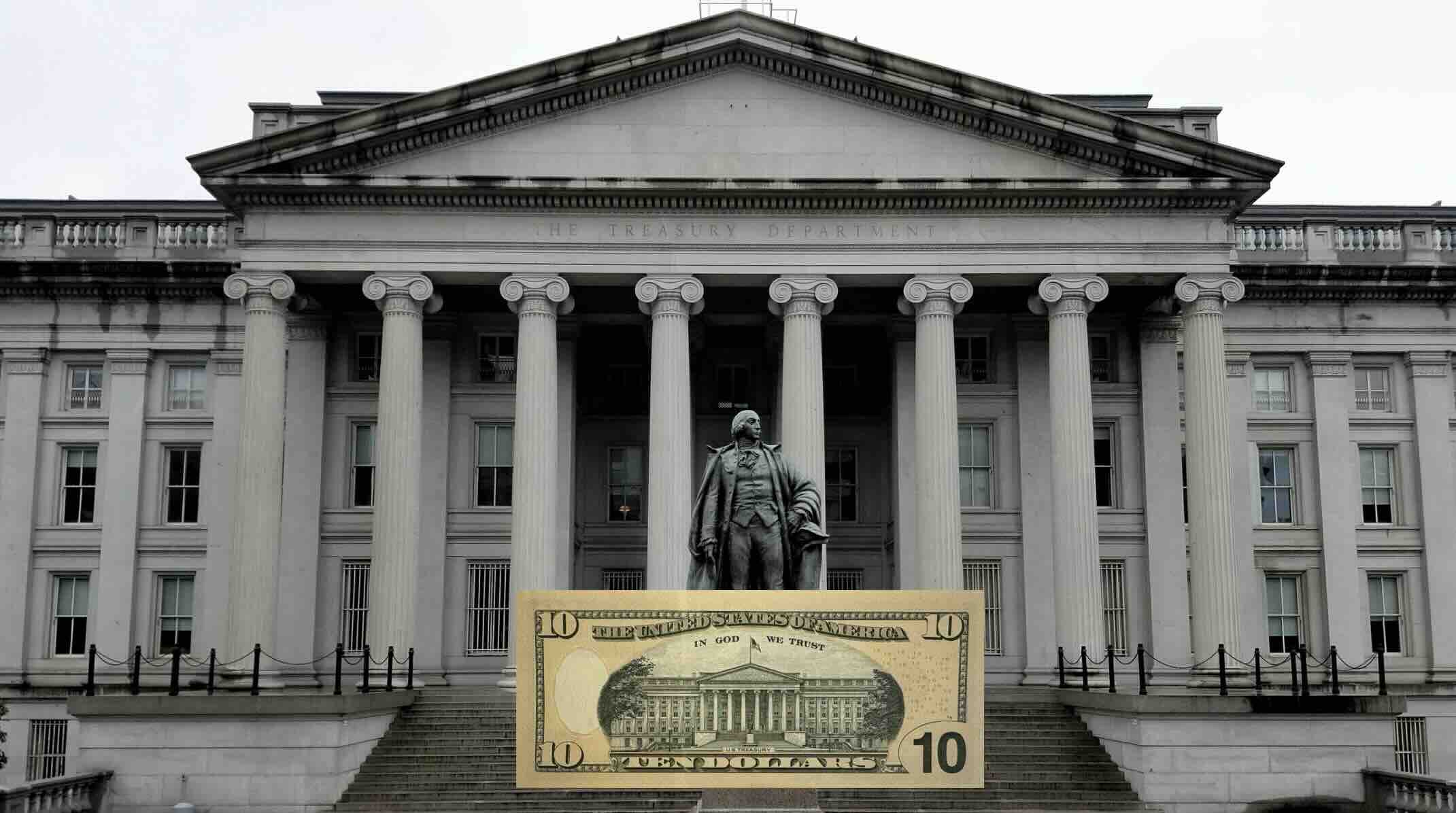
Photo: Wikipedia
The stock market is a spectacle—a theater of human emotion, speculative hope, and dizzying volatility. It is the star of the financial world, capturing the public's imagination through breathless headlines and dramatic rises and falls. But the true engine of global finance, the silent and colossal force that dictates the value of everything from your mortgage to your nation's currency, is something far less glamorous: the bond market.
Warren Buffett famously said that if you want to understand the economy and the markets, you have to understand the bond market first. He is right. While equities represent ownership and speculative future profits, bonds represent the cold, hard mathematics of debt. If stocks are the gasoline of the economy, the bond market is the very engine, setting the parameters for how that fuel is priced and distributed.
To truly understand money—its cost, its supply, and its stability—you must first understand the bond market. It is not a peripheral piece of the puzzle; it is the table on which the entire puzzle is assembled.
The Base of the Pyramid: Why Bonds Control Everything
Think of the global financial system as a pyramid. The top is comprised of volatile assets like stocks, cryptocurrencies, and raw land speculation, driven by hope and sentiment. The middle holds real estate and corporate loans, representing leveraged wealth. The base, the foundation upon which everything else rests, is the bond market. This is where the fundamental cost of borrowing money, known as the "risk-free rate," is established. The U.S. Treasury bond yield serves as the ultimate financial benchmark. Every other investment on earth is priced relative to this baseline.
The bond market doesn't just react to the economy; it predicts it. Bond traders are notoriously accurate economic forecasters. When the yield curve—a graph plotting bond yields across different maturities—inverts (meaning short-term yields are higher than long-term yields), it is a historically reliable signal of an impending recession, often foreshadowing economic downturns months before the stock market catches on. Furthermore, national currencies only hold their value because global investors trust the government's ability to back up its debt. The bond market is the global superpower's literal credit card.
The Seesaw Effect: Interest Rates and Bond Prices
At the heart of the bond market's power is a fundamental, inverse relationship: when interest rates rise, bond prices fall, and when interest rates fall, bond prices rise. This "seesaw" effect dictates how the entire fixed-income market moves and, by extension, ripples through the rest of the economy.
The mechanism is one of competition. If you own an older bond paying a 5% interest rate, and new bonds are issued at a 6% rate to reflect a market shift, your bond becomes less attractive. To sell it, you must lower its price below its face value so that the buyer's overall return (the yield) matches the new, higher market rate. Conversely, if rates fall, your older bond's higher coupon becomes a valuable asset, and its price will be bid up by investors hungry for yield.
Your Mortgage Is a Bond
This relationship directly dictates consumer mortgage rates because a mortgage is, in essence, a bond in disguise. When you take out a home loan, you are the issuer of the debt, and the bank is the initial investor. Banks don't just invent mortgage rates; they benchmark them directly against the bond market, specifically the 10-year U.S. Treasury yield.
As of June 2026, the 10-year Treasury yield sits around 4.5%, which naturally pushes the average 30-year fixed mortgage rate to roughly 6.5%. Lenders add a safety margin—historically about 1.5% to 2%—to account for default risk. Furthermore, banks rarely hold these mortgages for 30 years. They bundle them into Mortgage-Backed Securities (MBS) and sell them on the open bond market. These MBS must compete with Treasury bonds for investor dollars. If institutional investors dump bonds, causing yields to skyrocket, lenders are forced to raise interest rates on new home loans to make their mortgage bonds attractive enough to buy.
- Today's Impact: As of June 22, 2026, the 10-year Treasury yield is at 4.51%. This has driven the average 30-year fixed mortgage rate to approximately 6.53%, keeping housing affordability highly strained.
- Consumer Loans: This same mechanism extends to other borrowing. Fixed auto loans are tied to shorter-term Treasury yields, while variable-rate products like credit cards and ARMs fluctuate dynamically with central bank targets.
- The Fed's Role: The Federal Reserve's aggressive stance to combat inflation has caused a massive sell-off in the bond market, driving up yields and squeezing consumers.
The 2028 Maturity Wall: A Crisis Brewing?
The global economy is staring down a potential crisis known as the "2028 Corporate Debt Maturity Wall." This refers to a massive $3.02 trillion peak in global corporate debt scheduled to mature in 2028. During the pandemic era of near-zero interest rates, corporations borrowed massively. These low-interest loans, particularly concentrated in the technology sector, will need to be refinanced in a much higher interest rate environment.
For stable companies, this will simply eat into profits. For speculative-grade or "junk" companies, it could be an existential threat, potentially triggering a wave of corporate defaults and bankruptcies. However, the bond market is not passive. Companies are already proactively chipping away at this wall by extending their debt maturities into 2030 and 2031. Furthermore, a significant portion of this debt is held by private credit firms, which have more flexibility to renegotiate terms than rigid public markets. While a serious risk, a guaranteed crash is not inevitable. The market is already adjusting.
The Black Economy and the Bond Market
The macro mechanics of the bond market have a specific and profound impact on the Black economy in America. Because Black wealth is historically more concentrated in housing than financial securities, the current high-interest-rate environment creates a significant "real estate trap." With mortgage rates near 6.5%, the Black homeownership rate remains stagnant, and existing homeowners are locked out of utilizing home equity lines of credit (HELOCs) to fund businesses or education.
The looming 2028 maturity wall also threatens the Black labor market, as historical data shows that Black employment is highly sensitive to macroeconomic shocks and corporate cost-cutting. Additionally, while the high-yield environment rewards savers and lenders, Black households are significantly less invested in bond and stock funds, meaning a large portion of the billions being paid out in interest by the U.S. government bypasses Black portfolios. For a real-time look at these macroeconomic forces, explore the Emerald Economic Index System (EEIS). This dynamic exacerbates the racial wealth gap.
No Ads. By Us. For Us.
This article was made possible by readers like you. We hope it inspired you to support Emerald Book, so we can continue producing content like this.
We will never show you ads, sell your data, or require a subscription to consume our content. Your gift helps us keep the truth accessible.
Click the Support button to give a gift of any amount today.
Thank you for making this work possible.