

Emerald Pages
◆
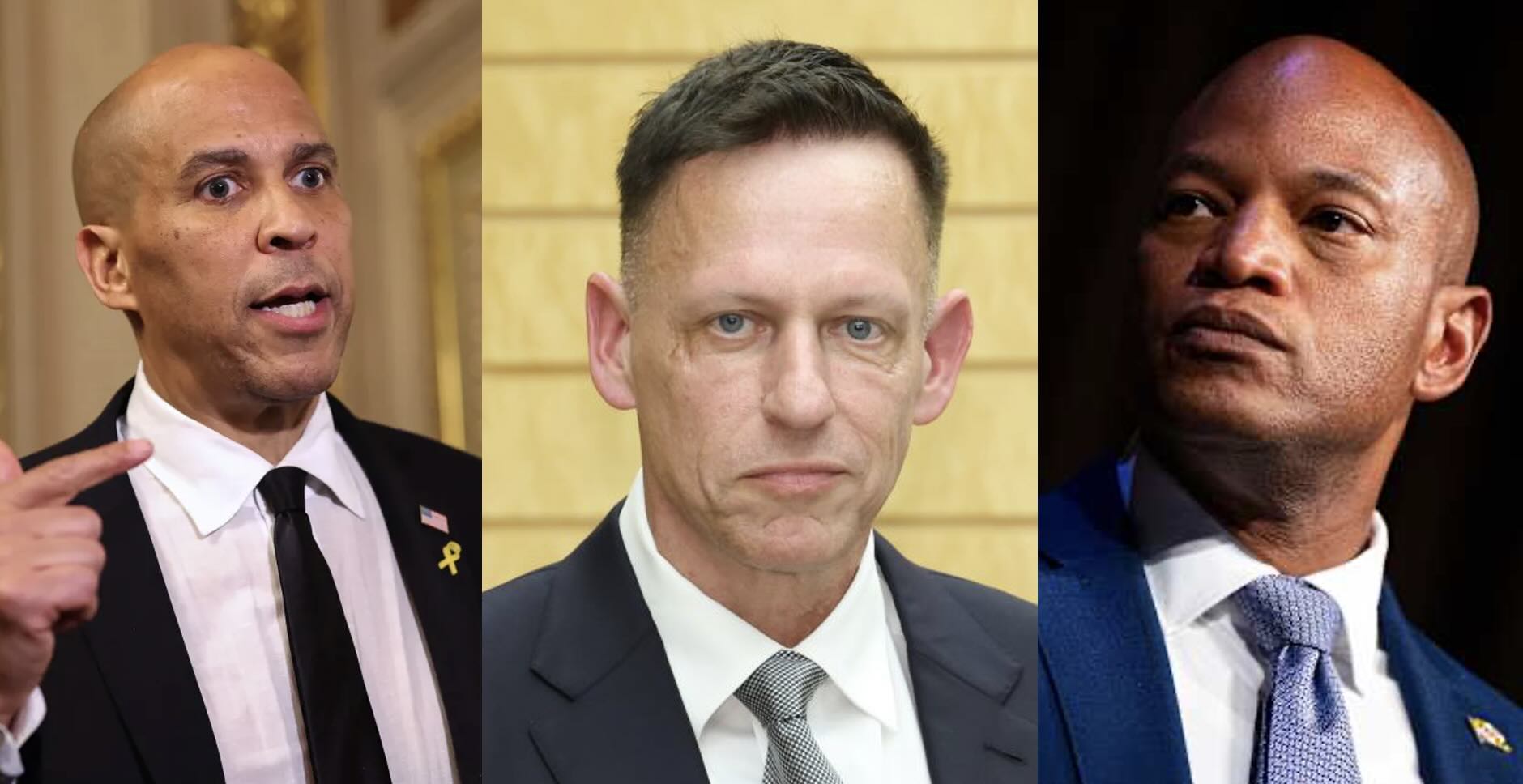
Photo: Emerald Book Image
On June 16, 2026, the political and technological elite were thrown into disarray. A catastrophic data leak, first reported by Wired, exposed the internal directory of "Dialog"—an ultra-exclusive, secretive networking organization founded by billionaire tech mogul and Palantir co-founder, Peter Thiel. The 222-person roster reads like a who's who of global power, featuring names from Elon Musk to Senator Ted Cruz. However, the presence of two specific names has sparked a firestorm of controversy among progressives and political analysts alike: Maryland Governor Wes Moore and New Jersey Senator Cory Booker.
For two of the Democratic Party's most prominent Black politicians—both lauded for their progressive rhetoric on equity, democracy, and working-class values—to be rubbing shoulders with Thiel, a man who has openly stated he no longer believes "freedom and democracy are compatible," presents a staggering ideological contradiction. The question on everyone's mind is not just who they are meeting, but why they are there, and what this secretive alignment means for the future of American governance.
The "Tech-Era Bilderberg" and the Allure of Influence
According to the leaked documents and subsequent reporting by Axios and The Stanford Daily, Dialog functions as Silicon Valley's answer to the infamous Bilderberg Meetings—a completely off-the-record forum where powerful leaders can network without public or media oversight. For a governor like Wes Moore, who oversees a state heavily reliant on federal cybersecurity and defense contracting (Maryland is home to Fort Meade and the NSA), the draw is obvious. The group is reportedly planning a permanent campus in the D.C. suburbs, placing it directly in Moore's backyard and offering unprecedented access to the defense and tech capital that could shape his state's economic future.
For Cory Booker, the calculus is similarly strategic. While New Jersey is known for its pharmaceutical corridor, the state is increasingly a hub for tech innovation. Being in Thiel's orbit provides Booker with an "inside position" on the Artificial Intelligence revolution, allowing him to hear directly from the engineers building the future before legislation hits the Senate floor. As one analyst noted, "If you want to regulate the machine, you have to understand how the machine is built." However, this "pragmatic" access raises a critical question: At what point does networking with the enemy become an endorsement of their anti-democratic aims?
The Power of Mutual Clout
Elite networking is a two-way street. Why would Peter Thiel, a man who has dedicated his fortune to dismantling democratic institutions and funding far-right populist movements, invite two rising Democratic stars into his inner sanctum?
- For Thiel: Having charismatic, highly influential Democrats like Moore and Booker legitimizes "Dialog" as a true cross-ideological powerhouse. It allows Thiel to position himself not as a partisan kingmaker, but as a neutral "statesman" facilitating global dialogue, granting him even more influence over the political center.
- For Moore and Booker: The motivation is likely a mix of "Keep Your Enemies Closer" and the pursuit of "Veto Power." By participating, they get a raw, unfiltered look at the strategies of their political rivals, while simultaneously neutralizing Thiel as a threat. If these tech moguls view Moore as a reasonable conversationalist behind closed doors, they are less likely to spend millions on Super PACs to destroy him in a future election cycle.
- The Bipartisan Shield: Being seen as a pragmatic leader who can "work with anyone" is a critical asset for a future presidential run. However, as critics point out, it also signals that high-level policy discussions about AI, military tech, and the economy are happening among elites in luxury locales like Dublin, completely bypassing ordinary voters.
The Ideological Contradiction
Perhaps the most damning aspect of this revelation is the sheer ideological whiplash it represents. Wes Moore has built his political identity on progressive coalition-building, equity, and strengthening democratic institutions. Cory Booker has similarly championed social justice and economic reform.
Yet, they are participating in a forum designed by a man who has publicly funded "neo-reactionary" thought and actively uses his billions to undermine the democratic processes they claim to champion. This is a "massive optical and ideological crisis," as one political commentator put it. The leak confirms the worst suspicions of voters: that behind the public theater of partisan fighting, elites from both sides quietly trade influence, sharing the common currency of power while the rest of the country is left in the dark.
The leaked internal registry reveals that attendees are required to submit predictions about the future, focusing heavily on world affairs, military tech, and AI. While the subject matter may be fascinating, the complete lack of transparency—exemplified by officials using personal email addresses to dodge FOIA requests—suggests an alignment that extends beyond mere policy curiosity. It suggests a shared belief that the public cannot be trusted with the truth.
No Ads. By Us. For Us.
This article was made possible by readers like you. We hope it inspired you to support Emerald Book, so we can continue producing content like this.
We will never show you ads, sell your data, or require a subscription to consume our content. Your gift helps us keep the truth accessible.
Click the Support button to give a gift of any amount today.
Thank you for making this work possible.