

Emerald Pages
◆
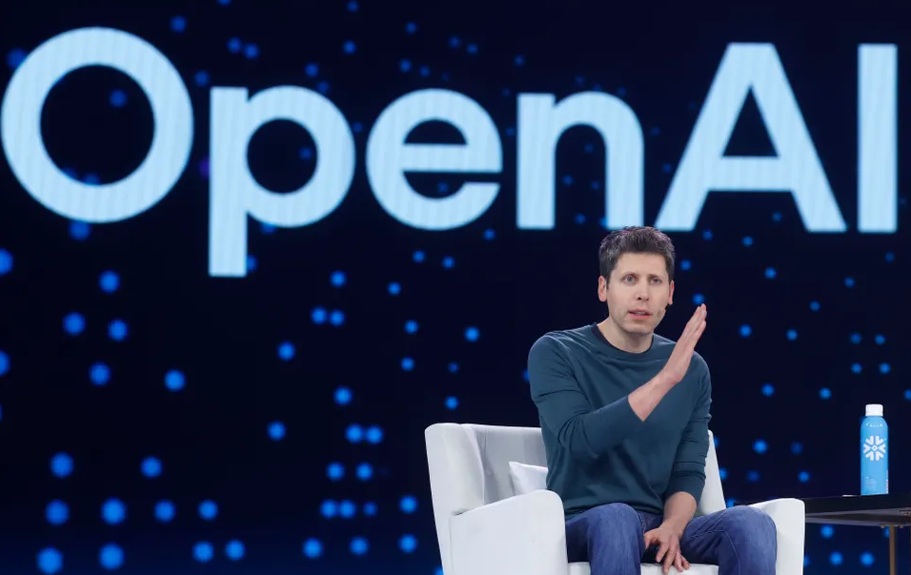
Photo: Justin Sullivan | Getty Images
In a striking echo of the ride-sharing wars of the 2010s, OpenAI is reportedly mulling drastic price cuts, according to the Wall Street Journal. CEO Sam Altman has admitted that high AI costs have become "a huge issue" as corporate executives balk at soaring monthly bills. But beneath this surface-level price war lies a deeper, irreversible tectonic shift: the artificial intelligence market is rapidly commoditizing, and open-source architectures are the primary reason why.
The catalyst for this panic is clear. The success of models like DeepSeek (including its groundbreaking R1 reasoning architecture and V4 iterations) has definitively proven that open-weight systems can perform nearly on par with frontier closed systems at a mere fraction of the operational cost. Why pay a premium for GPT-4 when a self-hosted Llama 3 or DeepSeek model delivers comparable intelligence for one-third to one-sixth the price? This economic reality is forcing proprietary giants to fight a war they are structurally ill-equipped to win.
The financial math behind OpenAI's strategy is precarious at best. Internal documents show that while the company made $5.7 billion in revenue in Q1 2026, it suffered an adjusted operating loss of approximately $7 billion. Slashing token prices now will only widen these multi-billion-dollar deficits. They are effectively using investor cash to subsidize your usage, mirroring the exact "grow-at-all-costs" playbook of Uber and DoorDash. However, unlike those markets, the AI industry has a structural feature that will prevent a successful long-term monopoly from emerging.
Why Open-Source is Winning the Volume Race
The narrative that closed models are inherently superior is crumbling. Enterprises have discovered that for the vast majority of daily production workloads—classification, data extraction, code review, and customer support—open-weight models are not just viable; they are superior from a total cost of ownership perspective.
- Extreme Cost Efficiency: Open-source architectures utilize hardware optimization and advanced reasoning pathways to deliver comparable intelligence at roughly one-third to one-sixth the cost of traditional API models.
- Model Distillation: Organizations can take reasoning paths from massive models to train small, localized versions capable of complex tasks (like competitive math) that run locally on consumer hardware.
- Data Sovereignty: Heavyweights like Goldman Sachs and JPMorgan Chase favor open-weight options because they can self-host on private servers, removing the risk of data leakage to external providers.
- Ecosystem Velocity: When a lab releases a breakthrough like Multi-head Latent Attention (MLA), the global community integrates it instantly, accelerating innovation far beyond the walls of a single company.
This shift is already visible in the market. On developer networks like Vercel and OpenRouter, DeepSeek's share of AI usage exploded from 1% to 17% in a single month, eating directly into OpenAI's traffic. Giants like AT&T have integrated open-source workflows to cut data processing times from 15 hours to under 5. The migration is accelerating because the engineering math has flipped: the cost of switching is now lower than the cost of staying.
How Black Entrepreneurs & Communities Can Leverage This Shift Right Now
For Black developers, founders, and community leaders, the collapse of the proprietary AI premium is not just a market story—it is a wealth-building blueprint. Historically, emerging technologies have excluded Black communities through high cost barriers, gatekeeping, and biased systems. Open-source AI changes that equation entirely. Here is how to act immediately.
1. Launch AI-Powered Services Without Venture Capital. The old model required massive funding to pay OpenAI or Anthropic for every API call. Now, a Black-owned consulting firm can download DeepSeek or Llama 3, fine-tune it on their own industry data (for example, grant writing, contract analysis, or real estate valuation), and offer white-labeled AI services to local businesses. The marginal cost per customer drops to nearly zero. Start with Ollama or Hugging Face to run models on a standard laptop.
2. Build Culturally Competent Tools on Your Own Infrastructure. Closed models often reflect mainstream cultural blind spots—poor handling of AAVE, lack of diverse health data, or biased hiring algorithms. With open weights, Black developers can fine-tune models using culturally specific datasets to serve Black healthcare providers, HBCUs, or media companies. Organizations like Alabama.AI and Black in AI are already pioneering this work. You can do the same for your niche.
3. Monetize Model Distillation for Local Enterprises. Large open models (70B+ parameters) are powerful but heavy. You can distill them into small, fast models that run on a smartphone or a $200 Raspberry Pi. Offer this service to Black-owned retail shops, churches, or community banks: an AI assistant that handles appointment scheduling, Q&A about services, or fraud detection—without sending customer data to a Silicon Valley server. This creates recurring revenue while protecting community privacy.
4. Capture the "Model Ops" Consulting Wave. Fortune 500 companies are racing to migrate from OpenAI to self-hosted open models (AT&T, Goldman Sachs, Shopify). They need technical talent to do it. Black technologists can position themselves as certified experts in open-weight deployment (e.g., on AWS SageMaker or runpod.io). The skill set is learnable in 3–6 months via free resources like Fast.ai and Hugging Face courses. Charge enterprise rates to bridge the gap.
5. Build Community-Owned AI Infrastructure. The most radical opportunity is cooperative ownership. Black-led economic development organizations can pool resources to purchase a single high-performance GPU server (costing as little as $5,000–10,000 refurbished) and host open models for dozens of local businesses under a collective usage model. This replicates the success of Black-owned credit unions and co-ops but for the AI age. No monthly API bills. No data leaving the community. Full ownership.
Immediate action step: This week, download a model via Ollama (meta/llama3-8b). Run it locally. Build one small tool—a text summarizer, a chatbot for your portfolio, or a data extractor. The barrier to entry is now technical curiosity, not budget.
The Uber Trap Fails Without a Monopoly
Critics might point to the future and warn that once the subsidies end, prices will skyrocket, just as they did for ride-sharing. But this analysis misses a fundamental difference. Uber succeeded in raising prices because they drove local taxi companies out of business, leaving consumers with few alternatives. OpenAI does not have a monopoly on intelligence. It never will.
If OpenAI tries to double its API prices to become profitable, a company can download an open model like Llama 4 or a DeepSeek iteration that same afternoon. The alternative cannot be driven out of business because it is decentralized, free to download, and funded by giants like Meta (who release Llama to commoditize the software layer and sell more cloud compute on AWS and Azure). The future "price hike" won't be a flat increase—it will be a tiered premium for hyper-advanced agentic capabilities that open-source hasn't replicated yet, while the commodity layer of intelligence trends toward zero.
The market is settling into a hybrid reality. For day-to-day production workloads, the market has shifted heavily toward open-weight architectures. Closed models will increasingly be reserved for specialized, hyper-advanced reasoning tasks that open-source hasn't yet replicated.
We are witnessing the end of the "intelligence scarcity" narrative. The massive deficits run by OpenAI and Anthropic—subsidized by investor capital in a race for IPO market share—are ultimately a rearguard action. They are fighting to remain relevant as the foundational layer of AI becomes a low-margin, highly competitive utility. For Black businesses and communities, the signal is clear: lock-in to a proprietary API today is a bet against your own economic independence. The only sustainable moat is not the model itself, but the infrastructure and community-specific data you control.
No Ads. By Us. For Us.
This article was made possible by readers like you. We hope it inspired you to support Emerald Book, so we can continue producing content like this.
We will never show you ads, sell your data, or require a subscription to consume our content. Your gift helps us keep the truth accessible.
Click the Support button to give a gift of any amount today.
Thank you for making this work possible.