

Emerald Pages
◆
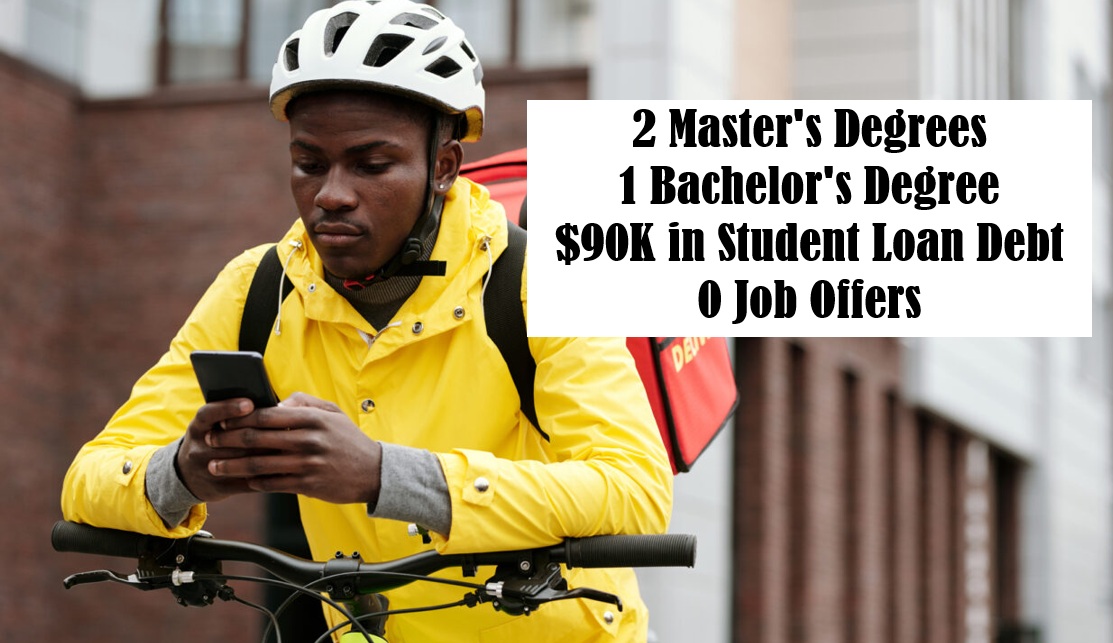
Photo: Emerald Book Image
For the price of a starter home in a midwestern suburb, the modern American university now offers a historically unprecedented outcome: a four-year degree that leaves you with a higher chance of being unemployed than if you had never enrolled at all. According to tracking data from the Federal Reserve Bank of New York and the Economic Policy Institute, the unemployment rate for recent college graduates (ages 22–27) has risen to approximately 5.7%, surpassing the general population's jobless rate of 4.2% for the first time in modern economic history without a recession occurring.
This is not a temporary blip caused by a pandemic or a tech correction. It is the structural endpoint of a 30-year transformation in which higher education deliberately evolved from a public good into a price-insulated cartel. By restricting supply, capturing federal loan dollars, and offloading workforce training onto unpaid internships, universities have successfully raised prices while systematically destroying the value of their own product. The result is a generation of debt-trapped, over-credentialed graduates who lack practical skills, forcing them into the gig economy just to service loans that cannot be discharged in bankruptcy.
The Numbers That Broke the Promise
The data reveals a clear and disturbing divergence between the cost of a degree and its labor market return. While older, established college graduates (ages 22–65) still enjoy a relatively low unemployment rate of roughly 3.1%, the cohort that just walked across the stage is facing a brutal reality. The unemployment rate for recent graduates sits at 5.7%, significantly higher than the national average of 4.2%. Even more telling, the underemployment rate for recent graduates hovers near 41.5% to 42.5%, meaning nearly half of young degree-holders work in retail, hospitality, or administrative support roles that do not legally or practically require a bachelor's degree.
This collapse is driven by three distinct market shifts. First, the white-collar sectors that traditionally consume the most college grads—technology, consulting, and finance—have experienced sharp hiring contractions and corporate layoffs. Second, the entry-level bottleneck has tightened dramatically; hiring rates have dropped back to levels not seen since the aftermath of the Great Recession. Third, and most ominously, companies are claiming artificial intelligence is now automating the precise rote research, writing, and coding tasks that used to be assigned to first-year hires, justifing the elimination of traditional foot in the door jobs for profit.
- Recent Grad Unemployment (Ages 22–27): ~5.7% (higher than the national average)
- Overall U.S. Unemployment: ~4.2% to 4.3% (lower than new degree holders)
- Underemployment Rate: ~41.5% – nearly half of grads work jobs that don't require a degree
- High School Grads (No Degree) Unemployment: ~7.2% (the only group doing worse)
How the Cartel Defied Economics
The obvious question is how universities managed to keep raising prices while their product's value plummeted. The answer lies in four specific market distortions that insulate higher education from normal competitive forces. First, the separation of price from value via third-party financing: over $135 billion in annual federal loan injections means students never feel the true cost at the point of sale. Second, prestige pricing—if a university dropped tuition to reflect actual instructional costs, application volume would actually fall because consumers equate higher prices with higher quality.
Third, the rankings arms race: colleges compete not on learning outcomes but on U.S. News & World Report metrics that reward spending on luxury dorms, recreation centers, and administrative bloat. Fourth, and most critically, the HR legal shield: corporate America acted as the cartel's enforcer by mandating four-year degrees as an automated screening tool, forcing consumers to pay the university's toll just to get past resume-filtering software. Between 2016 and 2021, per-student spending on administration increased by 6.3% while actual instructional spending fell by 4.7%. The cartel prioritized bureaucracy over teaching because the market allowed it.
The Internship Tax & The Skill Gap
Because universities refuse to integrate actual workforce training into their expensive curricula, the entire burden of proof has shifted onto the student's personal time and dime. Employers have known for decades that a resume with a 4.0 GPA but zero internship or project experience is practically unhireable. The difference today is that the cost of that credential has skyrocketed while its market value has cratered. Roughly 70% of college faculty are now adjuncts or part-time instructors—gig workers paid a few thousand dollars per course with no benefits—while the school charges students full luxury prices.
In a predatory twist, universities have monetized the internship loophole by requiring students to pay full tuition rates for "internship credits." The student pays the school for the privilege of working for free for a corporation. The university profits from a job placement they didn't create, while the student emerges with debt and no guarantee of employment. Meanwhile, corporations have eliminated the robust, multi-month entry-level training pipelines they offered in the 1990s, expecting new hires to be revenue-positive on day one.
The Three Phases of Collapse
This systemic failure did not happen overnight. It progressed through three distinct historical phases. Phase 1 (1990s–2000s) was credential inflation: the "college for all" narrative flooded the market with bachelor's degrees, turning a premium differentiator into a basic high-school equivalent. Phase 2 (2010s) was the Great Recession backlog: millions of experienced professionals took pay cuts and flooded entry-level roles, squeezing out new graduates. Universities responded by aggressively pushing expensive master's degrees as the "new bachelor's degree," trapping students in a secondary debt loop.
Phase 3 (present) is the corporate shift to a "low-hire, low-fire" model. Employers have frozen true entry-level training. Remote work and AI tools have allowed companies to automate or outsource the junior-level analytical tasks that used to be a graduate's foot in the door. The result is a labor market where a degree no longer guarantees access to the middle class. For the first time, the cartel's psychological promise—"pay us money, and we will guarantee your entry into the middle class"—is empirically false.
The Future: Bypassing the Cartel
The breaking point has finally arrived. Because tuition has crossed the threshold of what entry-level salaries can support, enrollment is declining nationwide, and the corporate world is actively dismantling the degree requirement. Major employers are shifting to skills-based hiring, using practical tests and portfolio reviews instead of four-year degree filters. Corporate apprenticeships, coding bootcamps, and co-op university models (where students work paid corporate jobs as part of the curriculum) are surging in popularity. The 2+2 community college strategy—knocking out general requirements at a fraction of the cost before transferring to a state university—offers the same diploma for dramatically less debt.
The higher education cartel is not going to reform itself. It will only respond to market pressure. When consumers finally refuse to pay luxury prices for a commoditized product that no longer delivers on its promise, the bubble will burst. For Gen Z and the generations that follow, the rational choice is increasingly clear: treat college purely as a transactional networking hub and internship-launching pad, or bypass it entirely in favor of direct skill acquisition. The degree is no longer a golden ticket. It never really was.
No Ads. By Us. For Us.
This article was made possible by readers like you. We hope it inspired you to support Emerald Book, so we can continue producing content like this.
We will never show you ads, sell your data, or require a subscription to consume our content. Your gift helps us keep the truth accessible.
Click the Support button to give a gift of any amount today.
Thank you for making this work possible.