

Emerald Pages
◆
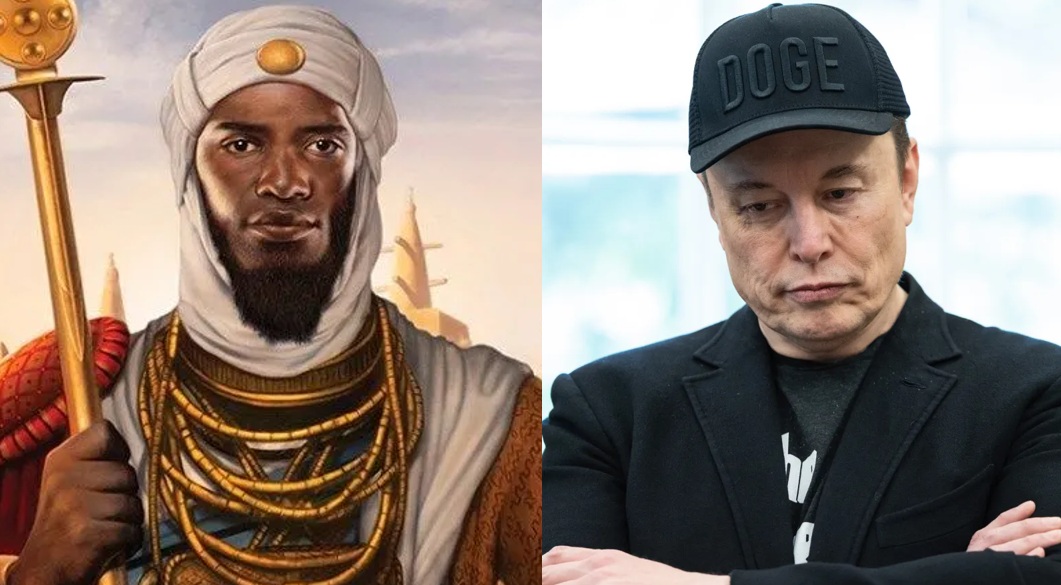
Photo: Emerald Book Image
On Friday, June 12, 2026, the financial world declared a new milestone. Headlines from the Wall Street Journal to Forbes blared that Elon Musk had become the world's first trillionaire, thanks to a record-shattering SpaceX IPO that sent his net worth soaring past $1.1 trillion. But there is just one problem: he doesn't have a trillion dollars. Not even close. And by the only metric that matters for actual wealth — tangible, liquid, real assets — Musk isn't even the richest person in history's shadow.
To understand why, you have to look past the stock tickers and the blinking net-worth trackers. The title of "first trillionaire" belongs not to a tech mogul in a Tesla, but to a 14th-century emperor who rode across the Sahara with so much physical gold that he single-handedly crashed the economies of entire nations. His name was Mansa Musa, the ruler of the Mali Empire. And unlike Elon Musk, his wealth was real.
The modern definition of "net worth" is a magic trick. When Forbes calculates Musk's fortune, it multiplies the number of SpaceX and Tesla shares he owns by the current stock price. That number — $1.1 trillion — is what economists call unrealized paper wealth. It is not cash. It is not gold. It is not land you can walk on. It is a mathematical prediction of what his shares might sell for if he sold them all at once — which he can't. According to the BBC's coverage of the IPO, Musk is legally barred by "lock-up" agreements from selling any of his new SpaceX stock for at least a full year. He cannot touch that money.
The Mansa Musa Standard: Tangible Dominance
Now, let us talk about the actual first trillionaire. Mansa Musa, who ruled Mali from 1312 to 1337, presided over an empire that produced more than half of the world's gold supply. He owned the land, the mines, and the salt reserves — salt being as valuable as gold in the 14th century. And he did not own it in shares or derivatives. He owned it in physical, weigh-it-on-a-scale, spend-it-in-a-market reality.
- Pure Tangible Assets: Mansa Musa personally controlled every gold mine in Mali. Elon Musk's wealth is tied to volatile stocks that could crash tomorrow. Musa's gold would still be gold.
- Absolute Liquidity: Musk cannot buy a cup of coffee with a share of SpaceX. Mansa Musa, during his 1324 pilgrimage to Mecca, traveled with a caravan of 60,000 men and camels carrying literally tons of gold dust and solid bars.
- Real Economic Impact: When Elon tries to spend big, his stock price collapses. When Mansa Musa gave away gold in Cairo, he caused a hyperinflation crisis that tanked the Egyptian economy for a full decade. That is real wealth.
Conservative modern estimates place Mansa Musa's net worth at around $400 to $500 billion adjusted for inflation. But those estimates miss the point entirely. Because gold was the global reserve currency of his era, and he controlled the majority of its supply, his effective purchasing power and economic control scaled to the equivalent of multiple trillions of modern dollars. He didn't need a bank loan to buy something. He just paid in gold.
How Elon Musk Actually Lives: The Debt House of Cards
Here is the uncomfortable truth that the headlines won't tell you. Elon Musk owes more money than he actually has in the bank. According to public disclosures and financial filings, Musk's liquid cash reserves sit below $850 million. That sounds like a fortune, sure. But when you owe banks tens of billions of dollars — loans taken out against his stock to buy Twitter (now X), fund xAI, and fuel his lifestyle — the math reverses.
Banks don't look at Musk's checking account. They look at his stock portfolio. And they allow him to play a game called "buy, borrow, die." Instead of selling stock and paying massive capital gains taxes, Musk borrows billions of dollars using his shares as collateral. The loans are not taxable income. He gets the cash tax-free. But it is debt. Pure, unadulterated, interest-accruing debt.
If the stock market crashes — if Tesla or SpaceX drops 70% — the banks will issue a margin call. They will demand immediate repayment of his loans. And because Musk doesn't have the cash, he would be forced to sell his shares at the worst possible moment, triggering a catastrophic financial spiral. His entire empire is a house of cards built on the assumption that stock prices only go up.
No Ads. By Us. For Us.
This article was made possible by readers like you. We hope it inspired you to support Emerald Book, so we can continue producing content like this.
We will never show you ads, sell your data, or require a subscription to consume our content. Your gift helps us keep the truth accessible.
Click the Support button to give a gift of any amount today.
Thank you for making this work possible.