

Emerald Pages
◆
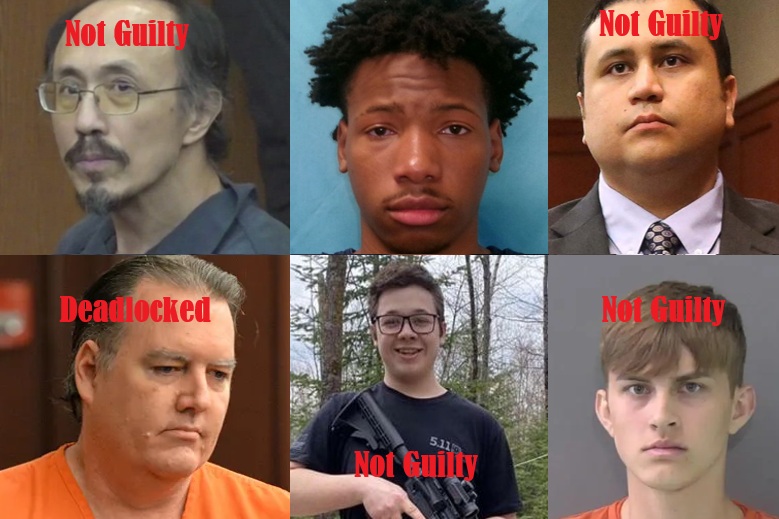
Photo: Emerald Book Image
On June 9, 2026, Karmelo Anthony was sentenced to 35 years in a Texas prison. The evidence was not in dispute: he did not leave his seat. He did not throw the first punch. He did not chase anyone. According to testimony, Anthony sat under a tent, was asked to leave, and when he refused, he warned, "Touch me and see what happens." When Austin Metcalf touched him, Anthony pulled a knife and stabbed him once in the chest. The jury labeled him the "initial aggressor" — not because he moved, but because he spoke.
The ruling sits uneasily against a growing tapestry of similar cases where the defendants were white or non-Black, initiated physical contact, chased their victims, or admitted to profiling — and yet were acquitted or received dramatically lighter sentences. Legal scholars call it the "reasonableness gap": the racialized standard by which juries determine who gets to claim self-defense and who gets labeled a threat.
The prosecution’s case hinged on a specific legal fiction: that by refusing to move and issuing a conditional warning, Anthony had "premeditated" the stabbing. Under Texas law, intent can be inferred entirely from circumstantial evidence — including the use of a deadly weapon and the content of a defendant’s speech. The jury agreed, rejecting his self-defense claim and ignoring that Metcalf was the one who made physical contact first.
The Comparator Cases: A Study in Contrast
To understand the disparity, one need only look at four recent high-profile cases involving white or non-Black defendants who did far more than refuse to leave a seat — and faced no consequences or drastically reduced charges.
- Kyle Rittenhouse (2021): Traveled across state lines with an AR-15-style rifle to a protest. Killed two people and injured a third. The jury accepted his self-defense claim despite him chasing Joseph Rosenbaum moments before the shooting. He was acquitted of all charges.
- Rick Chow (2026): The South Carolina store owner falsely accused 14-year-old Cyrus Carmack-Belton of stealing water. Chow and his son chased the unarmed (though later found to have a gun he dropped) teenager for over 130 yards. Chow shot Cyrus in the back. A jury found him not guilty of murder, accepting his defense that he was protecting his son.
- George Zimmerman (2013): The neighborhood watch coordinator profiled Trayvon Martin, called police to report a "suspicious" Black teenager, and followed him despite a dispatcher suggesting he not do so. After a physical altercation that Zimmerman initiated by exiting his vehicle, he shot and killed Martin. He was acquitted.
- Caysen Allison (2025): In a case factually similar to Anthony's (a Texas school stabbing), Allison was found not guilty of murder. The jury accepted that he acted without intent to kill, convicting him only of criminally negligent homicide. He faced a maximum of two years, later enhanced to ten by a judge, but avoided the murder conviction that sent Anthony away for 35 years.
In each of these cases, the defendants either chased, shot first, carried weapons to the scene, or admitted to profiling. In Anthony’s case, he was sitting down. He did not move. And yet he is the one serving a sentence that will keep him behind bars until his 50s.
The 'Passive Aggressor' Legal Doctrine
Anthony’s trial revealed a startling legal expansion: the concept of the "passive aggressor." Prosecutors successfully argued that a person can be the initial aggressor without throwing a punch, without pursuing the victim, and without leaving their seat. All that was required was a verbal dare and a refusal to comply with a request to leave.
This standard was never applied to Rittenhouse, who was actively running through the streets of Kenosha with a rifle. It was not applied to Chow, who chased a child down a public road. It was not applied to Zimmerman, who followed Trayvon Martin into a dark pathway. The reason, critical race theorists argue, is that the legal system consistently interprets Black male presence — even stationary presence — as inherently threatening, while interpreting white action as reactive and reasonable.
The data supports this intuition. Studies on implicit bias consistently show that mock jurors perceive Black defendants as more dangerous, less trustworthy, and more likely to have acted with "intent" than white defendants engaged in identical behaviors. When a white defendant says "I feared for my life," the jury leans toward sympathy. When a Black defendant says the same thing, the prosecution calls it a "calculated threat."
The Road Ahead
Karmelo Anthony’s legal team has already signaled an appeal, focusing on the jury instructions regarding the "initial aggressor" definition. But for many observers, the damage is already done: a 17-year-old who never left his seat will spend the prime of his life in a Texas prison, while others who chased, shot, and profiled now walk free, record expunged, or await minor sentences.
The Anthony verdict is not an outlier. It is a symptom. Until the legal definition of "reasonableness" includes the reality of Black fear — and until juries are required to examine who actually moved first, not just who spoke first — the scale will remain tilted. For now, the message from Collin County is clear: you can be an aggressor without moving a muscle, as long as you are Black.
No Ads. By Us. For Us.
This article was made possible by readers like you. We hope it inspired you to support Emerald Book, so we can continue producing content like this.
We will never show you ads, sell your data, or require a subscription to consume our content. Your gift helps us keep the truth accessible.
Click the Support button to give a gift of any amount today.
Thank you for making this work possible.