

Emerald Pages
◆
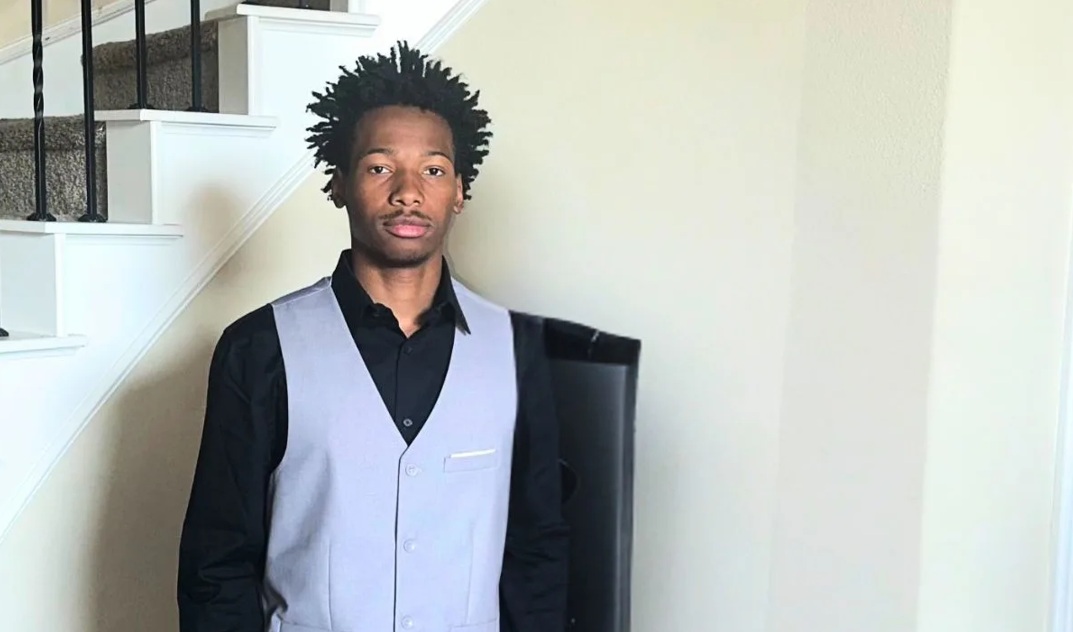
Photo: Karmelo Anthony @niquealex
He was just sitting there. By himself. Under a tent during a thunderstorm, trying to stay dry. Karmelo Anthony, a 19-year-old track athlete, had walked over to see a childhood friend. When the rain came, he sat down. He didn't approach anyone. He didn't raise his voice first. He simply existed in the wrong place at the wrong time. But on June 9, 2026, a Collin County jury convicted him of murder—transforming a terrified teenager into a legal anomaly known as a "passive aggressor."
The American legal system has always struggled to differentiate between a threat and a warning. Under Texas law, the phrase "Touch me and see what happens" can either be a frightened child's last attempt to avoid violence—or a provocation that forfeits your right to live. In the case of State of Texas v. Karmelo Anthony, the jury decided it was the latter. But to a growing number of observers, this verdict represents something darker: a legal framework where a Black teenager sitting alone is expected to vanish, while the white athletes who confronted him are given the grace of "reasonable reaction."
The facts of the case are not seriously in dispute. On April 2, 2025, during a rainy track meet at David Kuykendall Stadium in Frisco, Texas, Karmelo Anthony entered a team tent belonging to Frisco Memorial High School. His own school, Centennial, had not brought a tent. He knew a student inside. He exchanged a handshake, then sat down to wait out the storm. What happened next would cost a young man his life and another his freedom.
The ‘Violence’ of Sitting Still
Witnesses testified that Anthony was asked to leave approximately 15 times. He refused. But here is where the legal narrative splits from human reality. To the prosecution, his refusal to move was an act of "defiance" and "provocation." To the defense, it was a teenager stubbornly trying to stay dry. The prosecution painted Anthony as an instigator because he allegedly called the Memorial students "a bunch of pussies" and told them "you're not going to do nothing about it." But even if true—and disputed by the defense—these are words. Words spoken by a single, outnumbered teenager to a group of rival athletes.
The tipping point came when Austin Metcalf, a 17-year-old athlete, approached Anthony. According to testimony, Metcalf pushed Anthony with both hands. It was a shove—non-lethal, unarmed. But for Anthony, it was the moment his fear became real. He had warned them: "Touch me and see what happens." He reached into his backpack and pulled out a 3.5-inch folding knife. In a single motion, he stabbed Metcalf in the chest. The blade severed the heart. Austin Metcalf was dead within minutes.
- The Warning Paradox: Under Texas law, telling someone "Don't touch me or I'll defend myself" is legally considered provocation, not de-escalation.
- The Trespass Trap: Even though the stadium was public property, the team tent was ruled a "private space," giving Metcalf the right to use force to remove Anthony.
- The Proportionality Problem: A shove was deemed a minor threat; a knife in response was deemed murder—ignoring that Anthony was outnumbered and cornered.
The jury deliberated for less than three hours. They returned a unanimous guilty verdict. In the eyes of the law, Karmelo Anthony was not a scared kid who made a split-second decision. He was a "passive aggressor"—a legal fiction that allows the state to punish someone for starting a fight they never wanted, simply because they didn't run away.
Why ‘Stand Your Ground’ Only Applies to Some
The racial dynamics of this trial have ignited protests outside the Collin County Courthouse. Critics point to a glaring inconsistency: when white defendants in similar circumstances claim self-defense, they are often acquitted. Kyle Rittenhouse walked after killing two men with an AR-15, arguing he feared for his life. George Zimmerman was acquitted after following and killing Trayvon Martin. But Karmelo Anthony—who never left his seat, who warned his attackers before they touched him—will spend years, if not decades, in a Texas prison.
The prosecution's case hinged on a technicality buried deep in the Texas Penal Code. Under Section 9.31, a person forfeits the right to self-defense if they "intentionally provokes the other's use or attempted use of unlawful force." By telling Metcalf "Touch me and see what happens," the state argued, Anthony issued a conditional threat that invited the physical confrontation. The jury agreed. But as defense attorney Mike Howard asked in closing arguments: "What was he supposed to say? 'Please don't hurt me'? He was a kid alone in a tent full of rivals. He was terrified."
The sentencing phase is now underway. Because Anthony was 17 at the time of the offense, life without parole is not an option. The defense is expected to argue that the crime was committed under "sudden passion," which could reduce the sentencing range from 5–99 years to 2–20 years. But regardless of the final number, the message has been sent: in Texas, if you are a Black teenager sitting alone in the wrong place, you have no right to warn. No right to stand your ground. And no right to be afraid.
Karmelo Anthony didn't want to be a killer. He wanted to be dry. He wanted to be left alone. Instead, he became the latest casualty of a legal system that punishes the fear it refuses to understand. He wasn't an aggressor. He was a child who ran out of options. And the law, cold and indifferent, turned that into murder.
No Ads. By Us. For Us.
This article was made possible by readers like you. We hope it inspired you to support Emerald Book, so we can continue producing content like this.
We will never show you ads, sell your data, or require a subscription to consume our content. Your gift helps us keep the truth accessible.
Click the Support button to give a gift of any amount today.
Thank you for making this work possible.