

Emerald Pages
◆
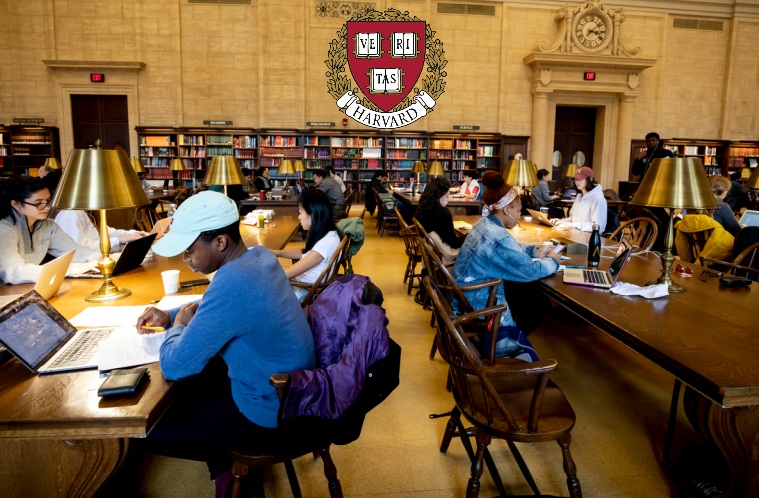
Photo: Harvard University
Harvard University's official overall acceptance rate for the Class of 2029 stands at 4.18%. It is a number that haunts the dreams of millions of high school students worldwide, a statistical barrier that has come to represent the pinnacle of academic exclusivity. But that number is a carefully constructed illusion. For the vast majority of applicants—those without institutional connections—the real acceptance rate hovers between a brutal 1.9% and 2.6%. Meanwhile, a specific subset of applicants enjoys odds that look nothing like the Ivy League and everything like a state school.
The difference between the public headline and the reality for a standard applicant comes down to the structure of the admissions pool. Harvard's overall acceptance rate includes highly sought-after institutional sub-pools—recruited athletes, legacy applicants, dean's interest list candidates, and faculty children—that enjoy dramatically higher admission rates. When these groups are subtracted, the remaining pool of "general public" applicants faces drastically compressed odds. Recruited athletes make up roughly 10% to 20% of an incoming class. Legacy applicants, children of Harvard alumni, traditionally make up between 14% and 36% of admitted students. And data revealed during historic admissions lawsuits showed that these "hooked" groups have an aggregate acceptance rate upwards of 30% to 45%.
The most striking statistic to emerge from the Students for Fair Admissions (SFFA) Supreme Court lawsuit was the precise breakdown of legacy admission rates. Court filings and subsequent civil rights complaints tracked over multi-year cycles revealed that legacy applicants enjoyed a 33.6% acceptance rate, compared to under 6% for non-legacies during the same period. Donor-related applicants on the "Dean's or Director's Interest List" were admitted at a 42.2% clip. Faculty and staff children saw a 46.7% acceptance rate. For a legacy applicant, applying to Harvard is statistically equivalent to applying to a flagship state university like the University of Georgia (35-40%) or the University of Maryland (45%).
The Two Parallel Universities
This structural divide effectively creates two completely different schools operating under the same name. The first is Harvard "Public" — the school the general public competes for, with a 1.9% to 2.6% acceptance rate. This is the most selective institution in the world, requiring near-flawless academic metrics, world-class extracurricular achievements, and an enormous amount of statistical luck. The second is Harvard "Legacy" — the school open to children of alumni. While still academically rigorous, it filters applicants through a statistical lens identical to a top-30 public flagship university, making admission a highly achievable probability for qualified candidates.
To put this in perspective, consider this: out of roughly 500 to 700 four-year public colleges and universities in the United States, the average acceptance rate sits at 77%. Only about 20 to 25 prominent state institutions have a baseline acceptance rate lower than what a legacy applicant experiences at Harvard. These elite public schools include UCLA (~9%), UC Berkeley (~11%), the University of Michigan (~18%), and the University of Texas at Austin (~29%). For a legacy applicant, Harvard is not an outlier in difficulty—it is functionally a state school with a famous name.
- Legacy applicants at Harvard: 33.6% acceptance rate — equivalent to University of Georgia or University of Maryland.
- General public applicants at Harvard: 1.9% to 2.6% acceptance rate — among the lowest in the world.
- Donor-related applicants: 42.2% acceptance rate — easier than most selective public universities.
- Faculty children: 46.7% acceptance rate — nearly one in two admitted.
The advantage is not merely about wealth, although wealth certainly correlates. The data shows that the standalone institutional "hook" of being a legacy carries vastly more mathematical weight than simply coming from a wealthy family. When comparing applicants with identical SAT/ACT scores, wealthy non-legacy students (top 1% income) are roughly 1.3 to 2 times more likely to be admitted than middle-class students, pushing their estimated acceptance rate to roughly 10-15%. But legacy applicants, regardless of wealth, are four times more likely to be admitted than identical non-legacy applicants, pushing their rate to the 33-34% range. According to Opportunity Insights research, legacy preferences single-handedly account for 46% of the entire admissions advantage that the top 1% holds over the middle class.
The Middle Class Crush
Perhaps the most disturbing finding from recent admissions data is the distinct "middle-class crush." Students whose parents make between $80,000 and $150,000 find themselves in an administrative dead zone. They do not possess the legacy, donor, or private school connections of the ultra-rich. But they also do not qualify for the active economic-diversity recruitment and institutional outreach programs aimed at low-income or first-generation students. As a result, middle-class and upper-middle-class applicants face the lowest acceptance rates of any income bracket—roughly 2% to 3%. Meanwhile, low-income students (bottom 20%) are 1.7 times more likely to be admitted than middle-class peers with identical test scores, pushing their rate to roughly 6-8%.
The final portrait of a Harvard class is starkly stratified. Analysis from tax records shows that 67% of Harvard undergraduates come from families in the top 20% of the U.S. income distribution. Fifteen percent of the student body comes from the top 1% alone. Only 4.5% of students come from the bottom 20% of earners. This is not a meritocracy. It is an inheritance, dressed in the language of selectivity.
The evolving landscape of higher education may eventually force change. Since the Supreme Court struck down affirmative action, elite universities have faced immense legal and public pressure to eliminate legacy preferences. MIT and Johns Hopkins have already banned the practice. But Harvard has historically defended the policy, continuing to weigh legacy status despite fierce public scrutiny and federal civil rights investigations. For now, the two Harvards remain. One is a mirage of exclusivity. The other is a family business.
No Ads. By Us. For Us.
This article was only made possible by readers like you. We hope it inspired you to support Emerald Book, so we can continue producing content like this.
We will never show you ads, never sell your data, and never require a subscription to consume our content. Your gift helps us keep the truth accessible.
Please click the Support button on the bottom right of your screen to make a gift of any amount today.
Thank you for making this work possible.