

Emerald Pages
◆
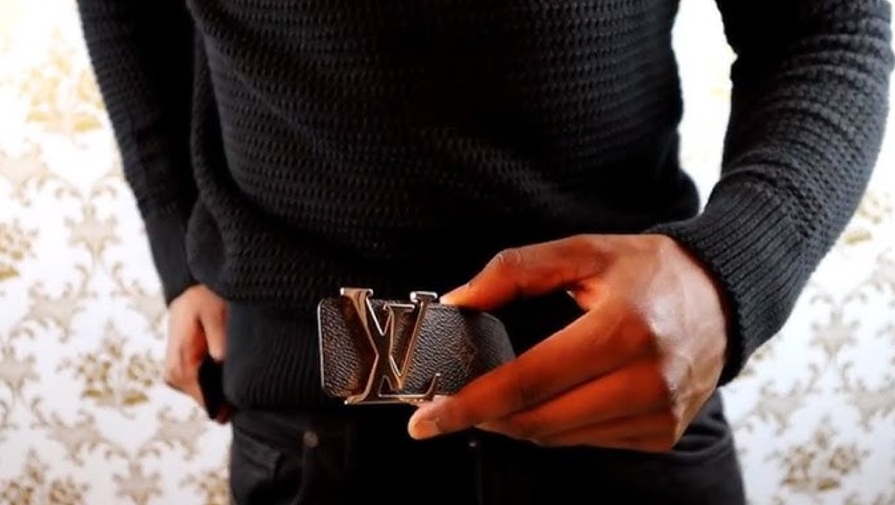
Photo: YouTube | A Closer Look
On any given city sidewalk, the flash of a brown and gold Louis Vuitton monogram has become a familiar sight. Conventional wisdom suggests that such visible displays of wealth signal a deep-pocketed owner. However, a growing body of peer-reviewed economic and sociological research spanning from 2009 to 2026 tells a very different story. The data consistently reveals that if you see someone wearing a prominently logoed luxury item, you are statistically looking at a middle-income, working-class, or lower-income shopper, not the ultra-wealthy.
This phenomenon is not an accident of bad taste, nor is it a simple case of financial illiteracy. Instead, global market analyses from Bain & Company and Boston Consulting Group (BCG), alongside academic papers published in the Journal of Marketing and the Quarterly Journal of Economics, show that the modern luxury economy is built on a pyramid. At the base are millions of "aspirational" buyers who save for months to afford entry-level status symbols, while the apex—where the truly wealthy reside—is a fraction of the customer base but accounts for the bulk of profit margins.
The breakdown is stark. When analysts count the number of individual people making purchases, the ultra-wealthy—often called VICs (Very Important Clients)—represent less than 1% of the customer base. High-net-worth individuals account for roughly 24% to 39%. That leaves the vast majority, a full 60% to 75%, as middle and lower-income consumers who stretch their budgets to own a piece of the brand. This "aspirational" class is the volume engine of the luxury industry, driving the overwhelming majority of foot traffic and entry-level sales, such as canvas wallets, belts, and the iconic Neverfull bag.
The Economics of "Loud" vs. "Quiet" Luxury
Why would a person with a modest income invest potentially thousands of dollars into a handbag or belt? The answer lies in a landmark 2010 study by Han, Nunes, and Drèze. The research categorizes luxury consumers into four groups, with the "Poseurs" being lower-income, status-seeking individuals who deliberately choose items with the largest, most recognizable logos. Conversely, the truly wealthy—referred to as "Patricians"—actively avoid such branding, paying a premium for "quiet luxury" that signals status only to other wealthy individuals.
This shift has created a distinct visual hierarchy. The loud Louis Vuitton monogram has become a tool for social climbing and a shield against discrimination, while the wealthy have migrated toward unbranded leather goods, exotic skins, and custom tailoring that the average passerby would never recognize as designer.
Survival Strategy, Not Irresponsibility
Sociologist Dr. Tressie McMillan Cottom, in her widely cited 2019 essay "The Poor Can’t Afford Not to Wear Nice Clothes," provides the human logic behind the data. She argues that for lower-income individuals—particularly those in marginalized communities—wearing a visible luxury item is often a defensive necessity. It serves as structural currency.
- The Shield Effect: A recognizable bag forces bank tellers, retail employees, landlords, and even police officers to offer basic respect and benefit-of-the-doubt that might otherwise be withheld.
- The Cost of Looking Poor: Studies show that individuals who appear impoverished face immediate gatekeeping, including denial of services and job discrimination. A luxury accessory buys social safety.
- Disproportionate Investment: Data from the University of Chicago and Wharton proves that lower-income minority households spend up to 30% more on visible luxury goods than white households making the exact same income, often at the expense of savings or non-visible goods.
This dynamic leads to a crucial reality: while White consumers represent roughly 70% of the total dollar value of luxury purchases due to their larger population size, the sacrifice is felt more acutely in lower-income and minority communities where spending on logos represents a larger percentage of disposable income.
The 2025-2026 Correction: When the Middle Class Stops Buying
The fragility of this economic model became brutally clear in the wake of inflation and rising living costs. Recent 2025 and 2026 reports from The Business of Fashion, McKinsey, and the Wall Street Journal show that Louis Vuitton’s parent company, LVMH, suffered consecutive quarters of declining sales. The reason was simple: the 70% to 75% of their customer base—the aspirational middle and lower class—was forced to pull back. According to YouGov BrandIndex, purchase intent for major luxury houses dropped sharply as working-class consumers prioritized rent and groceries over status symbols.
Interestingly, younger Gen Z and Millennial consumers are pivoting away from traditional "loud" luxury in favor of a "mass prestige" trend—choosing contemporary brands like Polène or COS that offer high-end aesthetics without the devastating financial commitment. This suggests that the era of the logo as the primary social signal may be waning, replaced by a new emphasis on value and subtlety.
In conclusion, the next time you see a gleaming Louis Vuitton monogram on the street, the evidence suggests you are witnessing a calculated act of social navigation rather than a display of idle wealth. It is the uniform of the aspirational class, bought with sacrifice, worn as armor, and studied intensely by economists who recognize that in our status-conscious world, looking poor is often a luxury that the poor simply cannot afford.
No Ads. By Us. For Us.
This article was only made possible by readers like you. We hope it inspired you to support Emerald Book, so we can continue producing content like this.
We will never show you ads, never sell your data, and never require a subscription to consume our content. Your gift helps us keep the truth accessible.
Please click the Support button on the bottom right of your screen to make a gift of any amount today.
Thank you for making this work possible.