

Emerald Pages
◆
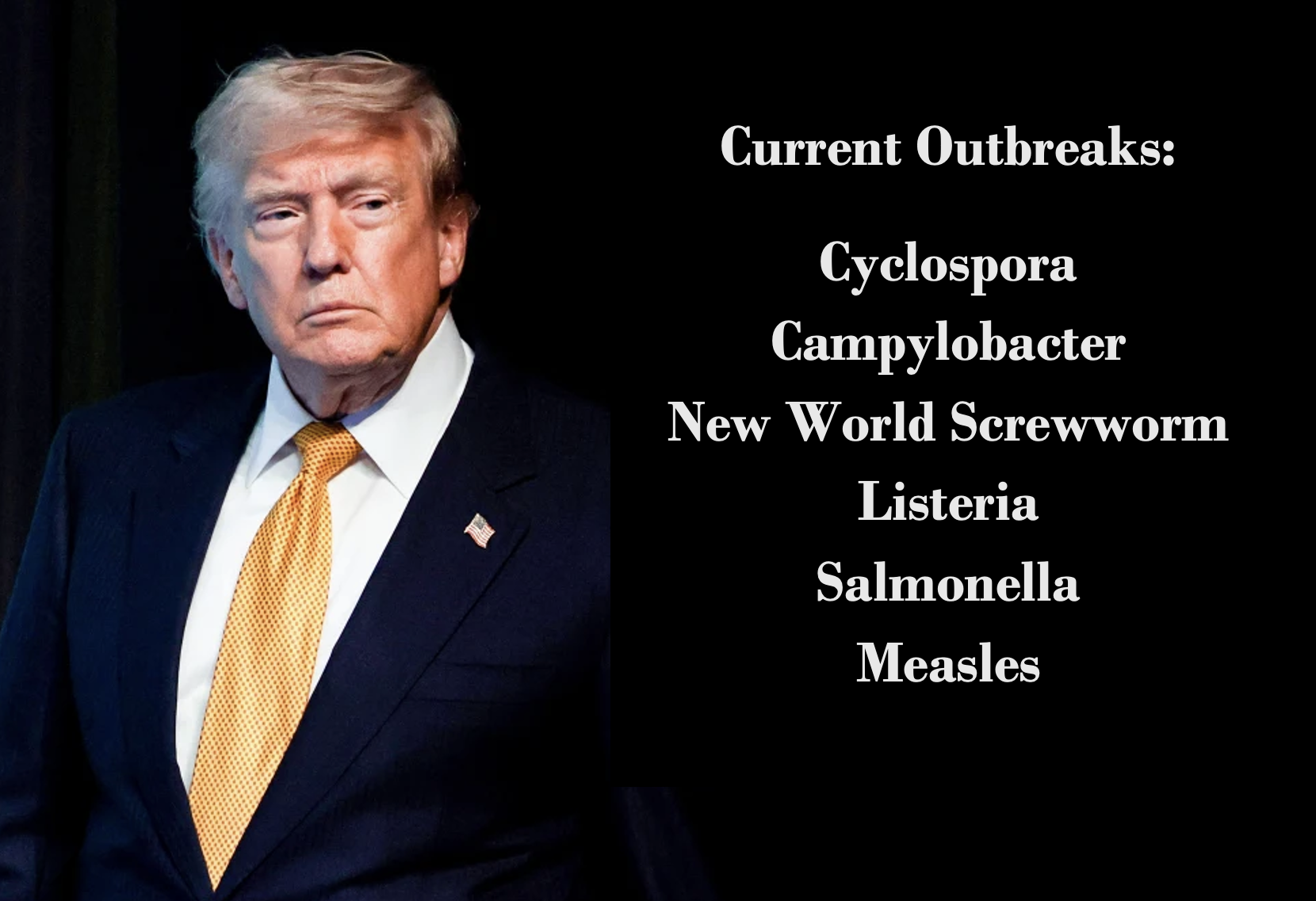
Photo: Emerald Book Image
In the summer of 2026, more than 11,500 Americans across 45 states are fighting severe, explosive diarrhea, debilitating stomach cramps, and profound fatigue. The culprit is Cyclospora, a microscopic parasite that has infiltrated the nation's lettuce supply. But for public health experts, the true cause of this crisis isn't just a contaminated field in Mexico; it is the systematic dismantling of the federal early-warning system designed to catch such outbreaks before they spiral out of control.
In July 2025, the Trump administration quietly scaled back the Foodborne Diseases Active Surveillance Network (FoodNet), a critical federal-state partnership that acted as a public health "smoke alarm." The program's mandatory tracking was reduced from eight pathogens to just two: Salmonella and E. coli. The remaining six, including Cyclospora, the deadly Listeria, and the highly contagious Shigella, were relegated to an optional status for already-overstretched state health departments. This policy shift, coupled with significant budget and workforce cuts at the CDC, FDA, and USDA, has created a vulnerability that experts say is fueling six active, simultaneous crises occurring right now—not historical examples, but real-time emergencies.
The current administration's approach marks a fundamental departure from the precedent set by previous presidents. After the tragic Jack in the Box E. coli outbreak in 1993, President Clinton created FoodNet. President Bush expanded import screenings, and President Obama signed the landmark Food Safety Modernization Act (FSMA), shifting the FDA's focus to prevention. In contrast, the Trump administration has treated these safety mechanisms as bureaucratic waste, actively scaling them back rather than expanding them. This has resulted in a "dangerous pivot toward the pre-Clinton era of passive, delayed data," according to critics.
The Policy Triggers: How the Infrastructure Was Dismantled
The 2026 Cyclospora crisis was not an accident. Public health experts point to four specific administrative actions that created the conditions for this and future outbreaks. The first and most direct was the decision to strip six major pathogens from FoodNet's mandatory tracking roster. The second was the dismantling of the USDA's National Advisory Committee on Microbiological Criteria for Foods, which was actively working on best-practice guidelines to prevent contamination. Third, the administration slashed funding for the Laboratory Flexible Funding Model (LFFM) by 25%, forcing hiring freezes and reducing diagnostic capacity at the state level. Finally, widespread staffing reductions at the CDC—which saw a 25% loss of its overall workforce and its specialized parasite team cut from 11 scientists to just 3—and a 20% operational staff loss at the FDA, created critical bottlenecks in inspections and response.
The Six Active Outbreaks Accelerated by These Policies—As of July 2026
Every pathogen and event highlighted below is causing active illnesses, recalls, or containment measures as of July 2026. These are not hypothetical scenarios; they are current crises public health experts are citing to illustrate the real-time impact of the administration's recent regulatory changes.
-
1. The Record-Breaking Cyclospora Outbreak
Current Status (July 2026): Actively peaking this summer, with the CDC and FDA issuing urgent investigation updates regarding 11,500+ suspected or confirmed cases across 45 states linked to contaminated lettuce.
The Disease: Parasitic intestinal infection triggering severe, "explosive" watery diarrhea.
The Policy Link: Stripped from FoodNet's mandatory tracking on July 1, 2025. The CDC's parasite team was slashed from 11 scientists to 3, and the team coordinating with Mexican safety investigators was eliminated. This dismantled the early warning system needed to detect and isolate the lettuce contamination before it left warehouses. -
2. Campylobacter in Raw Milk
Current Status (July 2026): Active outbreak sickening dozens across Idaho this year specifically due to raw milk distribution.
The Disease: Campylobacteriosis—bloody diarrhea, fever, and intense stomach cramping.
The Policy Link: The outbreak follows the administration's active political backing of raw milk distribution via HHS Secretary Robert F. Kennedy Jr., despite scientific warnings that pasteurization is required to kill Campylobacter. The pathogen was also removed from FoodNet's active tracking roster in 2025. -
3. The New Screwworm Livestock Outbreak
Current Status (July 2026): A massive agricultural emergency in Texas, where scientists are actively releasing millions of sterile flies to contain the flesh-eating parasite's spread after it reemerged in the United States in June 2026.
The Disease: New World Screwworm—a parasitic fly larva that burrows into living tissue of animals and livestock, fatal if untreated.
The Policy Link: Eradication relies on rigorous agricultural inspections. The USDA lost 18% of its total workforce in 2025, leaving inspection services severely understaffed and slow to halt the parasite's domestic reintroduction. -
4. Multi-State Listeria (Soft Cheese)
Current Status (July 2026): Active multi-state outbreak linked to soft ricotta cheese, with a death reported in Maryland; supply chains currently disrupted.
The Disease: Listeriosis—hospitalizes 95% of those infected with a 30% mortality rate.
The Policy Link: A 20% operational staff loss at the FDA caused a collapse in facility oversight, allowing structural sanitation failures at cheese packaging plants to go unnoticed until contamination reached grocery shelves. Federal investigators remain backlogged due to current staffing limits. -
5. Salmonella (Eggs)
Current Status (July 2026): Massive multi-state outbreak forcing the recall of 1.6 million dozen shell eggs; supply chains currently disrupted.
The Disease: Salmonellosis—severe gastrointestinal illness.
The Policy Link: While Salmonella was kept on the mandatory tracking list, the same 20% FDA inspector shortage allowed egg packaging plant sanitation failures to go undetected until after the products were distributed. Investigators remain backlogged due to staffing cuts. -
6. Measles (State Level)
Current Status (July 2026): Active multi-case outbreaks, most notably in Michigan.
The Disease: Highly contagious respiratory virus causing high fevers and dangerous complications.
The Policy Link: A 25% budget cut to the Laboratory Flexible Funding Model (LFFM) forced state health departments to pull frontline staff off routine immunization clinics just to manage the diagnostic backlogs created by the Cyclospora crisis.
Food safety experts warn that the U.S. has reached a dangerous "tipping point." The pathogens most likely to trigger the next major, unchecked outbreak are Listeria, Campylobacter, and Shigella. The concern is particularly acute for Listeria, which hospitalizes 95% of those infected and has a staggering 30% mortality rate. Without active, centralized tracking, a localized Listeria contamination in deli meat or cheese could quietly spread to dozens of states, leading to preventable deaths.
The administration has defended its actions, with HHS Secretary Robert F. Kennedy Jr. stating the Cyclospora crisis is "under control" and attributing the outbreak to an isolated supplier, while calling criticism of the budget cuts "invalid." The White House has dismissed allegations of corporate favoritism after it was revealed that Taylor Farms, the supplier linked to the outbreak, had donated $1 million to a pro-Trump super PAC and held private meetings with officials. Meanwhile, a coalition of blue states, including Illinois and California, has taken the administration to court over the $600 million in public health grant freezes, successfully blocking an attempt to have the lawsuit moved to a corporate-friendly monetary claims court.
As the legal battles unfold, public health experts are clear on one thing: the dismantling of the federal food safety infrastructure has created an environment where large-scale, multi-state outbreaks are not just possible, but a mathematical certainty. The interconnected nature of the U.S. food supply demands a strong, centralized, and active surveillance system. Without it, the Cyclospora outbreak of 2026 may be remembered not as a singular crisis, but as the beginning of a new, more dangerous era for America's food safety—one that is already upon us.
No Ads. By Us. For Us.
This article was made possible by readers like you. We hope it inspired you to support Emerald Book, so we can continue producing content like this.
We will never show you ads, sell your data, or require a subscription to consume our content. Your gift helps us keep the truth accessible.
Click the Support button to give a gift of any amount today.
Thank you for making this work possible.