

Emerald Pages
◆
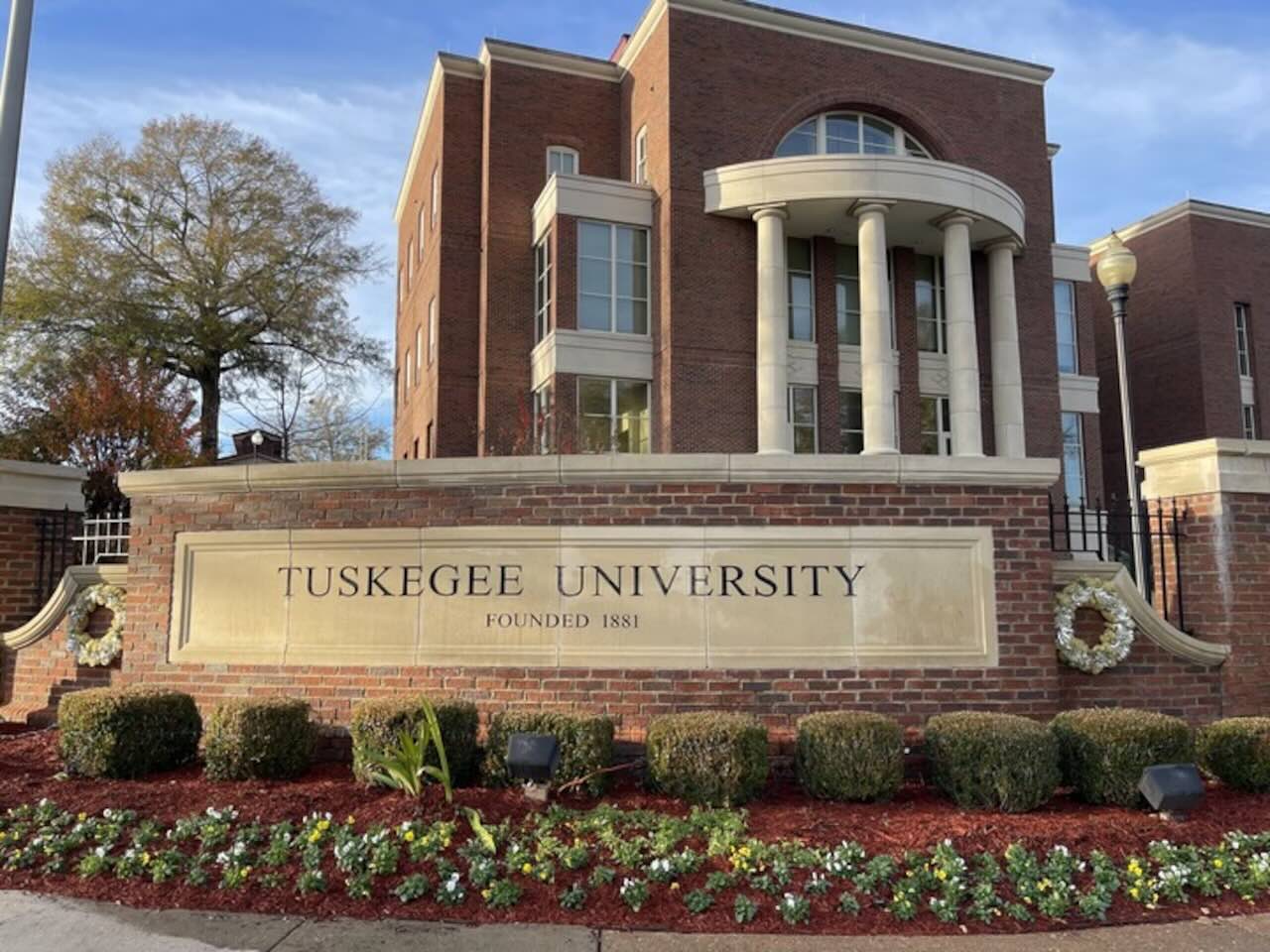
Photo: Hannah Denham | Hdenham@al.com
When Tuskegee University announced its updated dress code banning bonnets, durags, and bedroom shoes from classrooms and official events, university president Dr. Mark A. Brown framed it as a necessary step toward "professionalism" and "career readiness." The policy, set to take effect for the Fall 2026 semester, is being sold to students as a tool to prepare them for the corporate workforce.
But a closer examination of the data, the law, and the modern workplace reveals a stark reality: this ban has nothing to do with professional development. It is a personal preference imposed by a leader with a military background, supported by a flawed, outdated philosophy with no empirical evidence to back it up.
The policy's primary justification—that it creates positive first impressions with employers—collapses under scientific scrutiny. Psychological studies on "enclothed cognition" suggest that dressing formally can make an individual feel more focused, but this effect is tied to personal choice. When formal wear is forced upon a student, it often breeds resentment rather than confidence. Multi-year tracking studies by the University of Houston and others have found no statistically significant link between strict dress codes and higher GPAs or test scores. Simply put, there is no evidence that what a student wears to class determines their earning potential or career trajectory.
An Outlier Policy, Not a National Standard
If strict dress codes were truly a cornerstone of career success, one would expect the majority of universities to adopt them. They don't. Out of the roughly 4,000 degree-granting institutions in the United States, less than 5% enforce a policy like Tuskegee's.
The math is revealing. Nearly half of all U.S. colleges are public universities, and because they are government-funded, they are bound by the First Amendment. Under decades of legal precedent, public institutions generally cannot enforce strict, campus-wide dress codes on adult students without violating free expression rights. That eliminates roughly 1,600 schools from the pool.
Among private institutions, the vast majority—from NYU to Stanford to small liberal arts colleges—compete for students by offering maximum personal freedom. They intentionally have zero dress codes, treating students as the adults they are.
This leaves only a tiny fraction of schools that can and do enforce strict dress codes: military academies like West Point, work colleges like Paul Quinn, conservative religious institutions like BYU and Liberty University, and a small cluster of traditional private HBCUs—Hampton, Dillard, Fisk, and Tuskegee among them. Add them all up, and you get roughly 150 to 200 schools out of 4,000. That is exactly 5%. The remaining 95% of American colleges view their students as independent adults and leave dress entirely up to them.
A Tradition Rooted in Respectability, Not Evidence
Tuskegee is not alone in this approach, but it is part of a specific historical tradition. Institutions like Hampton, Dillard, Fisk, and Texas Southern have long enforced professional grooming standards. Paul Quinn College goes even further, requiring corporate casual attire daily and banning athletic wear entirely. These schools share a mission rooted in the philosophy that Black students must present themselves flawlessly to navigate a biased corporate world.
This philosophy is known as "respectability politics"—the idea that marginalized groups can avoid discrimination by adopting the dress, speech, and behavior of the dominant culture. It has been a survival strategy for generations. But historians and civil rights advocates note that it has never been empirically proven to eliminate or even significantly reduce systemic racism.
The core flaw of respectability politics is that it treats discrimination as a communication issue rather than a structural power issue. Historical evidence shows that even when Black professionals dress flawlessly, speak formally, and achieve high educational status, discrimination persists. Prejudiced systems simply shift the criteria for exclusion. It forces the victims of bias to change their behavior and appearance rather than demanding that biased institutions change their discriminatory practices. And it creates division within communities, rewarding those who can afford to conform while alienating those who cannot.
Military Discipline vs. Academic Freedom
The driving force behind this ban is not evidence-based policy, but the personal background of President Brown. As a retired U.S. Air Force Major General with over 32 years of service, Brown comes from a world where strict uniform codes serve a specific purpose: eliminating individualism to create cohesive units, instilling instant obedience, and establishing clear hierarchy.
While this logic is essential for military operations, critics argue it is a fundamental misstep when applied to a civilian institution of higher learning. A university is meant to be a space for intellectual curiosity, creative thinking, and individual growth—the exact opposite of military conformity. By imposing his personal preferences on adult students, Brown is forcing a square peg into a round hole, prioritizing discipline over student well-being and cultural expression.
Corporate America Is Moving the Other Way
The institutional push for strict dress codes at universities like Tuskegee often clashes with real-world hiring data, which shows corporate America is rapidly moving away from traditional attire.
In massive, high-paying job sectors like technology, software engineering, and creative media, traditional corporate dress codes are practically nonexistent. Tech giants prioritize skill, output, and comfort over formal wear. With a significant percentage of the workforce operating in hybrid or fully remote settings, professional expectations have permanently shifted toward "smart casual." Recruiters today prioritize skills, experience, and cultural fit—not whether a student wore a suit to class three years earlier.
To many students and critics, forcing a strict dress code feels like a waste of institutional energy that could be spent on funding, modernizing labs, expanding internship networks, or improving academic support.
Disproportionate Impact
It is also important to note that dress codes do not affect all students equally. A comprehensive report by the U.S. Government Accountability Office (GAO) found that strict dress codes disproportionately target and discipline Black, female, and LGBTQ+ students. Roughly 44% of schools with dress codes ban cultural items like durags or hair wraps, and enforcement often falls hardest on those who already face systemic bias.
Critics argue that teaching Black students to conform to white corporate grooming standards does not actually shield them from workplace discrimination. Instead, it reinforces the harmful idea that a student's natural or protective hair state is inherently unprofessional. It places the burden on the victim of discrimination rather than addressing the biases of corporate recruiters.
A Generational Divide
The clash at Tuskegee is also a generational one. Older Black leaders who grew up during the Civil Rights era often subscribe to the "two times better" rule—the cultural philosophy that minority professionals must work twice as hard and look twice as sharp just to be treated equally. To them, banning bonnets and durags is a protective measure to shield students from bias in conservative industries like law, banking, and government.
Younger generations, however, reject this logic. They argue that conforming to Eurocentric standards of appearance has never actually stopped discrimination—it just makes the victims work harder to meet shifting goalposts. They advocate instead for structural change, legal protections like the CROWN Act, and a fundamental redefinition of what "professionalism" actually means.
A Choice, Not a Requirement
Ultimately, an institution's dress code functions as a cultural and philosophical choice, not an evidence-based tool for career advancement. Schools that enforce them are leaning on traditional social norms to cultivate a specific image of discipline, while mainstream higher education relies on internships, networking, and academic excellence to drive student hiring.
The debate at Tuskegee University is a battle between tradition and modernization. The university is relying on an old playbook designed for a 20th-century corporate world, while the student body is demanding an environment that reflects the inclusive, skills-focused reality of the 21st century.
In the end, Tuskegee's ban on bonnets and durags is a choice. It is a choice to prioritize tradition over evidence, personal preference over student comfort, and a militaristic interpretation of "discipline" over the realities of the modern workforce. For a policy that offers no real-world benefit to students, it serves only to alienate, police, and distract from the actual work of higher education.
No Ads. By Us. For Us.
This article was made possible by readers like you. We hope it inspired you to support Emerald Book, so we can continue producing content like this.
We will never show you ads, sell your data, or require a subscription to consume our content. Your gift helps us keep the truth accessible.
Click the Support button to give a gift of any amount today.
Thank you for making this work possible.