

Emerald Pages
◆
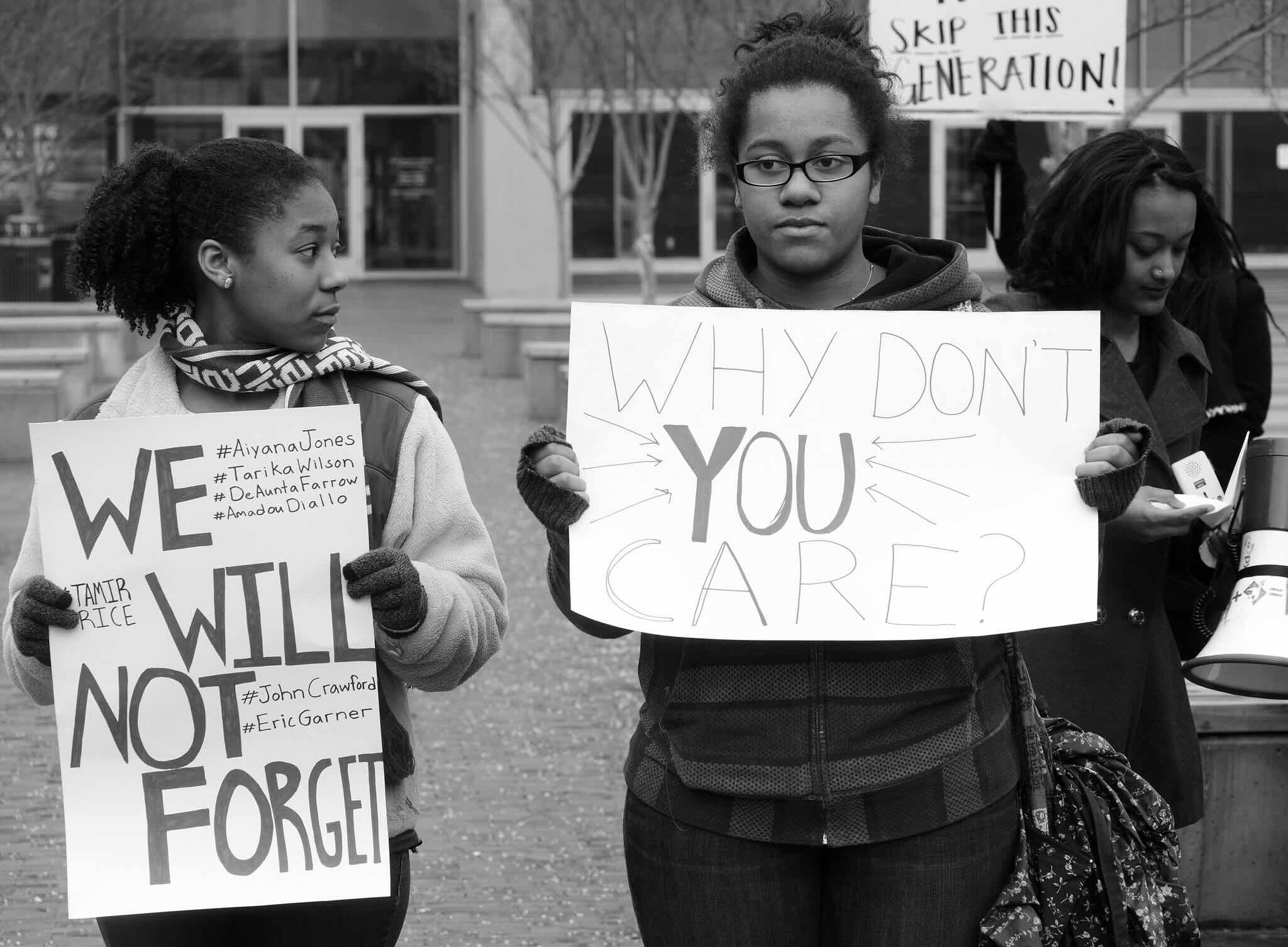
Photo: ACLU
When a Black individual is killed by law enforcement or a vigilante, a common and often immediate counter-argument emerges from certain corners of public discourse: "Why is there no outrage over Black-on-Black crime?" It is a rhetorical device that appears, on the surface, to be a call for consistency. However, criminologists, sociologists, and data analysts argue that this framing is a profound mischaracterization of crime patterns used to justify violence, devalue Black lives, and shield the broader reality of white criminality from public scrutiny.
The concept of "Black-on-Black crime" is widely considered a myth by experts because it mischaracterizes a standard sociological pattern as a unique racial pathology. Data from the Bureau of Justice Statistics consistently demonstrates that crime is overwhelmingly intra-racial across all groups. Approximately 84% of white homicide victims are killed by white offenders, a statistic that mirrors the roughly 92% of Black homicide victims killed by Black offenders. Because residential patterns in the United States remain highly segregated, crime naturally occurs predominantly between individuals of the same race.
Despite this statistical reality, the phrase "Black-on-Black crime" is frequently deployed to create a public presumption of guilt. It frames the death of a Black person as an expected outcome of a "violent culture" rather than a tragedy, fostering a narrative of disposability. This rhetoric, as noted by civil rights organizations like the NAACP and media scholars, serves a dual, insidious purpose: it devalues Black lives to justify aggressive policing and a lower standard of accountability, and it simultaneously acts as a smokescreen, hiding the fact that the vast majority of criminals in the United States are white.
Justifying Violence and Erasing Accountability
The most immediate function of this rhetoric is to deflect accountability away from public institutions. In the wake of high-profile killings by law enforcement, shifting blame to "community culture" protects police departments from legal liability and federal oversight. By arguing that the problem lies within the Black community itself, lawmakers and officials can avoid the complex, expensive work of systemic reform aimed at addressing the true drivers of crime: poverty, historical disinvestment, and lack of economic opportunity.
This tactic creates a false equivalency between civilian crime and state violence. When a civilian kills another civilian in an intra-racial crime, the perpetrator is aggressively prosecuted. Conversely, when state actors kill Black citizens, legal accountability is statistically rare. Using civilian crime to justify a lack of accountability for police officers is a logical fallacy that undermines constitutional rights. Analysts from The Washington Post note that this "what about" rejoinder is designed specifically to stall conversations about reform and suggest that protests against state violence are hypocritical or misplaced.
The Erasure of White Criminality
While the "Black-on-Black" narrative pathologizes a minority group, its structural consequence is the invisibility of white criminality in public discourse. Because White Americans make up the vast majority of the population, they also account for the vast majority of individuals arrested and convicted of crimes. According to FBI data, White individuals account for roughly 69% of all criminal arrests, including approximately 59% of violent crime arrests, 68% of rapes, and 66% of property crimes.
Yet, public discourse never groups white criminals together to label white Americans as an "inherently violent demographic." Crime by white individuals is treated as an isolated failure of character—the "bad apple" or the mentally ill individual—whereas crime by Black individuals is treated as a cultural or racial trait. Because the white population is so large and residentially concentrated, white-on-white crime occurs at four times the rate of Black-on-white crime, making it the most statistically common type of violent crime in the country. Despite this, the term "white-on-white crime" is entirely absent from mainstream political debates.
- White Accountability is Individualized: A white criminal is viewed as an anomaly. The broader white community is never targeted with aggressive, neighborhood-wide policing tactics as a response.
- Black Accountability is Collective: A Black criminal is viewed as a symptom of a "culture of violence." This collective labeling justifies aggressive state intervention, mass incarceration, and systemic disinvestment.
- Distorting the Perception of Threat: Media studies show that local news stations disproportionately feature Black suspects in violent crime reporting while underreporting white suspects, creating a false perception of the primary public threat.
By keeping the spotlight on Black communities, the system successfully pathologizes a minority group while shielding broader societal failures from critique. If the public acknowledged that the overwhelming majority of crime is committed by the dominant demographic, the narrative that crime is a "cultural problem" unique to specific neighborhoods would fall apart. The conversation would have to pivot to universal socioeconomic issues—like wage stagnation, mental health crises, and corporate disinvestment—that drive desperate behavior across all racial groups.
Protecting the Status Quo
Critics, historians, and political scientists identify three primary motivations for this rhetoric: to protect existing power structures, to control the political narrative, and to exploit psychological biases.
Politically, the "Black-on-Black crime" narrative is heavily used to maintain public support for "tough-on-crime" policies. It creates a sense of urgency that positions aggressive policing as the only barrier against chaos, effectively undermining civil rights movements and draining public empathy. For the broader public, the narrative satisfies the "Just-World Fallacy"—the deep-seated desire to believe that bad things only happen to people who deserve them or belong to "violent cultures." This allows outsiders to feel safe and morally superior without confronting the uncomfortable truths about systemic racism and state-sanctioned violence in their country's history and institutions.
Ultimately, the myth of "Black-on-Black crime" is a structural lie. It is a tool used to maintain the status quo, justify the deaths of Black people, and hide the reality that crime is driven by proximity and socioeconomics, not race. It prevents a realistic conversation about how to address crime across the entire country, regardless of the perpetrator's background, while ensuring that the faces of criminality in the public imagination remain those of a minority population.
No Ads. By Us. For Us.
This article was made possible by readers like you. We hope it inspired you to support Emerald Book, so we can continue producing content like this.
We will never show you ads, sell your data, or require a subscription to consume our content. Your gift helps us keep the truth accessible.
Click the Support button to give a gift of any amount today.
Thank you for making this work possible.