

Emerald Pages
◆
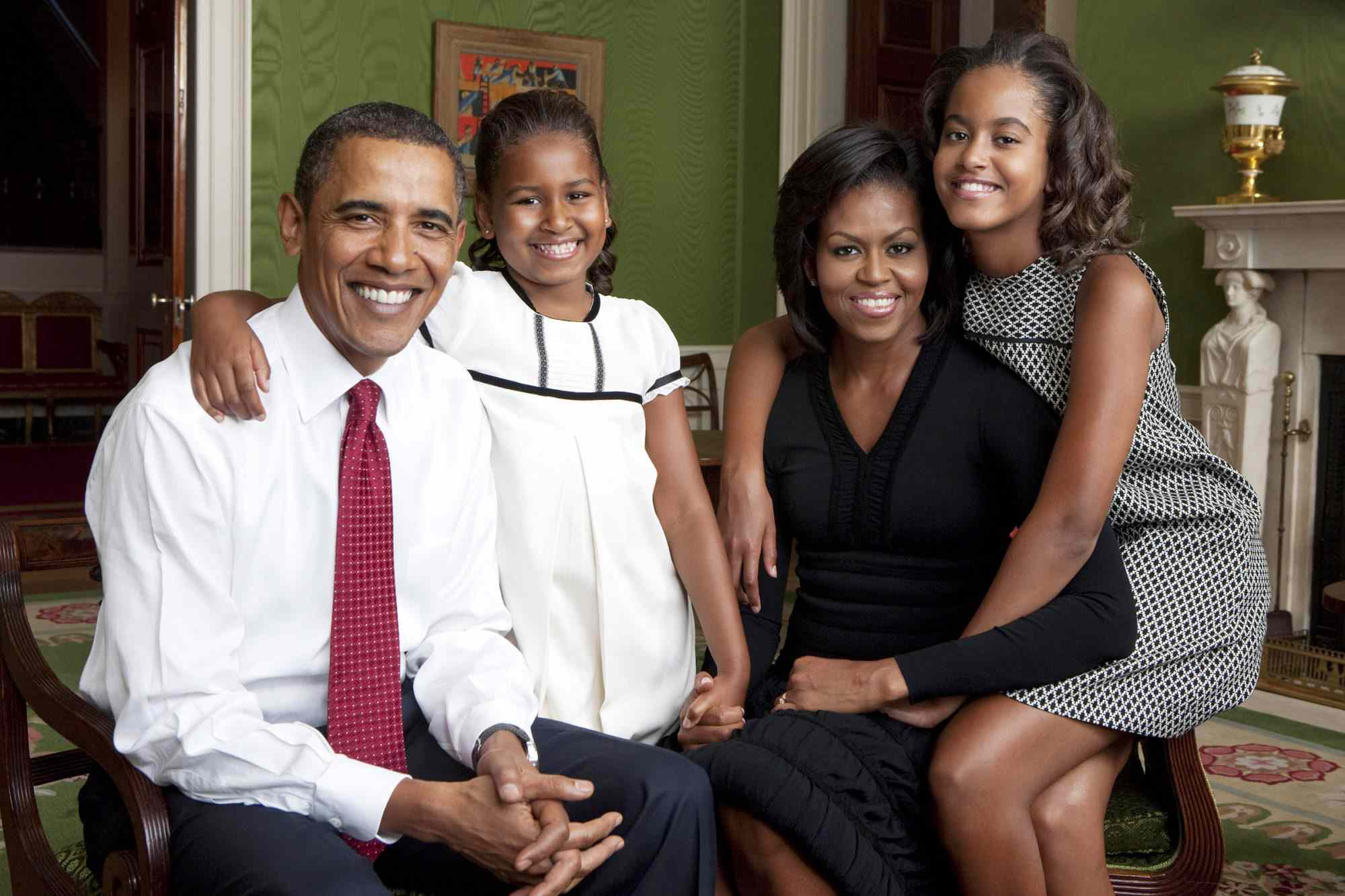
Photo: Obama Library
The phrase Black excellence—defined as extreme success demonstrated by Black individuals, often in the face of systemic racism—has become a rallying cry for empowerment. Yet for as long as Black people have achieved greatness in America, that achievement has been met with a predictable, almost mechanical response: backlash. This pattern is so consistent that historians and sociologists have given it specific names—"White Backlash" or "White Rage." The friction surrounding the term "Black excellence" itself reveals a deeper discomfort, one that exposes the fragile psychological foundations of America's racial hierarchy.
Critics of the term often argue that it is exclusionary, divisive, or that it "racializes" success. They ask, "Why can't it just be excellence?" For those who view society through a strictly race-neutral lens, any explicit celebration of race-based achievement feels counterproductive to equality. However, this colorblind critique misses the historical and sociological context: the term exists precisely because Black achievement has been systematically erased, suppressed, and punished for centuries. The backlash against the phrase is merely a linguistic extension of a much older, much uglier pattern.
The primary reasons why the concept of Black excellence can cause offense or discomfort among some white individuals are deeply rooted in specific political beliefs, psychological reactions to race discussions, and definitions of equality. For those socialized in a colorblind ideology, adding a racial modifier to a positive trait feels like a step backward. The underlying thought process is often: "Why do we have to bring race into it?" Yet this perspective conveniently ignores that race has always been brought into the equation—by the very systems that denied Black people access to education, housing, and wealth in the first place.
The Double Standard and Zero-Sum Thinking
Another common source of offense is the perception of an unfair double standard regarding how different groups are allowed to celebrate their identity. Because phrases like "white pride" or "white excellence" are deeply tied to hate groups and white supremacy, they are socially unacceptable. Some white individuals look at this dynamic and feel it is unfair or hypocritical that one racial group is encouraged to celebrate its identity while another is forbidden from doing so. This argument, however, deliberately ignores the historical context of white supremacy and the fact that "white excellence" has been the default assumption of American society for centuries.
Psychologically, some people view racial dynamics as a zero-sum game, meaning a gain for one group must mean a loss for their own. When Black excellence is highlighted, some white individuals subconsciously hear an implied critique: "If Black people are excellent, does that mean white people are not?" This defensiveness can trigger a reaction where the celebration of one group is misinterpreted as an attack on, or the exclusion of, another. This is where the concept of "Status Threat" or "Dominance Threat" comes into play—a phenomenon where a person's sense of self and societal worth is tied to being at the top of a racial hierarchy.
Barack Obama: The Case Study in Polished Excellence
The case of Barack Obama is perhaps the most prominent real-world example of how high-achieving Black individuals can evoke deep discomfort among segments of the white population. Sociological and psychological research strongly supports the observation that the labeling of a highly polished, consensus-seeking Black leader as "divisive" highlights how Black success often triggers an unintended backlash. Sociological research, such as the work of Yale sociologist Elijah Anderson, highlights a concept known as "the white space." Historically, white people have been socialized to associate Black people with lower social status or marginalized spaces. When a Black individual enters an elite "white space"—like the Oval Office—and operates with absolute competence, it creates psychological cognitive dissonance for those holding subconscious biases.
Ironically, the very traits that make an individual "polished"—being highly articulate, measured, and calm—can be turned against them. When a white leader is confident and intellectual, they are often viewed as authoritative. When a Black leader exhibits the same traits, racial stereotypes can cause those traits to be misread as "uppity," arrogant, or condescending. Because highly successful Black people often have to be exceptionally careful and diplomatic to avoid triggering racial stereotypes, critics sometimes frame this polish as being calculated or performative, fostering a sense of distrust. The labeling of Obama as "divisive" frequently intensified whenever he spoke about race, because doing so shattered the comforting illusion held by many white Americans that America had become "post-racial."
- Status Anxiety: Seeing a rapid shift in who holds power creates underlying anxiety about losing cultural dominance or social standing.
- The "No Excuses" Argument: When white individuals see a highly successful Black person (like Obama or Toni Morrison), it often prompts them to believe that the system is entirely fair, leading to resentment toward structural critiques.
- Defensive Backlash: The discomfort caused by witnessing Black excellence is rarely explicitly articulated as racial bias; instead, it is reframed as a critique of character, policies, or "divisiveness."
A History of Backlash: From Reconstruction to the Present
The historical record shows that the backlash against Black success is not a new phenomenon—it is a consistent, almost reflexive response to any threat to the racial status quo. Following emancipation and Reconstruction, Black Americans made staggering political and economic progress. They built schools, established businesses, and elected Black senators, governors, and representatives into office. This era of Black excellence was met with the rise of the Ku Klux Klan and the implementation of Jim Crow laws, systematically stripping away Black voting rights and using public lynchings as a tool of terror to punish any Black person who achieved financial independence or social standing.
In the early 20th century, despite intense segregation, several Black communities achieved extraordinary economic self-sufficiency and wealth. The Tulsa Race Massacre of 1921 saw a thriving, highly affluent Black neighborhood known as "Black Wall Street" looted, bombed, and burned to the ground by a white mob spurred by racial resentment over concentrated Black wealth. Similarly, the Rosewood Massacre of 1923 completely razed a prosperous, self-sufficient Black-owned mill town in Florida. During the Civil Rights Movement, when Black activists successfully challenged segregation, white politicians responded with "Massive Resistance," shutting down entire public school systems rather than integrating them.
The Identity Crisis and Over-Correction
For individuals socialized within a racial hierarchy, their sense of safety, merit, and stability is rooted in a specific worldview: the dominant group belongs at the top because of natural capability or harder work. When a Black person demonstrates undeniable excellence, it creates an unbearable mental conflict—cognitive dissonance that cannot easily reconcile the reality of Black brilliance with their internal map of the world. The threat to self-worth is profound: if a marginalized group can excel, it means the dominant group's position is not naturally superior. Worse, it implies that the dominant group's own success may have been aided by systemic advantages rather than pure merit. This triggers deep insecurity and shame, which is quickly converted into anger.
Because this identity crisis is so uncomfortable, the human brain seeks to resolve it immediately. To protect the ego and restore the hierarchy, people engage in an extreme over-correction to force the status quo back into place. This manifests in three main ways:
- Institutional Over-Correction: When a Black person or community achieves massive success, the over-correction often manifests as a hyper-aggressive legal or policy rollback, such as the wave of voter restriction laws following Obama's election.
- Rhetorical Over-Correction: To protect the hierarchy, critics aggressively redefine the rules of success so that Black achievement is retroactively disqualified, labeling successful Black professionals as "DEI hires" or "products of woke quotas."
- Behavioral Over-Correction: On an everyday level, the identity crisis causes people to over-index on monitoring and policing Black people who are simply existing in spaces of success, demanding they constantly "prove" they belong.
The Inevitability of Black Excellence
By focusing so heavily on building barriers and orchestrating backlashes, those who cling to racial hierarchies miss a fundamental truth: ingenuity, talent, and ambition cannot be permanently suppressed. The inevitability of Black success is not just a hopeful sentiment; it is a reality driven by powerful historical, demographic, and cultural forces. If slavery, Jim Crow, state-sanctioned violence, and redlining could not completely stop Black progress, modern institutional pushback will not succeed either. The baseline of resilience is already hardwired into the culture.
Black consumer power in the United States alone is measured in trillions of dollars. Corporations that try to alienate Black consumers or exclude Black talent eventually fail to compete. On a global scale, Africa has the youngest, fastest-growing population and workforce in the world—the future of global innovation, tech, and labor is inherently tied to Black youth. Trying to stop Black success is like trying to stop an oncoming demographic tidal wave. Historically, gatekeepers maintained racial hierarchies by controlling who could get a book deal, get on television, access capital, or get into elite spaces. The internet and decentralized platforms have completely democratized distribution, allowing Black creators, tech founders, academics, and activists to build global audiences independent of traditional, biased institutions.
Ultimately, those who suffer an identity crisis over Black excellence are fighting a losing battle against time. Success is a natural byproduct of human potential. When you have a group of people who have historically mastered the art of turning obstacles into stepping stones, their eventual rise isn't just a possibility—it is a mathematical certainty. The harsher and more intense the backlash, the deeper the underlying identity crisis usually is. It is a defense mechanism used to avoid facing the reality that the old racial hierarchies are both unjust and unsustainable. And that reality, like Black excellence itself, is inevitable.
No Ads. By Us. For Us.
This article was made possible by readers like you. We hope it inspired you to support Emerald Book, so we can continue producing content like this.
We will never show you ads, sell your data, or require a subscription to consume our content. Your gift helps us keep the truth accessible.
Click the Support button to give a gift of any amount today.
Thank you for making this work possible.