

Emerald Pages
◆
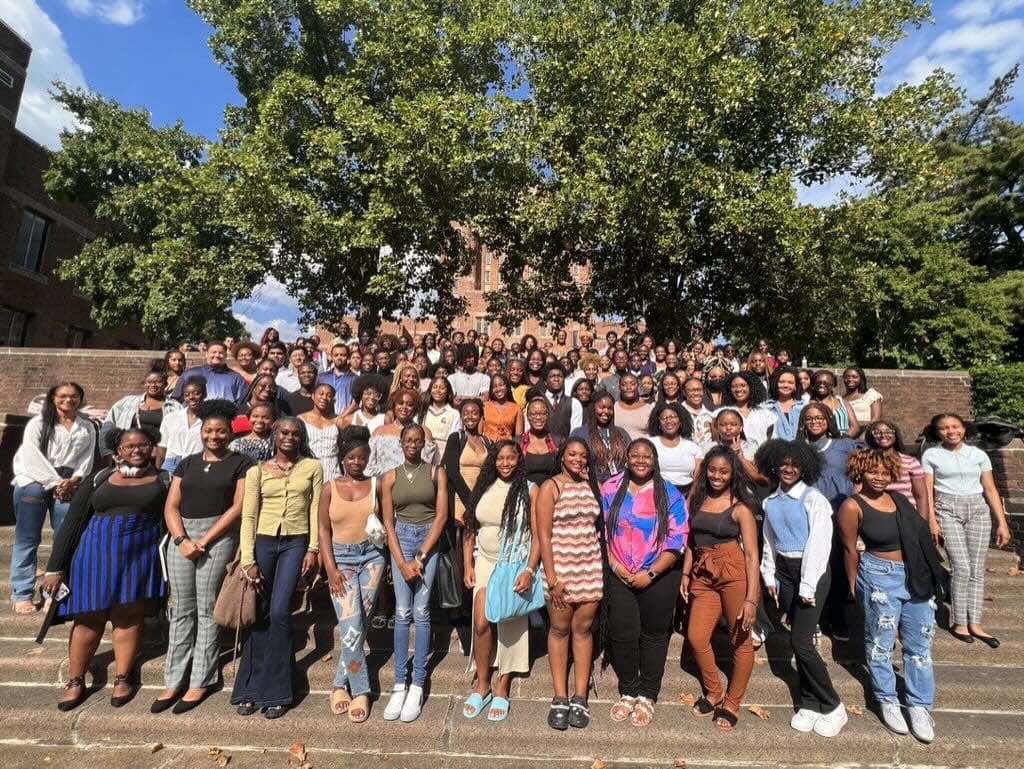
Photo: Fisk University
The landscape of American higher education is undergoing a seismic shift, one that is reshaping the academic trajectories of Black students across the nation. While hundreds of private universities and elite Ivy League institutions grapple with declining enrollment and a significant drop in minority student populations, Historically Black Colleges and Universities (HBCUs) are experiencing a renaissance. Year after year, these storied institutions are smashing enrollment records, creating a powerful counter-narrative to the prevailing trends in the broader academic world.
According to data from the National Student Clearinghouse Research Center and federal education metrics, overall HBCU enrollment has grown by roughly 4% to 6% annually in recent consecutive fall terms. This upward surge stands in stark contrast to national higher education trends, where many institutions have faced overall enrollment drops. The boom is being felt across the board, from prominent flagship universities to broad-access and smaller colleges, all of which are welcoming the largest student bodies in their histories.
The data is undeniable. North Carolina A&T State University, the nation's largest public HBCU, has seen its student population crest over 15,200 students, marking its 12th consecutive year of growth. Howard University’s undergraduate population ballooned by nearly 25 percent between 2021 and 2025, reaching more than 11,000 students. Spelman College saw application numbers soar past 11,500 annually, driving its acceptance rate down to a historic low of 19 percent while expanding its student body by more than 20% over a five-year period.
A New Era of Choice: Beyond the Supreme Court Ruling
Educational analysts point to several specific catalysts driving this historic shift, with the June 2023 Supreme Court decision to end race-conscious admissions serving as a critical tipping point. Following the ruling, many Black students actively pivoted away from Predominantly White Institutions (PWIs). The impact on elite PWIs has been dramatic: Harvard University's Black freshman enrollment tumbled from 18% down to 11.5%, Columbia University experienced the largest Ivy League decline, dropping from 20% to 13%, and Princeton University saw its population of incoming Black students cut nearly in half, plummeting from 9% to 5%.
Concurrently, political rollbacks and executive restrictions targeting diversity, equity, and inclusion (DEI) programs at public state universities have further driven students to seek out the culturally affirming and supportive environments offered by surging HBCUs. This is not a rejection of higher education, but rather a strategic migration. While elite "Ivy Plus" schools saw a 19% drop in underrepresented minority students, state flagship public universities saw an 8% increase in minority freshman enrollment, with many of those students being highly qualified Black scholars who previously would have chosen an Ivy League institution.
The Numbers Tell the Story: Record After Record
The fall 2024 and fall 2025 admissions cycles saw a wave of campus-specific records that are unprecedented in higher education history. When looking specifically at public research institutions and private flagship universities, the highest records belong to:
1. Highest Public HBCU Record
North Carolina A&T State University: Reached an all-time record high of 15,275 students. It stands as the largest public HBCU in the country and is the first to ever break past the 15,000-student threshold.
2. Highest Prestigious Private HBCU Record
Howard University: Reached an enrollment record of 14,890 students. Driven by an explosion of over 36,000 applications, "The Mecca" holds the highest student body population among all private HBCUs.
3. Highest Single-Year Growth Rate Record
Fisk University and Edward Waters University: While their total student bodies are smaller, they broke percentage-based records. Edward Waters achieved a staggering 30 percent enrollment spike compared to its 2019 data, while Fisk experienced a 60%+ multi-year surge that completely reshaped its campus footprint.
The table below breaks down the specific milestones reached by major institutions across the country:
| University | Specific Enrollment Record | Context / Key Milestone |
|---|---|---|
| North Carolina A&T | 15,275 students | First HBCU ever to surpass 15,000 total students. |
| Howard University | 14,890 students | Highest enrollment among all private HBCUs. |
| Morgan State University | 10,739 students | Hit a massive, historic enrollment milestone for the institution. |
| North Carolina Central | 9,000+ students | Broke its own record in its 115-year history. |
| Morehouse College | 2,500+ freshman class | Set an all-time record for its class of 2028. |
| Alabama A&M University | 2,157 first-year students | Record number of freshmen, with 42% identifying as male. |
| Edward Waters University | 1,210 students | Highest recorded enrollment in more than 20 years. |
The surging popularity has also allowed these institutions to become hyper-selective, attracting top-tier academic talent. Incoming out-of-state freshmen at North Carolina A&T posted a staggering 3.93 average GPA, and the record-breaking freshman class at Morehouse College carries a competitive 3.7 average GPA. This represents a direct pipeline of talent that was once the exclusive domain of the Ivy League.
The Economic Logic: A Higher Return on Investment
Beyond the cultural and social appeal, a powerful economic argument is driving this shift. Recent socioeconomic and educational data confirms that Black students achieve a uniquely high return on investment (ROI) by graduating from HBCUs. The combination of lower up-front costs, higher graduation probabilities, and robust upward mobility makes HBCUs a mathematically superior investment.
- 28% Lower Cost: The average cost of attendance at an HBCU is roughly 28 percent lower than at comparable non-HBCUs.
- 14.6% Higher Graduation Rate: An Annenberg Institute study at Brown University tracked over 1.2 million Black students and discovered that those who enroll in an HBCU are 14.6 percentage points more likely to complete their bachelor's degree.
- 51% Mobility Boost: A landmark McKinsey & Company study revealed that graduates of HBCUs are 51 percent more likely to move up into a higher-income quintile than Black graduates of non-HBCUs.
- Double the National Average: The mean social mobility rate across all U.S. colleges hovers at 1.6%, but the mobility rate for HBCUs is double that, at 3.0%.
Furthermore, HBCUs maximize ROI by steering Black students into high-paying, recession-proof economic sectors at disproportionately high rates. Black students who choose an HBCU are twice as likely to major in high-earning STEM fields. Though HBCUs represent only about 3% of all U.S. colleges, they account for a staggering 80 percent of all ABET-accredited engineering programs tailored to minority success. This is a testament to their enduring legacy of not just educating, but elevating entire communities.
Navigating the Infrastructure Crunch
The historic demand has, however, stretched many underfunded campuses to their limits. To handle overcrowding, several institutions have had to implement creative measures. Fisk University invested $4 million into a student village made from retrofitted shipping containers, while Jackson State University resorted to leasing nearby commercial hotel rooms to navigate housing shortages.
As universities prepare for the upcoming Fall 2026 semester, the narrative has shifted from celebrating numbers to managing the sheer volume of students. The Thurgood Marshall College Fund and various university administrations are currently dealing with severe housing shortages, dining overloads, and campus infrastructure strains due to these consecutive, back-to-back years of historic enrollment highs. It is a good problem to have, but it underscores the urgent need for greater investment in these vital institutions.
The rise of HBCUs is not a fleeting trend but a profound and enduring shift in the landscape of American higher education. As Black students continue to vote with their feet, they are not just choosing a college—they are choosing a future where they can thrive academically, culturally, and economically. The records being smashed today are not just numbers; they are the foundation for a new generation of leaders, innovators, and change-makers.
No Ads. By Us. For Us.
This article was made possible by readers like you. We hope it inspired you to support Emerald Book, so we can continue producing content like this.
We will never show you ads, sell your data, or require a subscription to consume our content. Your gift helps us keep the truth accessible.
Click the Support button to give a gift of any amount today.
Thank you for making this work possible.