

Emerald Pages
◆
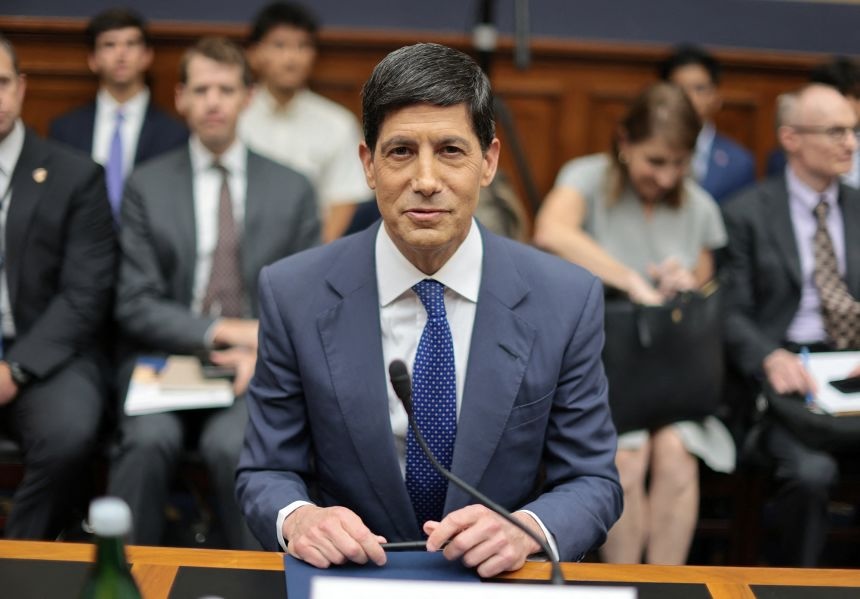
Photo: Jonathan Ernst | Reuters
The data is clear. While the national unemployment rate sits at a comfortable 4.2%, Black unemployment is alarmingly high at 6.6%. Over 700,000 Black women are currently out of work. This disparity, often referred to as a "quiet recession" in Black America, is a persistent feature of the U.S. economy. Yet, during his first semiannual monetary policy testimony before Congress this week, newly appointed Federal Reserve Chair Kevin Warsh made it abundantly clear: he has no specific plan to fix it.
Testifying before the House Financial Services Committee on Tuesday and the Senate Banking Committee on Wednesday, Warsh was heavily questioned by lawmakers, particularly Representative Ayanna Pressley, who demanded to know how the central bank would address the racial employment gap. Warsh’s response was a masterclass in institutional deflections, leaning entirely on a colorblind macroeconomic philosophy that has historically left Black workers behind.
When pressed by Rep. Pressley on implementing targeted measures to close the racial unemployment gap, Warsh explicitly rejected the idea of specific carve-outs. Instead, he outlined a "macroeconomic approach" that prioritizes broad "productivity-led economic growth." He insisted that price stability and maximum employment are not an "either-or" proposition and that the best way to help minority communities is to focus on the entire economy.
The Limits of a "Rising Tide"
Warsh’s argument relies on the traditional economic philosophy that a strong macroeconomy creates a tide that lifts all boats. However, the Black unemployment rate has remained roughly double the white unemployment rate for over 50 years, regardless of booms or busts. The persistence of this 2-to-1 ratio suggests a structural problem that broad monetary policy alone cannot solve.
Rep. Pressley directly challenged this failing philosophy, stating, "If a crisis of this scale hit any other demographic, the Fed would have a specific blueprint." She demanded that Warsh bring the same "rigor and vigor" to addressing Black unemployment that he brings to fighting inflation. His refusal to commit to specific benchmarks or strategies for minority employment, she argued, is an abdication of the Fed’s "maximum employment" mandate.
- The Disparity is Persistent: For over five decades, the Black unemployment rate has consistently been roughly double that of white workers, revealing systemic barriers that a generic "hot" economy fails to dismantle.
- Blunt Instruments: The Fed’s primary tools—adjusting interest rates and controlling the money supply—are blunt instruments. They cannot target specific zip codes or demographics, meaning capital naturally flows to already wealthy, predominantly white sectors first.
- Structural vs. Cyclical: The Fed can address cyclical economic slowdowns (recessions) but is structurally and legally unable to address the systemic racism that causes a "quiet recession" in Black communities.
Why the Fed Can't (or Won't) Intervene
The debate exposes a fundamental mismatch between the Fed's institutional design and the realities of structural racism. The Federal Reserve is legally mandated to manage the economy as a single entity—controlling the supply of money and ensuring the stability of the financial system. Its tools are designed for aggregates, not for distribution.
Warsh and his supporters maintain that the central bank’s tools are ill-suited for micro-targeting. They argue that because lower-income households spend a higher percentage of their income on essentials like food and gas, crushing inflation is the single most effective action the Fed can take to help Black families. However, this ignores the reality that even when inflation is low, Black Americans face higher unemployment rates, meaning they are less likely to have the income to spend in the first place.
Furthermore, the Fed does not have the legal authority to create jobs or invest directly in communities. Those fiscal tools belong to Congress. While technically true, this legal argument rings hollow to activists who note the Fed used its emergency powers under Section 13(3) to bail out Wall Street and purchase corporate debt during the 2008 crisis and the pandemic. If the Fed can use creative lending facilities to save the financial system, it could use those same tools to back Minority Depository Institutions (MDIs) or directly fund infrastructure in marginalized communities.
A Political Dodge with Real Consequences
Warsh’s testimony ultimately left the Congressional Black Caucus and civil rights organizations feeling dismissed. While he promised to ensure American workers have opportunities "regardless of any characteristic," he offered no concrete policy to reverse the alarming disparity. The "mission accomplished" warning he issued regarding inflation was not matched by a "mission critical" declaration for Black employment.
Because his time expired before he could lay out deeper policy specifics, the House Financial Services Committee formally requested that Warsh submit a detailed, written explanation of his approach to minority unemployment. Rep. Pressley also extended an invitation for him to brief the Congressional Black Caucus on his long-term strategy. Whether Warsh will meaningfully engage with these requests remains to be seen, but for now, Black America is left with a Fed chair who sees the crisis, acknowledges the data, but refuses to use the tools at his disposal to fix it.
The "quiet recession" continues. And if the central bank will not acknowledge the structural nature of the crisis, the burden to act falls squarely on the shoulders of Congress and the White House—institutions with a similarly poor track record of delivering justice for Black workers.
No Ads. By Us. For Us.
This article was made possible by readers like you. We hope it inspired you to support Emerald Book, so we can continue producing content like this.
We will never show you ads, sell your data, or require a subscription to consume our content. Your gift helps us keep the truth accessible.
Click the Support button to give a gift of any amount today.
Thank you for making this work possible.