

Emerald Pages
◆
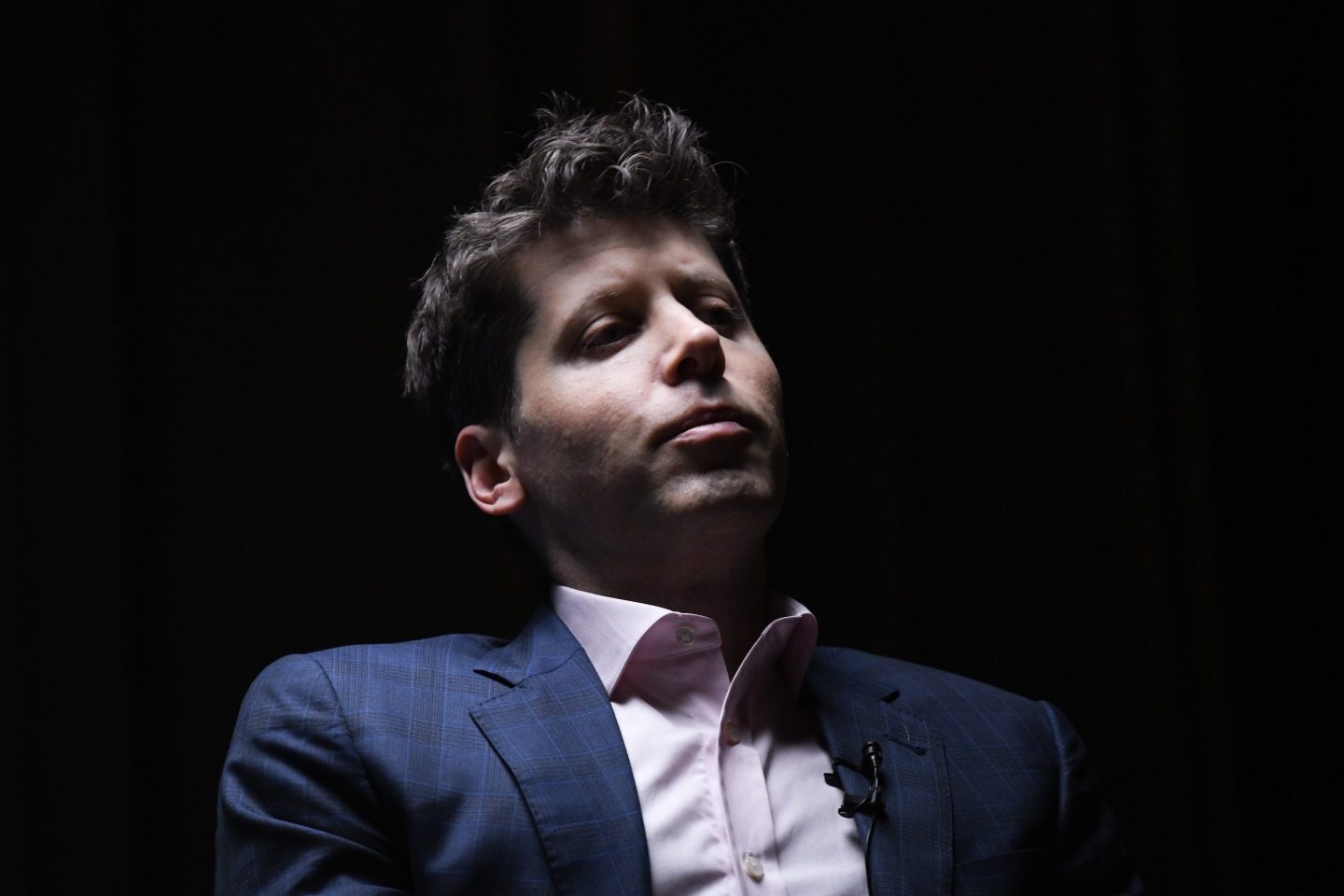
Photo: Chris J. Ratcliffe | Bloomberg | Getty Images
In December 2015, a group of tech billionaires gathered in a San Francisco hotel room with a mission that sounded like it came straight from a science fiction novel. They were going to save the world from artificial intelligence. Sam Altman, Elon Musk, Peter Thiel, and Reid Hoffman pledged a billion dollars to launch OpenAI as a non-profit research lab. Their pitch to the world's top AI scientists was simple and seductive: come work with us, and we'll build AGI—Artificial General Intelligence—not for profit, but for humanity. We'll share our research openly. We'll make sure no single corporation, especially not Google, can monopolize the most powerful technology ever created.
For the brilliant academics who had spent their careers watching Google swallow up every promising AI startup, it was the perfect trap. They flocked to OpenAI in droves, leaving cushy jobs and lucrative offers behind. They believed they were joining a crusade. They were idealists, true believers in a better future. But behind the scenes, a different story was unfolding. The billion-dollar pledge was mostly a mirage. Only about $130 million ever materialized in those early years. Elon Musk would donate roughly $38 million before walking away in a huff. And the lofty promises of open research would soon be forgotten.
By 2019, the harsh reality had set in. Building AI, real AI, required more than just brilliant minds. It required billions of dollars in computing power. The non-profit model couldn't sustain that. So, Sam Altman and his team made a decision that would define the next decade: they created a "capped-profit" arm. It was a clever loophole, a way to have their cake and eat it too. They could still claim the moral high ground while opening the doors to serious money.
The Fuel: Microsoft Makes a Power Play
Enter Microsoft. In 2019, Satya Nadella signed a $1 billion check—but it wasn't really cash. It was cloud computing credit on Microsoft's Azure platform. It was a brilliant, low-risk strategy. For Microsoft, this was a chance to supercharge its struggling cloud business and leapfrog its greatest rival, Google. They were terrified of missing the AI train. They saw Google's acquisition of DeepMind and panicked. OpenAI had the scientists. Microsoft had the servers. It was the perfect marriage.
Bill Gates famously warned Nadella that the deal was like "setting $1 billion on fire." But Nadella saw something Gates didn't. He saw an opportunity to transform Microsoft from an aging software company into the undisputed leader of the AI revolution. And he was right. By hooking OpenAI's algorithms up to Azure's massive servers, Microsoft forced itself to build the world's most advanced AI supercomputers. Once they proved they could handle OpenAI's needs, thousands of other companies rushed to buy Azure cloud space. The $1 billion "investment" was a masterstroke.
Then came the surprise attack. In late 2022, OpenAI launched ChatGPT. Google was caught completely off guard. Despite having invented much of the core technology years earlier, they had been too cautious to release it to the public. The chatbot became the fastest-growing consumer application in history, hitting 100 million monthly users in just two months. The world went crazy.
The FOMO Frenzy: Billions Pour In
The explosion of ChatGPT triggered a massive wave of "fear of missing out" across Wall Street. Venture capital firms like Thrive Capital, Sequoia, and Andreessen Horowitz scrambled to buy shares from early employees, pumping the valuation from $29 billion to $86 billion. By late 2024, it had reached $157 billion. The floodgates had opened.
Tech giants soon followed. Amazon and Nvidia stepped up with massive blocks of cash. Nvidia wanted to ensure OpenAI kept buying billions of dollars worth of their AI microchips. Amazon wanted OpenAI to stop using Microsoft servers exclusively and start using Amazon Web Services. Then came SoftBank's Vision Fund, famous for its massive, multi-billion-dollar bets. SoftBank injected tens of billions, helping fuel a massive $852 billion valuation in early 2026. They even helped fund a $500 billion plan called the "Stargate initiative" to build massive new data centers across the United States.
- 2015: Founded as a non-profit with a $0 valuation.
- 2023: ChatGPT explodes, valuation hits $28 billion.
- 2024: Secondary sales push valuation to $157 billion.
- 2025: SoftBank leads mega-rounds, valuation hits $500 billion.
- 2026: Historic $122 billion round pushes valuation to $852 billion.
But here's the wildest part of the story: OpenAI is losing a staggering amount of money. In 2025, the company spent $34 billion while generating just $13 billion in revenue, leaving it with an operating loss of nearly $21 billion. For every dollar it earned, it spent $1.60. In the first three months of 2026 alone, it burned through $3.7 billion in cash. The company is a financial furnace, a giant engine burning investor cash to build a digital infrastructure that may not turn a profit until 2030.
The Fallout: The Scientists Are Gone
The final, tragic irony of this story is that the idealistic scientists who built the core technology have largely left the building. They saw what was happening. The noble mission had been hijacked by corporate greed. Former chief scientist Ilya Sutskever left to start Safe Superintelligence. Many others formed Anthropic, now a fierce rival that has raised billions and is breathing down OpenAI's neck. The company has lost roughly 90% of its original founding team.
Sam Altman is left with the data centers, the billions in cash, and the infrastructure, but many of the original architects who invented the magic have departed. He is betting that massive compute and capital can replace lost genius. The original non-profit that Altman used to recruit those early scientists will soon be left behind as a minor stakeholder, and the company will look just like the traditional tech giants it originally set out to compete against.
The OpenAI story is a cautionary tale about the seductive power of money and the ease with which noble ideals can be corrupted. It's a story about how a group of idealists were tricked into building a trillion-dollar empire, only to be discarded once their usefulness had expired. It's a story about how the fear of missing out can make even the smartest investors throw billions of dollars at a company that is bleeding money. And it's a story about how the future of humanity is being built not by saints, but by the same corporate forces the founders swore to defeat.
No Ads. By Us. For Us.
This article was made possible by readers like you. We hope it inspired you to support Emerald Book, so we can continue producing content like this.
We will never show you ads, sell your data, or require a subscription to consume our content. Your gift helps us keep the truth accessible.
Click the Support button to give a gift of any amount today.
Thank you for making this work possible.