

Emerald Pages
◆
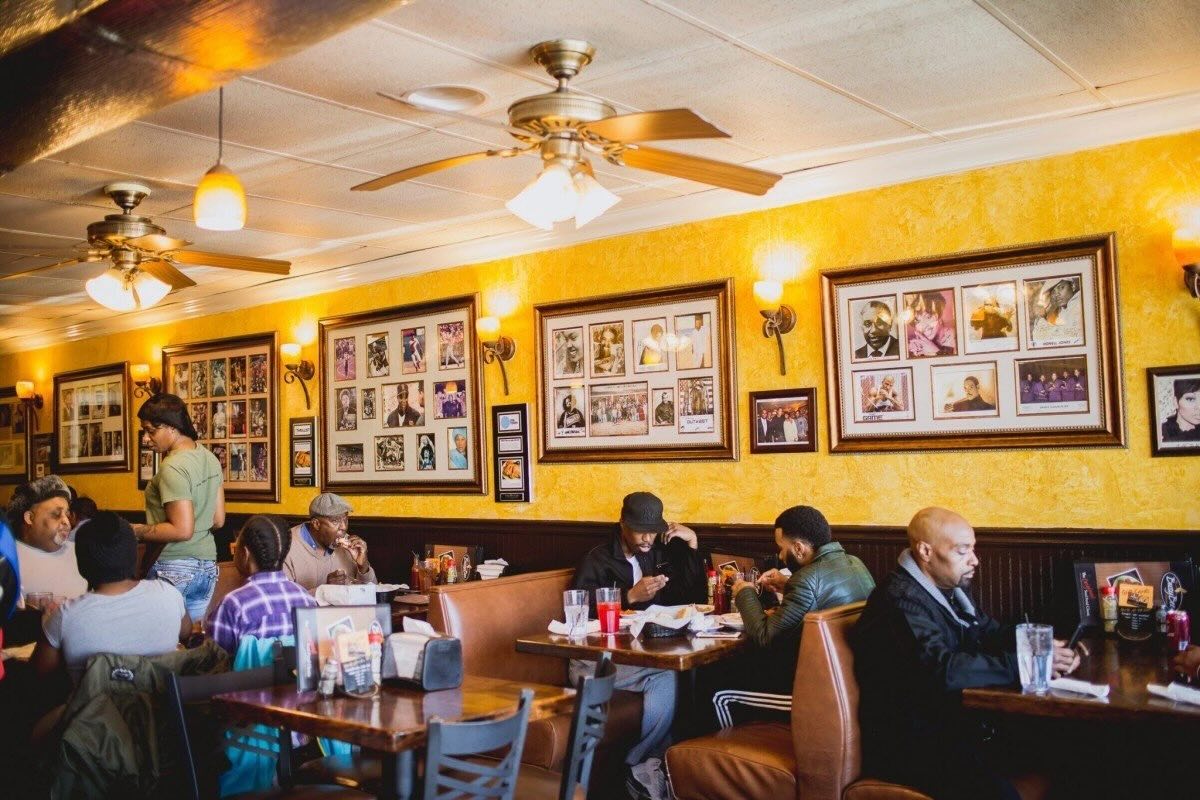
Photo: BlackFoodie.co
Opening a restaurant is one of the few businesses where you can work 80 hours a week, serve hundreds of people a day, and still have no idea if you will be able to pay yourself at the end of the month. It is a romanticized industry, fueled by reality television and the allure of creating a neighborhood gathering spot. But beneath the steam and the sizzle lies a world of razor-thin margins, astronomical upfront costs, and an economic reality that is far more unforgiving than most people realize.
Most restaurant owners in the United States make between $45,500 and $100,000 a year, with national averages generally landing around $60,000 to $97,000 annually. However, because owners are entrepreneurs, their actual pay varies wildly. A brand-new or struggling independent restaurant owner might take home less than $20,000 a year, while a highly successful multi-unit or franchise owner can clear over $300,000.
These salary numbers are typically based on an independent restaurant generating between $400,000 and $1.5 million in total annual revenue. Because restaurant profit margins are notoriously thin—usually hovering between 3% and 10%—it takes a large amount of sales just to pay the owner a moderate wage. A full-service restaurant bringing in $1,000,000 in total sales over a year will see $950,000 go immediately out the door to pay for food ingredients, employee wages, rent, utilities, insurance, and marketing. This leaves $50,000 in net profit (a 5% profit margin). The owner can then take that $50,000 home as their pay, assuming they do not need to keep any cash in the bank for emergency repairs like a broken walk-in freezer.
The first and most critical rule of this brutal economics game is location. "Location, location, location" is not just a real estate cliché; it is the lifeblood of a restaurant's revenue. A high-traffic street corner provides free advertising and builds a customer base through sheer visibility. Conversely, a quiet side street may have cheap rent, but it forces the owner to spend thousands on marketing just to get people in the door. This sets up a dangerous paradox: landlords know the value of a prime location and charge extreme rent, which can take up to 12% to 15% of a restaurant's total sales. A quiet side street might keep rent at a safe 5% to 8% range, but you might struggle to get enough customers to break even. Furthermore, the restaurant must fit the neighborhood—a high-end steakhouse in a working-class area or a late-night tapas bar in a sleepy suburb is a recipe for empty tables.
The Anatomy of the Income Statement
To understand why a restaurant owner needs to be a master of finance, we must look at the industry's foundational rule: the 30/30/30 rule. This states that a restaurant aims to spend 30% of its revenue on ingredients, 30% on employee labor, and 30% on overhead like rent and utilities. This leaves roughly 10%—or less—as net profit. In reality, full-service restaurants often survive on margins of 3% to 5%.
This small margin is why food sales are so unpredictable. A spike in the price of avocados, a sudden drop in foot traffic due to bad weather, or a single line cook accidentally using an extra ounce of cheese on every pizza can wipe out an entire shift's profit. This volatility is why many restaurants look to alcohol to survive.
The Real Money Maker: Alcohol
While food draws customers in, alcohol is what pays the bills. While a steak dish might have a profit margin of 60%, a draft beer can have a profit margin of 80% or more. A single busy bar crowd can carry the financial weight of an entire slow week of food sales. This is precisely why a liquor license can be so expensive.
In states with "quota" systems, the government limits the number of available licenses. This creates a secondary market where a permit to serve alcohol can cost anywhere from $100,000 to over $500,000. For a restaurant owner, this is a massive upfront financial pain, but it is viewed as a long-term investment. They know they will make that money back through those steady, high-margin alcohol sales. Adding liquor liability insurance costs an extra $1,000 to $5,000 a year, and in strict areas, you will need to hire a specialized liquor lawyer to handle the mountains of paperwork, zoning reviews, and local town hearings.
- Fixed Costs: Rent, salaried payroll, insurance, and software subscriptions typically account for 10% to 15% of revenue. These bills don't change, regardless of how many customers walk through the door.
- Variable Costs: Food ingredients, drinks, and credit card fees move directly with sales volume, usually making up 28% to 35% of revenue.
- Semi-Variable Costs: Hourly labor has a fixed base (a skeleton crew) but scales up during busy periods, often sitting between 25% and 35% of revenue.
The upfront cost to open a restaurant before serving a single customer usually ranges from $175,000 to $750,000, and it can easily pass $1 million if you are buying real estate. This capital is required for leasehold improvements, kitchen equipment, furniture, technology, and that expensive liquor license. A full breakdown includes the security deposit and rent (first month plus deposit, often with proof of 3–6 months of payments), leasehold improvements (the biggest expense, including grease traps, ventilation hoods, plumbing, and fire suppression), kitchen and bar equipment (commercial ovens, walk-in freezers, ice machines, dishwashers), furniture and tableware, POS systems, licenses and permits, initial inventory, and pre-opening labor and training.
But perhaps the most overlooked cost is "working capital"—a separate stash of cash used to pay fixed costs, utilities, and payroll during the first few months when the restaurant is brand new and may not be generating enough revenue to cover its bills. Smart owners always secure 3 to 6 months of working capital before opening.
How Owner Pay Works
Owners don't always get a regular paycheck like a traditional employee. According to 7shifts, they usually choose one of three methods: a Fixed Salary (setting a standard, recurring wage just like a general manager, providing stability but straining the business during slow months), an Owner's Draw (writing a check to themselves from the business account whenever there is extra cash available, which is flexible but requires careful self-employment tax planning), or Profit Distribution (waiting until the end of the quarter or year to take a percentage of whatever profit is left over). Industry experts note that an owner's personal salary typically amounts to less than half of the restaurant's total net profits. The rest must be saved or reinvested.
Debunking the 90% Failure Myth
The narrative that 90% of restaurants fail in the first year is one of the industry's most persistent myths. In reality, data from the U.S. Bureau of Labor Statistics reveals that only 14% to 17% of restaurants close during their first year. Surprisingly, restaurants have a slightly better first-year survival rate than the average for all other service-providing small businesses. The rumor largely went viral because of a 2003 American Express television commercial that casually stated most restaurants fail right away, without using any real data.
However, the restaurant business is still a marathon, not a sprint. By Year 3, roughly 50% have either closed or changed owners, and by Year 5, that number climbs to 60%. When a restaurant closes after a few years, it is rarely because the food tasted bad. The ultimate downfalls are usually under-capitalization, burnout from working 70-hour weeks, or a bad lease where rent inflation swallows the profits. This is why choosing the right location and managing the upfront capital is a life-or-death decision. Because restaurant profit margins are so small, there is no room for error.
Choosing the right spot doesn't just bring in hungry people; it also saves the business an enormous amount of money. A high-traffic street corner serves as a massive billboard. Thousands of people see the restaurant's sign every single day just by driving or walking past it. If a location has great visibility, the owner doesn't need to spend thousands of dollars a month on social media ads, flyers, or radio commercials. The storefront does all the heavy lifting. People feel safer trying a new place if they see other people constantly walking inside. A busy location naturally creates a "buzz" that attracts even more customers.
Before a smart restaurant owner ever signs a lease, they evaluate a location based on three specific details: foot traffic (how many people pass by on foot or by car), accessibility (is it easy to park, turn into, or walk inside?), and visibility (can hungry drivers easily see the sign from the road?). Owners will literally stand outside an empty building for days with a clicker, counting exactly how many people walk past during lunchtime and dinner time. They analyze the "ease of entry" factor—if a customer has to make a dangerous U-turn across a four-lane highway just to get to a parking lot, they will choose an easier restaurant down the road. And they check the sightline—if a building is hidden behind a larger store or buried deep inside a confusing shopping plaza, it is invisible to passing traffic.
No Ads. By Us. For Us.
This article was made possible by readers like you. We hope it inspired you to support Emerald Book, so we can continue producing content like this.
We will never show you ads, sell your data, or require a subscription to consume our content. Your gift helps us keep the truth accessible.
Click the Support button to give a gift of any amount today.
Thank you for making this work possible.