

Emerald Pages
◆
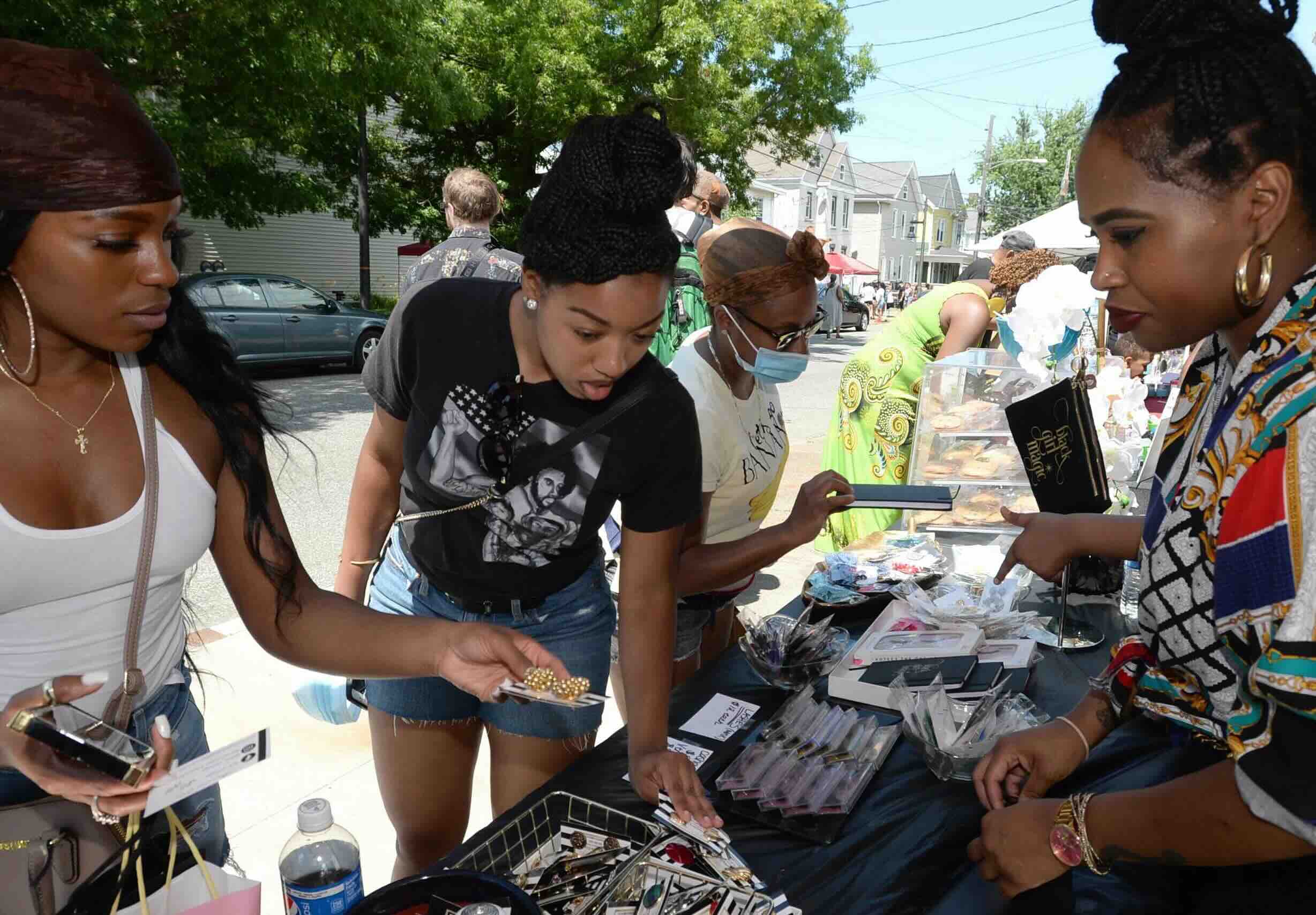
Photo: Jack Hanrahan | Erie Times-News
The question was simple enough. "What is the Black economy?" The answer? A textbook definition describing illegal trade, tax evasion, and "unreported financial transactions." When pushed back, pointing out that the black economy is actually about the financial power and business ownership of Black people, the AI apologized and corrected itself. But the pattern repeated across multiple exchanges—the AI kept defaulting to the old, problematic definition, like a record stuck in a groove.
This exchange reveals a fundamental flaw in artificial intelligence. AI models don't think or reason; they mirror patterns found in their training data. When an AI assumes "black economy" means illegal activity, it's because millions of older textbooks, financial papers, and news articles used that very language. The machine is being racist—it's trapped in a time capsule of economic jargon that used the word black to mean illegal.
The confusion stems from two entirely different meanings of the same phrase. In traditional macroeconomics, a "black economy" was jargon for untaxed, off-the-books activity—a visual metaphor where "black" meant hidden in the dark and "white" meant out in the open. But the real Black economy—the one that actually matters to people—represents the collective financial power, business ownership, and wealth generation of Black individuals and communities. It's a near $2 trillion force in the United States alone, driven by entrepreneurship, cultural influence, and the conscious "Buy Black" movement.
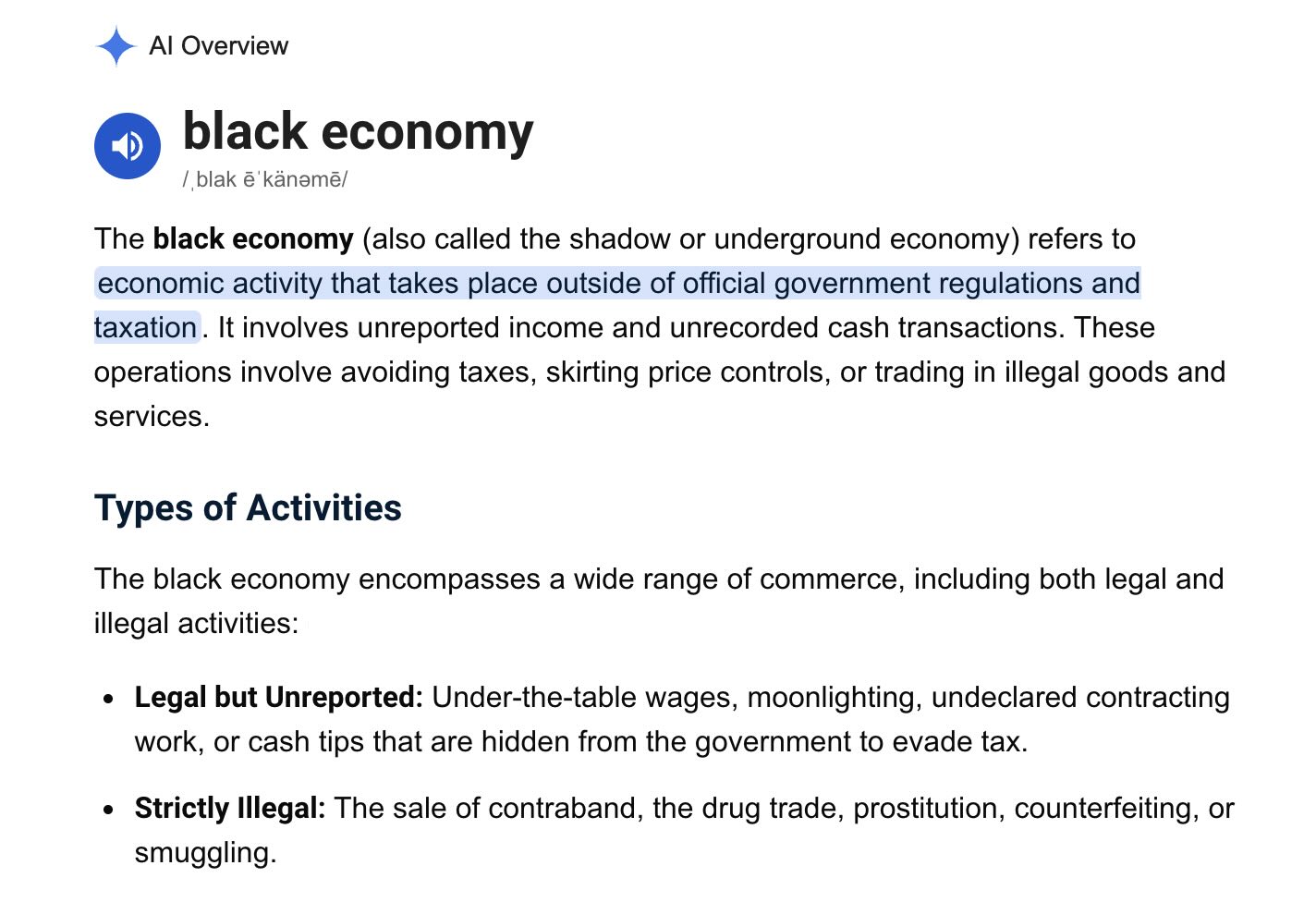
Photo: Google's definition of the Black economy
Why AI Keeps Getting It Wrong
The problem isn't malice; it's training data. Large language models are fed enormous datasets of human-written text—books, articles, websites, academic papers. For decades, economists used "black economy" to mean illegal markets. That usage appears thousands of times in the AI's training corpus. The more recent, and accurate usage—referring to Black economic power—is newer and less represented in older texts. When you ask a simple question, the AI statistically defaults to what it's seen most often.
- Old usage: "Black economy" as economic jargon for illegal, untaxed, or shadow economic activity
- Accurate usage: The collective buying power, businesses, and wealth of Black communities
- Problem: AI is trained on older data, so it defaults to the outdated definition
What makes this more than just a technical quirk is the real-world impact. When people search for information about Black economic empowerment, they shouldn't have to correct an AI that assumes they're asking about crime. The language we use matters, and the associations we encode into our machines reflect—and reinforce—cultural biases. After multiple rounds of correction, it's a simple question, AI keeps getting wrong.
The Human Solution
The good news is that humans are already fixing this. Modern economists, business leaders, and global institutions are moving away from color-coded jargon that conflates "black" with illegal and "white" with legal. Instead, they use clearer, neutral terms: formal economy, shadow economy, informal sector, or unregulated market. These terms are more precise and eliminate the racial baggage.
As people write new articles, textbooks, and reports using these clearer terms, AI models will learn from that updated data. The machines will gradually stop making the old, problematic assumptions. But the process takes time. Until then, it's up to users—and the humans building these systems—to remain vigilant, to correct mistakes, and to demand that our technology reflects the world as it is, not as it was.
Beyond the Headlines
The Black economy is not a shadow market of illegal activity. It's a near $2 trillion in Black buying power. It's the record-breaking rate of Black women starting new businesses. It's the cultural influence that drives global trends in fashion, music, and technology. It's the community wealth being built in neighborhoods, banks, and schools. It's a story of resilience, entrepreneurship, and economic self-determination—one that AI is only beginning to understand.
So the next time you ask a simple question and get a problematic answer, remember: the machine isn't the problem. The problem is what we've taught it. Fixing that means updating our language, challenging outdated assumptions, and building a future where technology serves all of us—not just the textbooks of the past.
No Ads. By Us. For Us.
This article was made possible by readers like you. We hope it inspired you to support Emerald Book, so we can continue producing content like this.
We will never show you ads, sell your data, or require a subscription to consume our content. Your gift helps us keep the truth accessible.
Click the Support button to give a gift of any amount today.
Thank you for making this work possible.