

Emerald Pages
◆
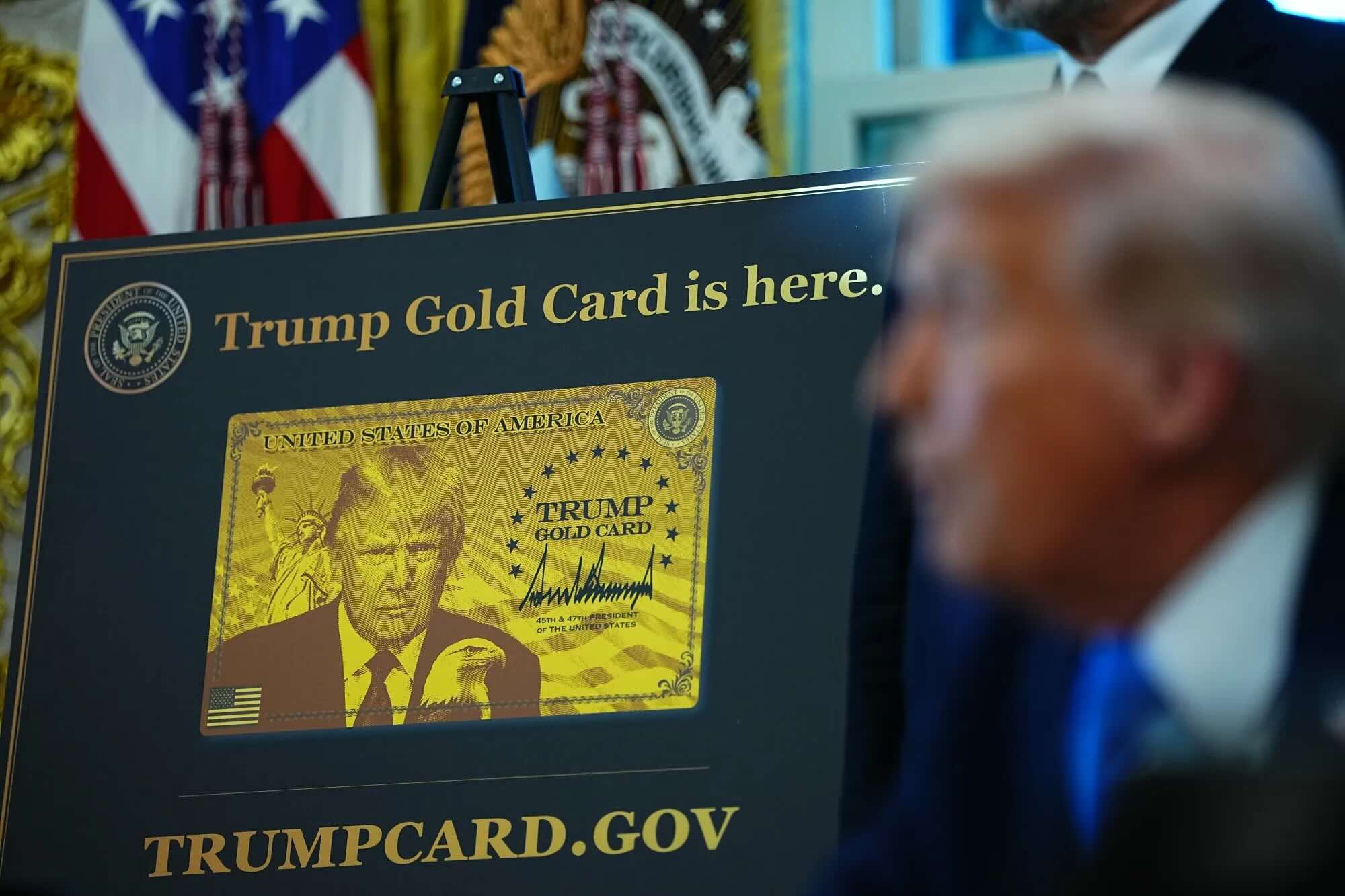
Photo: Bloomberg
In December 2025, the Trump administration launched a new program that promised to reshape American immigration: the Trump Gold Card. For a $1 million contribution and a $15,000 processing fee, wealthy foreigners could secure expedited U.S. residency. The goal was ambitious—raise billions of dollars to help pay down the national debt. The marketing was swift and loud. Within days of its opening, Commerce Secretary Howard Lutnick announced the government had "sold" $1.3 billion worth of cards, implying that over 1,300 people had committed their fortunes. It was a headline that dominated global news cycles and showcased the administration's deal-making prowess.
What many observers have forgotten is that the program was initially pitched at a much higher price point. When President Trump first floated the idea in early 2025, he proposed a $5 million "gold card" that would serve as a direct replacement for the existing EB-5 investor visa program. The administration argued that the higher price tag would attract only the "world's most serious" investors and generate even more revenue for the Treasury. That vision, however, quickly collided with market reality. After weeks of internal debate and feedback from wealthy foreign nationals who balked at the price, the administration quietly slashed the cost by 80% to $1 million—a move that critics saw as an admission that the original valuation was wildly out of touch with demand. Even with this massive discount, the program's actual performance has fallen far short of expectations, revealing a cautionary tale about the perils of mixing business bravado with government bureaucracy.
The Numbers: Attention vs. Action
The breakdown of the numbers illustrates a fundamental failure in understanding the sales funnel. The administration boasted about the big number—the 70,000 people who joined a free pre-registration waitlist—and the biggest number, the $1.3 billion in theoretical revenue. However, the granular data from the Department of Homeland Security (DHS) tells a much more grounded story. This is where "attention" and "leads" diverge completely. It's worth noting that the administration had already lowered the barrier to entry by 80% from the original $5 million asking price, yet still found few takers willing to make the financial leap.
- Total Applications: 338 people have officially filled out the paperwork to express a serious intent to buy.
- Deposits Paid: 165 people have paid the $15,000 processing fee, essentially a deposit to enter the vetting process.
- Actual Buyers: Only 1 person has cleared all background checks, paid the full $1 million, and been officially approved.
The drop-off from 338 applications to a single sale is stark. It suggests that while there was a level of global interest, the vast majority of applicants were either unable or unwilling to make the financial commitment. The administration's "waitlist," which generated the initial hype, was open to anyone with an email address. As immigration attorneys noted, the barrier to entry was virtually nonexistent, creating a "vanity metric" rather than a pipeline of qualified buyers. Even the steep price reduction from $5 million to $1 million—a discount that would normally signal a fire sale in the business world—failed to move the needle.
Why the Funnel Collapsed
The administration attempted to run a government program like a fast-moving private enterprise, but several factors prevented the transition from curiosity to cash. The most significant hurdle was the vetting process. To prevent fraud and ensure security, the government implemented what it called the "most serious vetting in history." While this is a responsible practice for national security, it created a crippling operational bottleneck. The infrastructure to process hundreds of deep-dive background checks simply wasn't ready, leaving wealthy applicants waiting for months in a queue.
Secondly, the price tag itself remains a deterrent—even at the reduced $1 million level. In the world of "golden visas," a $1 million non-refundable gift to the government is still at the high end, and the original $5 million proposal was seen as laughably unrealistic by immigration attorneys. While the administration promised value in the form of expedited residency, the lack of transparency regarding the path to citizenship made many potential buyers hesitate. The one person confirmed to have been approved was widely reported to be a celebrity, with some rumors suggesting the card was offered as a promotional courtesy rather than a standard sale, further muddying the official metrics.
- Operational Stall: The government opened a storefront without having the staff to process the high-end customers.
- Price Cut Admission: The move from $5 million to $1 million signaled to the global market that the administration had overestimated demand.
- Rumored Issues: Reports suggest tech founder Jeffrey Chao, of TP-Link, is stuck in the queue due to ongoing investigations.
- The Single Buyer: The identity of the sole $1 million purchaser remains a closely guarded secret, though DHS has confirmed a transaction was made.
Ultimately, the Trump Gold Card stands as a testament to the difference between a marketing launch and an operational launch. As a marketing campaign, it succeeded in capturing the world's attention and creating a buzz that few government programs could replicate. As a revenue-generation operation, it has been a striking disappointment, proving that in the business of high-stakes government programs, attention is not a currency that can be spent at the bank. The fact that the administration had to cut the price by 80% before even opening the doors—and still could only find one buyer—may ultimately be remembered as one of the most telling moments of the program's brief history.
No Ads. By Us. For Us.
This article was made possible by readers like you. We hope it inspired you to support Emerald Book, so we can continue producing content like this.
We will never show you ads, sell your data, or require a subscription to consume our content. Your gift helps us keep the truth accessible.
Click the Support button to give a gift of any amount today.
Thank you for making this work possible.