

Emerald Pages
◆
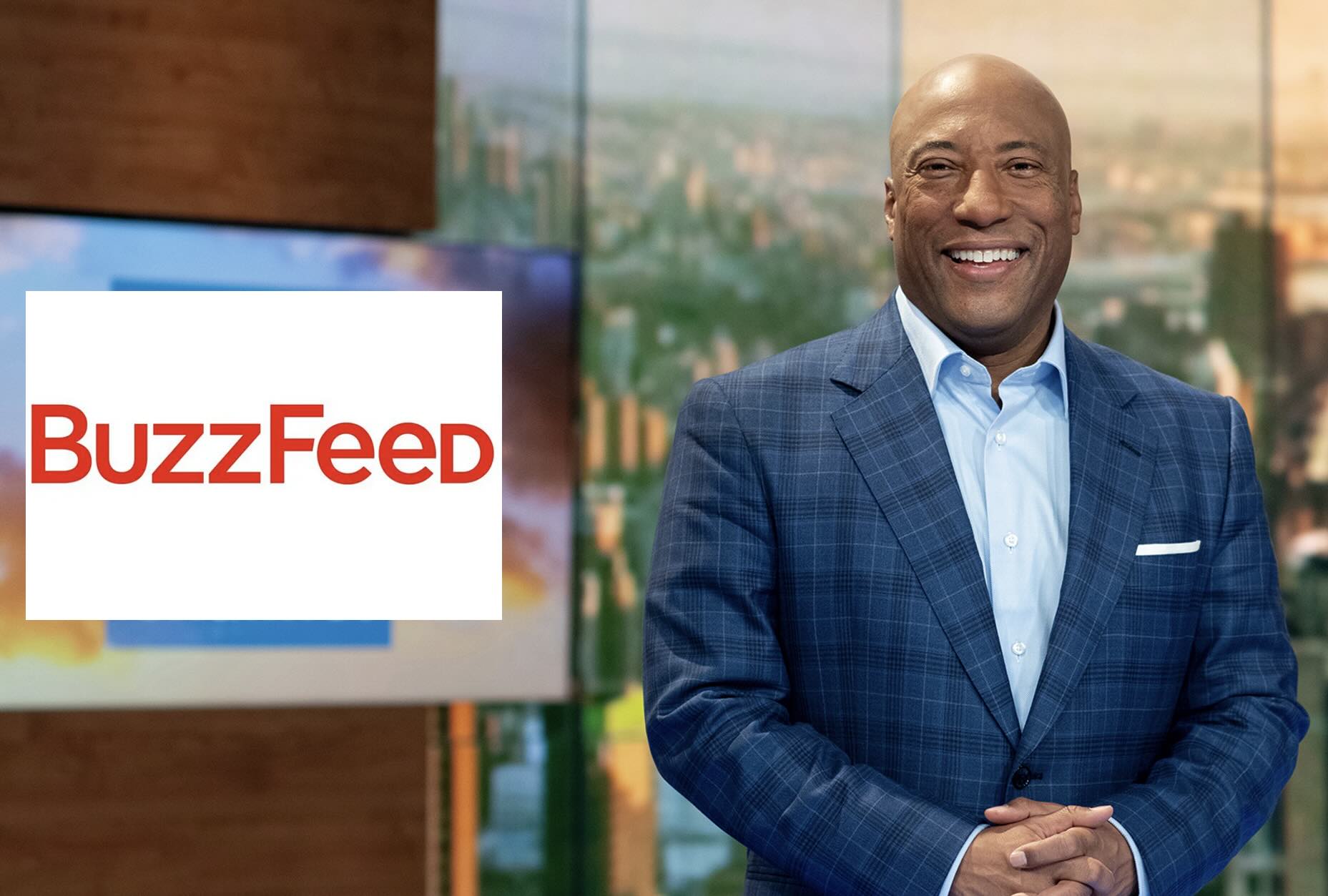
Photo: Emerald Book Image
When Byron Allen officially closed his acquisition of BuzzFeed on May 27, 2026, the numbers looked like a steal. The comedian-turned-media-mogul paid $120 million for a 52% controlling stake in a company once valued at $1.7 billion. But buried in the fine print was a detail that revealed everything about the precarious state of both BuzzFeed and Allen's own media empire: he only put down $20 million in cash.
The remaining $100 million was structured as a promissory note — essentially an I.O.U. — due in five years at 5% interest. It was a clever financial maneuver that allowed Allen to take control of a global digital publisher with the upfront cost of a single Hollywood mansion. But it also raised a troubling question: if Allen Media Group is already struggling under nearly $1 billion in debt, how exactly does he plan to save BuzzFeed without dragging his entire operation down with it?
The acquisition came at a desperate moment for BuzzFeed. The company had missed a key debt deadline and warned investors it was at risk of running completely out of cash. Founder Jonah Peretti stepped down as CEO, shifting into a new role as President of BuzzFeed AI, while Allen took over as Chairman and CEO. The deal gave BuzzFeed an immediate financial lifeline — $12.5 million of the upfront cash went directly to paying down urgent debts.
The $1.7 Billion Crash
To understand just how cheap Allen got BuzzFeed, you have to look at its fall from grace. In 2016, the company was the undisputed king of internet media, with a peak valuation of $1.7 billion. But by the time Allen stepped in, BuzzFeed's total stock market value had collapsed to just $31 million — meaning Allen bought 52% of the company for more than its entire market capitalization.
The downfall was caused by relying entirely on social media networks that eventually changed the rules and cut off their traffic. BuzzFeed had mastered the Facebook algorithm, creating iconic viral moments like "The Dress" and Tasty cooking videos. But when Facebook changed its algorithm in 2018 to deprioritize news and outside links, BuzzFeed's traffic plummeted almost overnight. The company had built its entire house on land it didn't own.
- Peak Valuation (2016): $1.7 billion — BuzzFeed was the king of internet media
- Market Cap Before Sale (2026): $31 million — a 98% collapse in value
- Allen's Upfront Cash: $20 million — less than the cost of a single Super Bowl ad
- Total Debt Owed: $100 million promissory note due in 5 years at 5% interest
The financial numbers tell the rest of the story. BuzzFeed brought in $185.3 million in revenue in 2025 but suffered a massive net loss of $57.3 million. The company had been bleeding money for years: $201 million loss in 2022, $88.6 million in 2023, and $10.1 million in 2024. By the first quarter of 2026, revenue had dropped another 12.4% year-over-year to just $31.6 million.
The Corporate Firewall
Allen's first and smartest move was creating a legal firewall between BuzzFeed and his struggling TV empire. He bought BuzzFeed through his personal family office, Allen Family Digital — not through Allen Media Group (AMG), which owns The Weather Channel and dozens of local TV stations.
This distinction is crucial. Allen Media Group is facing its own financial pressures: credit rating agencies like S&P Global downgraded the company because it has $928 million in corporate debt coming due. To help pay off those debts, Allen's company recently had to sell 10 of its local TV stations to Gray Media for $171 million. By keeping BuzzFeed legally separate, Allen ensured that BuzzFeed's debt and collapse cannot touch his TV networks, and AMG's $928 million debt cannot touch BuzzFeed.
Chasing YouTube — Again
Allen's turnaround plan for BuzzFeed is bold — but it repeats the same mistakes that brought the company down in the first place. His strategy is to pivot BuzzFeed and HuffPost away from traditional text articles and toward a highly profitable, video-first ecosystem. He announced that BuzzFeed is now "officially chasing YouTube."
The plan involves inviting popular internet video creators to put their content on BuzzFeed's new streaming network, letting them keep their videos on YouTube while splitting BuzzFeed's advertising cash with them. The goal is to use BuzzFeed's massive audience — over 40 million monthly visitors — to build a free-streaming video, audio, and user-generated content platform that can compete with YouTube.
But there's a fundamental flaw in this approach: YouTube creators already have total control on YouTube. There is very little reason for a famous creator to move their fans to a brand-new BuzzFeed video app, especially when YouTube's monetization system is already the best in the world. Allen is trying to build a business by chasing a massive tech giant instead of building a unique, independent product — exactly the same mistake that doomed BuzzFeed when it chased Facebook.
The AI Problem
Allen also plans to rely heavily on artificial intelligence to dramatically speed up content creation, sorting, and video discovery. He kept Jonah Peretti on as President of BuzzFeed AI, with the goal of using AI to generate endless pages of quizzes, interactive content, and video feeds without having to pay human salaries.
The problem? Nobody wants to read bland, generic, AI-written articles. When BuzzFeed first introduced AI quizzes and travel guides, readers mocked them for being repetitive and full of errors. Traffic dropped because AI lacks the human wit, humor, and voice that made early BuzzFeed successful. If Allen replaces human writers with automated software, BuzzFeed risks becoming a zombie website — a ghost town of AI-generated junk that real people actively avoid.
The $100 Million Question
The biggest question hanging over the entire deal is whether Allen can make BuzzFeed profitable before his $100 million promissory note comes due in five years. His strategy requires massive, "significant" cost reductions — which means major layoffs and slashing office expenses. BuzzFeed was losing about $57 million a year, and Allen plans to immediately force the balance sheet to break even.
If BuzzFeed succeeds, the company essentially pays for itself. If BuzzFeed fails completely, Allen is only out his initial $20 million cash investment. But if he can't convince real people to watch, and real creators to join, nothing new is being created. In five years, when that $100 million I.O.U. is finally due, Allen might find himself holding the keys to an empty shell of a company.
Allen is trying to solve BuzzFeed's old mistakes by making the exact same mistakes on a different app. The company collapsed because it relied on Facebook; now it wants to rely on YouTube. The audience hated AI-generated content; now Allen is doubling down on it. The strategy is a fascinating corporate gamble — but one that looks increasingly like a house of cards.
For now, Byron Allen has bought himself five years to figure it out. But with his own TV empire facing $928 million in debt and a media landscape that has already destroyed one digital giant, the clock is already ticking.
No Ads. By Us. For Us.
This article was made possible by readers like you. We hope it inspired you to support Emerald Book, so we can continue producing content like this.
We will never show you ads, sell your data, or require a subscription to consume our content. Your gift helps us keep the truth accessible.
Click the Support button to give a gift of any amount today.
Thank you for making this work possible.