

Emerald Pages
◆
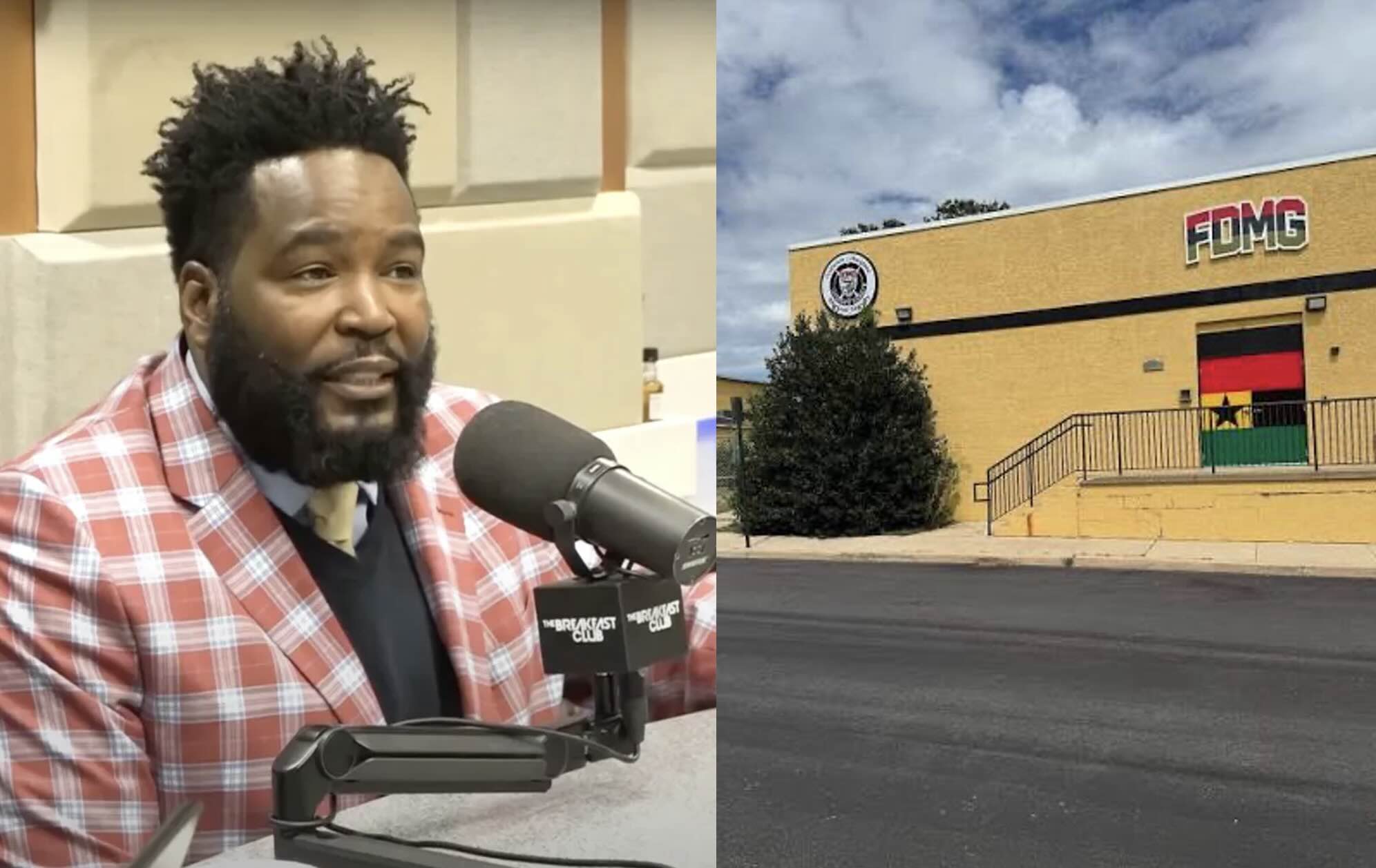
Photo: Emerald Book Image
For over a decade, Dr. Umar Johnson has been one of the most polarizing figures in Black online spaces. His critics call him a grifter. His supporters call him a visionary. But beneath the heated debates and social media firestorms lies a simple, undeniable reality that explains everything: building a school from scratch — or even renovating an old one — costs an astronomical amount of money. And when you refuse to take government funding, the timeline stretches from years into decades.
Dr. Umar's Frederick Douglass & Marcus Garvey (FDMG) Academy in Wilmington, Delaware, has become a case study in the brutal economics of independent education. While public charter schools can secure multi-million dollar loans and tap into taxpayer-funded revenue streams overnight, Dr. Umar chose a different path: grassroots community donations, volunteer labor, and a historic building that required extensive — and expensive — rehabilitation. The result? A project that began fundraising in 2015 and is only now, in 2026, approaching the finish line.
To understand why the FDMG Academy took so long, we have to look at the actual cost of building a school in America. Recent construction data reveals a sobering picture: elementary schools cost $385 to $525 per square foot, middle schools run $425 to $575 per square foot, and high schools — with their specialized labs and sports complexes — soar to $465 to $675+ per square foot. A brand new elementary school starts at $15 million on the low end and can easily surpass $25 million. High schools routinely exceed $100 million. Against this backdrop, Dr. Umar's $2 million fundraising haul, while impressive for a grassroots campaign, is barely a drop in the bucket.
The "Zombie Building" Gamble
Instead of building from scratch, Dr. Umar purchased a pre-existing, vacant historic school property in 2019 for roughly $400,000. On paper, this was a savvy move — it skipped the multi-million dollar cost of raw land and heavy structural steel framing. In practice, it triggered a cascade of hidden costs that would bleed the project dry for years.
Bringing an old, empty building up to modern safety standards is often more expensive than building a new one. Dr. Umar noted in public interviews that the building required hundreds of thousands of dollars just for specialized plumbing and electrical installations. The property came with thousands of dollars in vacant property fees, which reportedly jumped from $5,000 to $12,000 a year. And that was just the beginning. A school cannot simply open because the walls are painted; it requires strict commercial zoning, environmental permits, and safety approvals that add months — or years — to the timeline.
The $2 Million Math Problem
Dr. Umar has reportedly raised more than $2 million in community donations over the last decade. Public records and tax filings from 2019 to 2024 reveal that at least $1.6 million was brought in during that timeframe alone. But here's where the numbers get brutal: on a standard school project, architectural drawings, engineering blueprints, permits, and legal fees alone can easily cost $1 million to $2 million before a single brick is laid. A modern commercial HVAC system for a large building can cost $500,000 to over $1 million by itself. Buying desks, chairs, science lab gear, computers, cafeteria equipment, and security systems for a whole school usually costs hundreds of thousands of dollars.
- Soft Costs: Architectural fees, permits, legal fees — easily $1-2 million before construction even begins.
- Major Systems: HVAC alone can run $500,000 to over $1 million for a large building.
- Furnishing & Tech: Desks, computers, security systems, and cafeteria equipment add hundreds of thousands more.
- Land & Structure: The $400,000 purchase price was a steal, but the renovation costs dwarfed the initial savings.
So how did Dr. Umar try to make $2 million work? By cutting massive corners that conventional school builders would never attempt. He spent years pleading for volunteer Black electricians, plumbers, and carpenters to do the work for free or at a steep discount. While this saved money, it also explains why the project took 10+ years — volunteers only show up when they have free time. Instead of opening a massive campus with hundreds of kids, a budget this small means the school can likely only open as a very small, private tutoring or academy program with limited classrooms and a tiny student body.
How Charter Schools Get Millions Overnight
The contrast between Dr. Umar's FDMG Academy and a standard public charter school could not be starker. Charter schools are legally recognized as public schools, meaning they are hooked directly into state, federal, and local tax revenues. The largest source of income for a charter school is called per-pupil funding — state and local governments allocate a specific dollar amount for every single student enrolled. Depending on the state, this can range from $8,000 to over $20,000 per student, every single year. If a charter school signs up 500 students, the government automatically cuts them a check for $4 million to $10 million annually just for basic operations.
On top of that, charter schools can access massive federal "startup" grants through the Charter Schools Program (CSP), securing $150,000 to $900,000 just for planning and initial launch costs. Because charter schools have guaranteed government income rolling in every year based on student enrollment, banks view them as safe investments. A charter school can walk into a financial institution and secure a $10 million to $30 million commercial loan or issue private bonds to buy land and build a campus immediately. They do not have to wait decades for $20 donations to trickle in; they borrow the full amount upfront and use their annual state checks to pay off the mortgage over 30 years.
The Authorizer Barrier
But there's a catch. To access this river of taxpayer money, charter schools must first apply to an official government board known as a charter school authorizer — usually the local district school board, the state board of education, or a specialized independent state charter school board. The founders present a massive, hundreds-of-pages-long business and education plan. If the board approves the application, they sign a legal contract that legally triggers the state to start sending millions of taxpayer dollars to the school based on student enrollment.
This is the mechanism Dr. Umar Johnson deliberately skipped. Because he wanted 100% total control over his curriculum and facility without government oversight, he chose not to apply to a government authorizing board. Without that board's stamp of approval, a school is legally considered a private entity and is completely cut off from the stream of taxpayer millions. He had to rely on his own internal team to slowly raise individual cash.
To put it bluntly: Dr. Umar's model is the educational equivalent of building a house by hand, one brick at a time, while charter schools have access to an entire construction crew with unlimited funding. The two approaches cannot be compared.
Where the Project Stands Today
Dr. Umar announced that renovations on the FDMG Academy building are finally 100% complete. He shared video tours of the finished classrooms and hallways to prove the physical work is done. However, the school is currently stuck in the final phase: legal inspections, licensing, and city permits. Because of these remaining bureaucratic hoops, he has stated the academy is aiming for an official opening by Fall 2027.
The core lesson here is not about Dr. Umar's character or competence — it's about the raw, unforgiving math of building infrastructure. $2 million is a fortune to an individual, but in the world of commercial school construction, it's barely enough to cover the planning phase. When you choose to go it alone, without government backing or institutional loans, you are choosing to move at the speed of grassroots donations, volunteer labor, and bureaucratic patience. A decade is not a sign of failure; it's a sign of the brutal economics of building a school from scratch.
No Ads. By Us. For Us.
This article was made possible by readers like you. We hope it inspired you to support Emerald Book, so we can continue producing content like this.
We will never show you ads, sell your data, or require a subscription to consume our content. Your gift helps us keep the truth accessible.
Click the Support button to give a gift of any amount today.
Thank you for making this work possible.