

Emerald Pages
◆
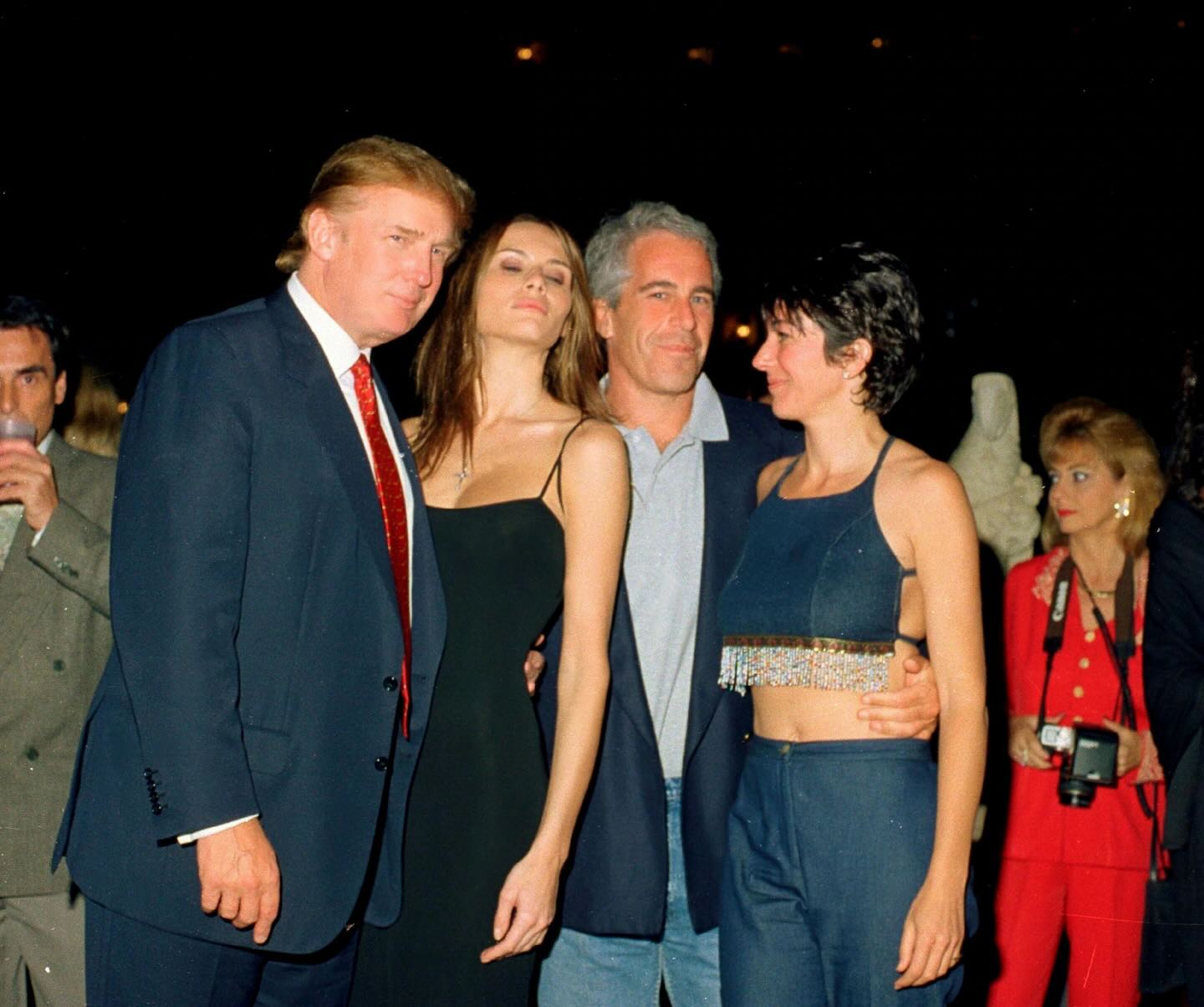
Photo: The Washington Post
The Epstein Economy is not a failure of a few bad actors. It is not a glitch in the system. It is the system itself—a carefully constructed machinery that functions by design, not by accident. To understand how it works, you must abandon the comforting illusion that figures like Jeffrey Epstein are anomalies. They are not. They are the logical, predictable, and inevitable product of an economic order that actively requires a deficit of human empathy to survive.
Coined by social commentators and political scientists, the term Epstein Economy serves as a critical metaphor for how extreme concentrations of money corrupt society, paralyze legal systems, and fundamentally alter human behavior. It describes a world where the ultra-wealthy cross an "impunity threshold"—a point at which they can buy not just legal protection, but institutional paralysis. Law enforcement, banks, and government agencies simply look the other way.
But here is the uncomfortable truth that few want to confront: The Epstein Economy doesn't merely tolerate a lack of empathy—it feeds on it and needs it to function. Empathy is the oxygen that keeps accountability alive. Without empathy, there is no guilt. Without guilt, there is no hesitation. Without hesitation, there is no limit to the exploitation. The system requires a steady supply of individuals who can look at human suffering and see only an opportunity for profit.
Part I: The Hunger for Indifference
The Epstein Economy is, first and foremost, a predator. It actively searches for, cultivates, and elevates individuals with a specific psychological profile—one marked by low empathy, high narcissism, and a willingness to treat other human beings as expendable resources. This is not a conspiracy; it is the cold logic of market selection.
As documented by the American Psychological Association (APA), people with lower empathy are disproportionately overrepresented in corporate leadership and executive roles. In the brutal arena of high finance, Wall Street, and Silicon Valley, empathy is a liability. A CEO who feels the weight of a mass layoff might hesitate, costing the company millions. A hedge fund manager who sees the human cost of a hostile takeover might pull back, leaving billions on the table.
This is the "Selection Effect" in action. The system rewards ruthlessness. It promotes the "Dark Triad" traits—narcissism, Machiavellianism, and psychopathy—because these traits enable individuals to make cold, calculating decisions without being paralyzed by guilt. Jeffrrey Epstein himself was a textbook case. He didn't build his fortune through genius or innovation; he built it through charm, deception, and the systematic exploitation of trust. He gained power of attorney over billionaire clients and then simply stole from them.
- Institutional Paralysis: Wealth buys more than lawyers. It buys the silence of banks, the blindness of regulators, and the indifference of the justice system.
- Shadow Markets of Access: Power is traded through secretive networks of favors among billionaires, politicians, and royals—unseen and unaccountable.
- The Human Commodity: In this economy, people are not citizens or neighbors. They are assets to be acquired, exploited, and discarded.
Part II: The Feed—How Wealth Consumes Empathy
The second, more insidious part of this equation is what happens after wealth is acquired. Even if an individual started with a normal, healthy capacity for empathy, the act of becoming massively wealthy systematically destroys it. This is the "Socialization Effect"—the process by which money re-wires the brain.
As psychologist Dacher Keltner explains in his "Power Paradox," the traits that allow a person to gain power—empathy, cooperation, listening—are often the exact traits that are destroyed once power is obtained. Wealth creates an "independence loop." When you are poor, you need community to survive. You learn to read facial expressions and body language because your survival depends on it. When you are rich, you can buy your way out of any problem. You no longer need to read the room. The empathy muscles, like any muscle not used, begin to atrophy.
The data is staggering: A famous field study found that drivers of luxury cars were significantly more likely to cut off pedestrians in crosswalks than drivers of older vehicles. In another study, participants were hooked to heart monitors while watching videos of children undergoing cancer treatment. Lower-income participants showed a physical drop in heart rate—a sign of compassion. Wealthier participants showed virtually no biological reaction. Their bodies had become numb to the suffering of others.
This is how the Epstein Economy feeds. It takes individuals who have already been selected for low empathy, and then amplifies that deficit through isolation and entitlement. The "Entitlement Bias" kicks in: the wealthy convince themselves that their success is entirely earned, that they deserve their status, and that anyone who is struggling is simply lazy or inferior. This mindset acts as an off-switch for natural compassion.
Part III: The Vicious Cycle — A Self-Sustaining Machine
When you combine the Selection Effect and the Socialization Effect, you get the engine of the Epstein Economy. It is a self-perpetuating, self-sustaining machine that corrodes the moral fabric of society. This explains why Epstein was able to operate with impunity for decades. The system was not just looking the other way—it was designed to look the other way. Wealth creates institutional paralysis. Once a person crosses the impunity threshold, they can manipulate banks, governments, and legal systems with impunity.
Consider the evidence: According to recent congressional records and investigative journalism, Epstein legally dodged an estimated $300 million in taxes using shell companies in the U.S. Virgin Islands. He received staggering, opaque fees—$158 million from private equity executive Leon Black alone—for vague "estate planning." Even after his 2008 conviction for sex offenses involving minors, major financial institutions like JPMorgan Chase and Deutsche Bank continued clearing his massive cash withdrawals. They knew what he was doing. They simply didn't care. Why? Because the wealth had paralyzed their moral compass. The system needed his money more than it valued justice.
The Epstein Economy requires a steady supply of human suffering to generate profit. It requires victims who can be exploited and discarded. It requires a society that is too fragmented, too distracted, and too isolated to mount an effective resistance. And most importantly, it requires the wealthy elite to remain detached, indifferent, and profoundly disconnected from the humanity of those they exploit.
Part IV: Breaking the Cycle — Can We Starve the Machine?
If the Epstein Economy feeds on empathy, then the only way to dismantle it is to starve it. This requires a conscious, collective effort to rebuild the very thing the system seeks to destroy: human connection, compassion, and accountability.
For the individual wealthy: It requires breaking the "Gilded Bubble." Hands-on community service, deep and genuine relationships with people from different socioeconomic backgrounds, and "pro-social" spending—using money to connect rather than isolate—are essential. Studies show that when wealthy individuals actively maintain diverse relationships and practice structural gratitude (acknowledging the luck, timing, and public infrastructure that contributed to their success), they can preserve their capacity for empathy.
For society: It requires strong public institutions that bring people together. When public schools, healthcare, and transit are excellent, people of all income levels share space. This creates natural social cohesion and prevents the wealthy from retreating into isolated bubbles. It also requires aggressive enforcement of anti-trust laws, transparency in campaign finance, and the dismantling of the offshore tax havens that enable the shadow economy to thrive.
For the rest of us: It requires refusing to look away. The Epstein Economy survives on silence and complicity. Every time we accept the narrative that "billionaires are job creators" without questioning the human cost, every time we allow the ultra-wealthy to buy our politicians and our media, we are feeding the machine.
The Epstein Economy is not inevitable. It is a choice—a collective choice to value profit over people, secrecy over accountability, and individual wealth over shared humanity. But choices can be unmade. The cycle can be broken. It starts with recognizing that the system needs us to be indifferent. And then choosing to care anyway.
No Ads. By Us. For Us.
This article was made possible by readers like you. We hope it inspired you to support Emerald Book, so we can continue producing content like this.
We will never show you ads, sell your data, or require a subscription to consume our content. Your gift helps us keep the truth accessible.
Click the Support button to give a gift of any amount today.
Thank you for making this work possible.