

Emerald Pages
◆
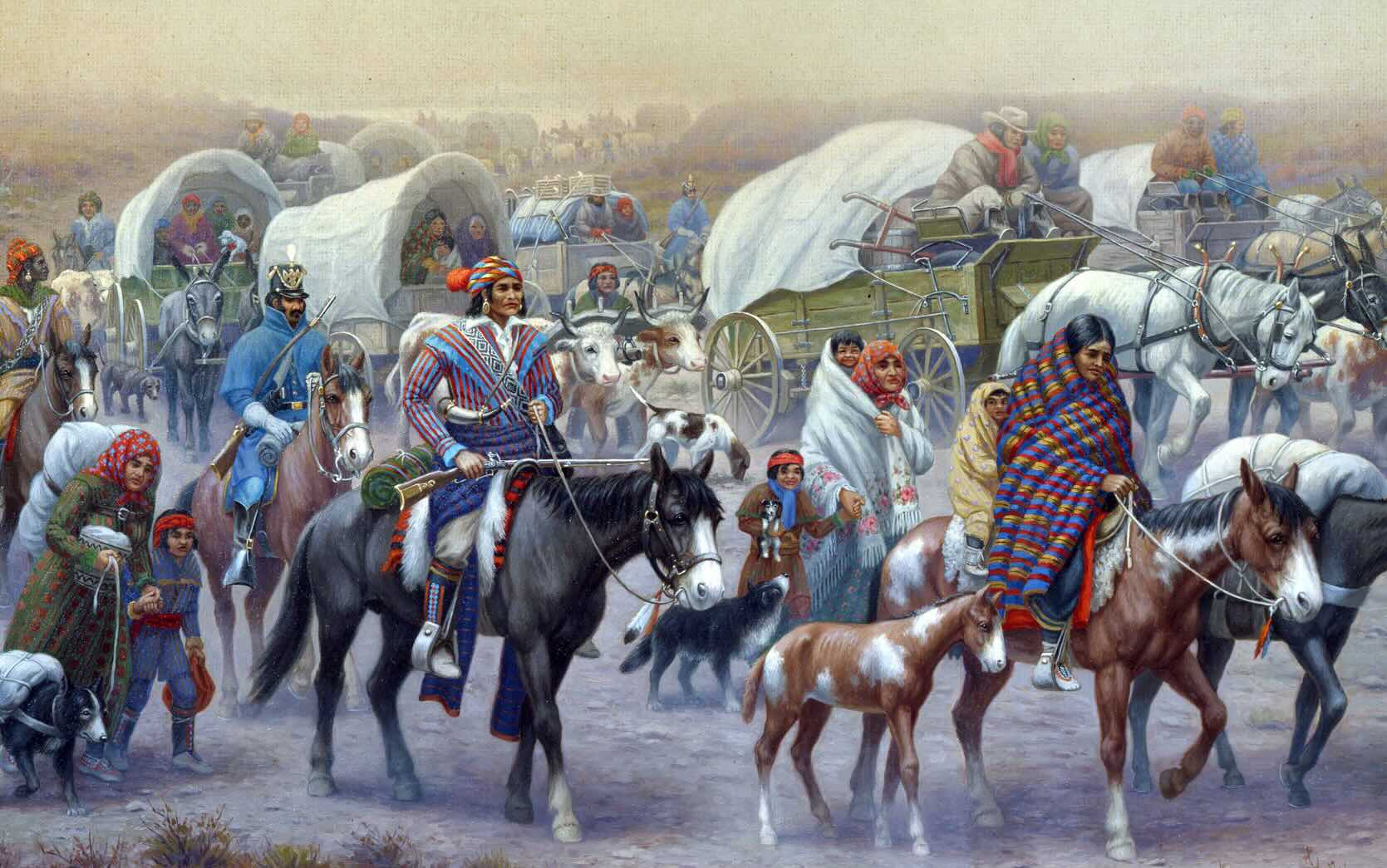
Photo: Robert O. Lindneux
The word evokes a simple, pastoral image: a family stepping off a ship, building a log cabin, plowing a field, and raising children in a new land. This is the power of the term "settler." It suggests peace, hard work, and the founding of a new civilization. However, historical records reveal a starkly different reality. European powers and their descendants used the word "settler" as a sophisticated propaganda tool to conceal a global wave of genocide, land theft, and atrocity.
On every inhabited continent, the pattern was eerily consistent. Arriving groups used superior military technology and ruthless tactics to displace, enslave, or annihilate the native populations. After the violence was complete, the perpetrators rewrote the history, recasting themselves not as conquerors or war criminals, but as peaceful pioneers taming a "wilderness." This linguistic sleight of hand remains one of the most successful public relations campaigns in history.
The strategy was simple but effective. In North America, British colonists called themselves "pioneers" as they pushed westward, despite the fact that their governments systematically broke treaties, forced Indigenous nations on death marches like the Trail of Tears, and openly placed bounties on Natives. In Australia, the British legally declared the continent terra nullius—"nobody's land"—erasing the presence of Aboriginal peoples who had lived there for over 60,000 years. This legal fiction allowed them to justify the brutal Australian Frontier Wars and the destruction of Indigenous culture.
The Mechanics of a Global Crime
The use of the word "settler" was not accidental. It was a deliberate strategy to hide a catalog of crimes that would be recognized today as war crimes and crimes against humanity. The methods employed on every continent involved a disturbing litany of violence:
- Massacres and Biological Warfare: Military forces slaughtered entire villages, and in documented cases, colonial officials intentionally distributed smallpox-infected blankets to decimate populations.
- Destruction of Survival Systems: Armies slaughtered millions of buffalo in North America and burned crops and poisoned wells to starve resisting populations into submission.
- Systemic Rape and Sexual Violence: Sexual violence was used as a weapon of war to terrorize and humiliate Indigenous communities, with colonial courts rarely offering any protection or justice.
- Cultural Genocide: Governments tore children from their families to place them in residential schools, where they were beaten for speaking native languages, a policy designed to "kill the Indian, save the man."
While other empires in history have committed violent conquest, European powers are unique for doing so on a global scale. The Spanish in Latin America, the French in Algeria (where they called the arrivals colons), the British in New Zealand and Kenya, and the Dutch in South Africa all utilized the same tactics. Even in the 20th century, this pattern continued, with Imperial Japan using the term "agricultural settlers" in Manchuria and the Nazi regime invoking the concept of Lebensraum (living space) to justify the mass slaughter and displacement of Slavic peoples in Eastern Europe during World War II.
Unlike pirates who operated outside the law, these "settlers" had the immense power of the state behind them. When they invaded new lands, their home countries eventually sent armies to protect them. Instead of being punished for their crimes, they rewrote the laws—declaring themselves owners of the land through new legal systems—and then erased their criminal history from history textbooks for centuries.
The Legacy of a Lie
The decision to call themselves "settlers" was a masterstroke of historical revisionism. It hid the murder, rape, theft, and poisoning behind a veneer of pastoral respectability. It created a myth of brave pioneers rather than the reality of criminal invaders. For hundreds of years, this myth went unchallenged, teaching generations of children in colonized nations a sanitized version of their own origin stories.
Today, modern historians and Indigenous scholars are actively dismantling this linguistic deception. They are replacing the word "settler" with more accurate terms like "invader" or "colonizer." They are forcing a confrontation with the harsh realities of history, addressing the painful legacy of residential schools, and fighting for the return of stolen lands. The truth, unlike the myth of the peaceful settler, is finally beginning to emerge from the shadows of history.
No Ads. By Us. For Us.
This article was made possible by readers like you. We hope it inspired you to support Emerald Book, so we can continue producing content like this.
We will never show you ads, sell your data, or require a subscription to consume our content. Your gift helps us keep the truth accessible.
Click the Support button to give a gift of any amount today.
Thank you for making this work possible.