

Emerald Pages
◆
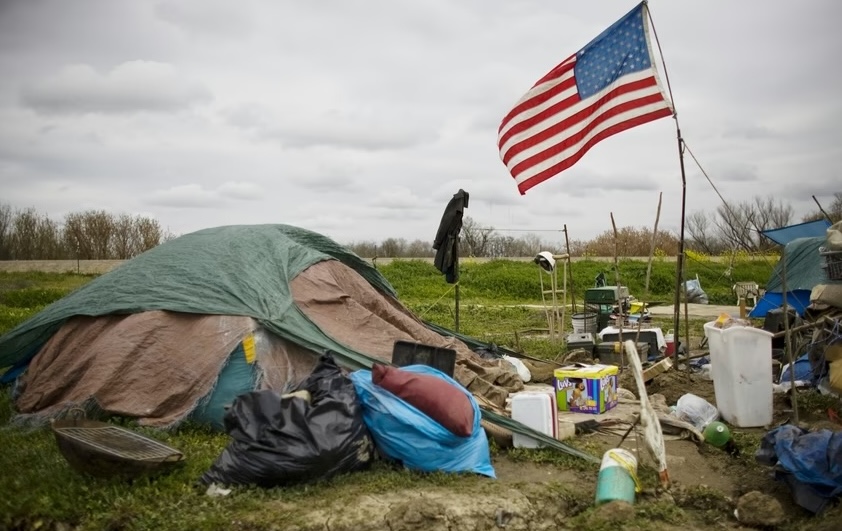
Photo: Max Whittaker | Reuters
It is a paradox so glaring it borders on the absurd. The United States, a nation with a $29 trillion economy and more billionaires than anywhere else on the planet, remains a country where 40 million people live in poverty. The richest country in the world cannot solve poverty. The refrain often goes that it’s complicated, that poverty is a “deeply tangled web” of systemic issues. But beneath all the jargon, a simple, uncomfortable truth persists: we have the money. We just don't want to fix it.
The argument that poverty is an intractable problem—a "leaky bucket" that money alone can't fill—is a convenient myth. It allows us to ignore the fact that the most powerful nation in history has the resources to end the suffering of its most vulnerable citizens, but actively chooses not to. This isn't a failure of economics; it is a failure of political and social will.
The Myth of the "Tangled Web"
It's often said that poverty is a complex problem, a tangle of economic systems, political choices, and social challenges. It is, but we use this complexity as a shield. We point to fears of inflation, the "benefit cliff," or a lack of affordable housing as reasons why a simple cash transfer can't work. But the scientific evidence tells a different story.
Organizations like the Abdul Latif Jameel Poverty Action Lab (J-PAL) have run hundreds of studies showing that when you give cash directly to people in poverty, they spend it wisely. They buy food, repair their homes, and invest in their children's education. It works. The research is clear: poverty is, at its core, a lack of cash, and giving cash is one of the most effective ways to fight it. The idea that recipients will "waste" the money is a falsehood disproven time and time again.
A Simple Math Problem
To understand how simple this problem actually is, you just have to look at the numbers. Scientist have calculated that it would take roughly $177 billion a year to lift every single American out of poverty.
Now, consider this: the top 1% of Americans hold roughly $44 trillion in wealth. That's nearly half the country's stock market. A modest annual tax on the richest Americans—or simply closing basic corporate tax loopholes—would raise hundreds of billions of dollars annually. The U.S. government found trillions of dollars overnight to send out stimulus checks during the COVID-19 pandemic. When they expanded the Child Tax Credit, child poverty dropped to the lowest levels ever recorded.
- The Cost to End Poverty: ~$177 billion per year.
- Wealth Held by the Top 1%: ~$44 trillion.
- The Proof: Expanded Child Tax Credit cut child poverty by nearly half almost overnight.
The Real Holes in the Bucket Are Political
The leaks in the system aren't economic; they are political. The reason we don't have the political will to fund these policies is that the people who hold the cash also hold the power. The richest 1% and massive corporations spend billions of dollars lobbying politicians, funding campaigns, and writing tax laws that protect their wealth. They fund think tanks and media campaigns to convince the public that "giving people free cash will ruin the economy" or "make people lazy"—a narrative that persists even though their own research proves otherwise.
This isn't about a divided public with differing opinions. It's about a system that is designed to protect the status quo. The U.S. tax code is packed with deductions and loopholes that heavily benefit wealthy homeowners and investors, effectively subsidizing the rich more than the poor. The political gridlock isn't a bug; it's a feature, ensuring that wealth remains concentrated at the very top.
A Nation of Contradictions
Some might argue that the U.S. isn't "stingy," pointing to the nation's high levels of charitable giving or total social spending. While Americans are generous, the structure of the U.S. safety net is fundamentally different from those of its peers. Unlike other peer countries that heavily tax wealth to provide universal healthcare, education, and childcare, the U.S. leaves these basic needs to the private market. This means a significant portion of its wealth is spent through employers or private charities, leaving the poorest vulnerable to job loss or systemic failures.
The great American paradox is a conflict of values. We claim to believe in protecting the vulnerable, yet we consistently prioritize protecting the wealthy. The richest country in the world fails to solve poverty not because it lacks the funds, but because its economic and political systems are designed to keep that wealth concentrated. It is a structural design choice. We have the blueprints to fix it. The money is there. The only thing missing is the collective will to change the system.
No Ads. By Us. For Us.
This article was made possible by readers like you. We hope it inspired you to support Emerald Book, so we can continue producing content like this.
We will never show you ads, sell your data, or require a subscription to consume our content. Your gift helps us keep the truth accessible.
Click the Support button to give a gift of any amount today.
Thank you for making this work possible.