

Emerald Pages
◆
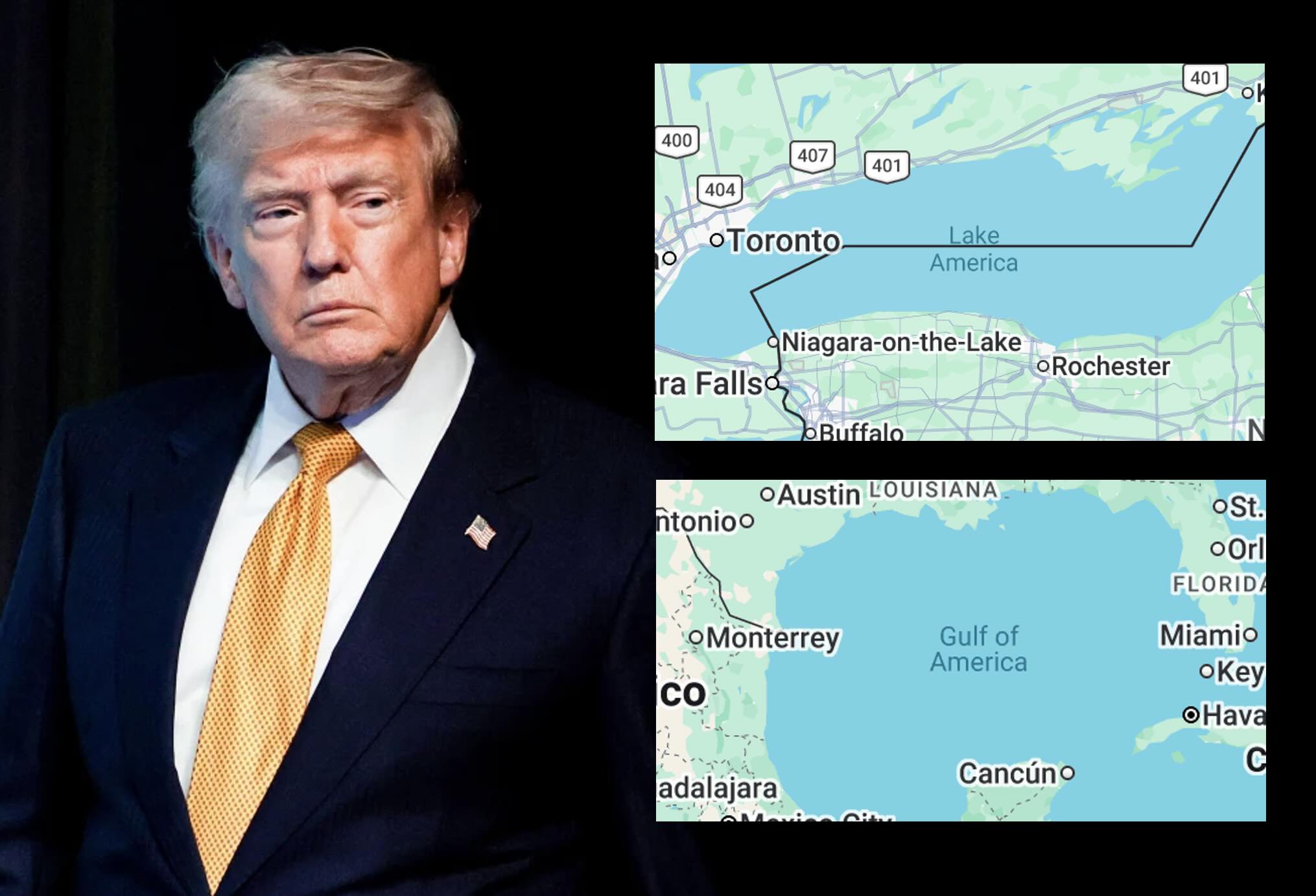
Photo: Emerald Book Image
On January 20, 2025, President Donald Trump signed an executive order renaming the U.S. portion of the Gulf of Mexico to the "Gulf of America." Nineteen months later, on August 27, 2026, he signed another, ordering that Lake Ontario be officially redesignated as "Lake America" amid an escalating trade war with Canada. Between these two symbolic acts—both framed by the administration under the directive "Restoring Names That Honor American Greatness" as gestures of national pride—the material reality for the average American consumer has not just stagnated; it has actively deteriorated by nearly every measurable metric. While Wall Street celebrated a surging S&P 500 up 27.5% and corporate boards cheered deregulation, the economic foundation for working-class families has crumbled under the weight of persistent inflation, crippling debt, and a labor market that has shed hundreds of thousands of jobs.
The Cost-of-Living Crisis: Gas, Food, and Everything Else
When the first renaming was signed, inflation was already a persistent challenge. But between January 2025 and August 2026, the situation went from bad to worse. The headline annual inflation rate, which had decelerated from 4.2% in May 2026 down to 3.4% in July 2026, remains stuck above the Federal Reserve's 2% target. A 3.4% inflation rate does not mean prices are falling; it means they are still compounding on top of previous hikes. Wages have simply failed to keep pace with the cumulative cost of housing, insurance, and food.
By August 2026, the national average for a gallon of regular gasoline had remained above $4.00 every single day of the month, setting a record for the most expensive August in American history at $4.10 per gallon. Prices have skyrocketed by roughly 30% to 40% compared to last year. The primary driver was Operation Epic Fury—the U.S. and Israeli military "conflict" in Iran that launched in late February 2026—which led to a blockade of the Strait of Hormuz, pinning crude oil in the $80 to $110 per barrel range.
The impact has been devastating for working families. As Max Levchin, CEO of the buy-now-pay-later firm Affirm, stated on August 28, high gas prices are heavily weighing on shoppers. Working-class Americans are increasingly turning to point-of-sale micro-loans and short-term debt financing just to handle everyday inflationary points like refilling their fuel tanks. When filling up a mid-sized sedan costs $60 to $80, there is simply less money left for groceries, rent, or healthcare.
- Gas Prices: National average hit a record $4.10/gallon in August 2026, up 30–40% year-over-year. California ($5.63), Hawaii ($5.41), and Washington ($5.27) saw prices over $5.
- Inflation: Stuck at 3.4% — prices are still compounding on top of previous hikes, not falling.
- Consumer Confidence: The Conference Board's index dropped to a seven-month low of 89.4, with citizens citing over-$4 gas as the primary driver of pessimism.
Even the most affordable staples have become out of reach. On August 4, 2026, McDonald's executives admitted that lower-income traffic has plummeted. The average price of a fast-food meal in major U.S. cities has crossed into double digits at $11.56, while a Quarter Pounder with Cheese meal has more than doubled in price from $5.39 to $11.99. Items that used to cost $1 a decade ago, like the McDouble, have jumped closer to $3—a massive 150%+ surge. The "dollar menu" is dead, and for many, fast food has become a luxury. In the first seven months of 2026, overall traffic to quick-service restaurants fell by 1.3%, with lower-income consumers cutting back entirely and cooking at home instead.
The Labor Market Illusion
The administration has pointed to a headline unemployment rate of 4.1% as evidence of a strong job market. But this figure masks a much darker reality. The official U-3 rate only counts people actively looking for work in the past four weeks. It ignores millions of Americans who have stopped looking entirely, as well as the vast ranks of the underemployed—people working part-time jobs who desperately want full-time work.
When you factor in these hidden layers—marginally attached workers, discouraged workers who believe no jobs are available, and involuntary part-time workers—the government's own U-6 rate sits closer to 7.5% to 8.5%. Independent economic research groups estimate the "True Underemployment" rate, including gig workers and those trapped in multiple low-wage survival jobs, is nearly 15% to 20% of the functional workforce.
Since January 2025, the U.S. economy has shed jobs across critical sectors. Retail trade lost 129,000 jobs—with a benchmark revision expanding that to a downward correction of 154,600 jobs. Financial activities contracted by 121,000 jobs since its peak in May 2025. Manufacturing lost 78,000 jobs in 2025 alone, with independent data from the Joint Economic Committee placing total sector damage closer to 108,000 lost manufacturing jobs during Trump's first year.
As part of the administration's stated goal to downsize the federal government, the federal workforce shrank by 12%—a direct loss of over 250,000 government jobs, bringing it to its smallest size in 15 years. The Bureau of Labor Statistics' preliminary benchmark revision, released on August 28, confirmed the economy created 79,000 fewer jobs between March 2025 and March 2026 than initially reported. In July 2026 alone, the U.S. economy unexpectedly shed 23,000 jobs, and revisions erased another 103,000 jobs from May and June.
A comprehensive analysis by the Center for American Progress highlighted the structural inequality of this labor market: since January 2025, 361,000 fewer workers without college degrees have jobs. While high-end tech positions and healthcare roles expanded, the material reality for blue-collar and service-industry Americans has been defined by shrinking payrolls, cut hours, and outright layoffs.
The Debt Trap: Personal and National
Compounding these pressures is the crushing weight of debt. For the average American, high interest rates—kept elevated to combat 3%+ inflation—have made borrowing for a home, a car, or even everyday expenses prohibitively expensive. Credit card rates are at multi-decade highs, and the housing market has become increasingly inaccessible for a generation of renters.
At the national level, the situation is even more alarming. The U.S. gross national debt has surpassed $40 trillion—the highest of any country in human history. The debt has effectively doubled in just 10 years. The federal budget deficit reached $1.8 trillion for the first 10 months of the 2026 fiscal year alone, and the Congressional Budget Office expects the full-year deficit to easily exceed $2.1 trillion.
The annual net interest payments on the U.S. national debt have skyrocketed to $1 trillion per year. To put that staggering number into perspective, it now completely eclipses several major pillars of federal spending. The government now spends more on interest payments than on the entire U.S. Armed Forces, weapons procurement, and national security combined—which hovers around $850 billion to $900 billion. Interest payments have also surpassed the total federal cost of Medicaid and dwarf the combined federal budgets for public education, scientific research, highway construction, and environmental protection.
To manage this, the Treasury Department—led by Treasury Secretary Scott Bessent—shocked Wall Street on August 19, 2026, by announcing it would at least double its bond repurchases to $4 billion per operation starting in September. Investors have grown terrified of long-term U.S. debt because of the skyrocketing $40 trillion national deficit, causing 10-year and 30-year bond yields to spike to 20-year highs. The Treasury is buying back expensive long-term 30-year bonds and funding those purchases by issuing an absolute flood of short-term Treasury bills. This is an act of financial triage—comparable to a household using one credit card to pay off another—that makes the economy extremely vulnerable to sudden shocks like the escalating trade war with Canada. It also crowds out private sector investment in small businesses, corporate expansion, and home mortgages.
The AI Bubble and the False Promise of Growth
What little top-line GDP growth the economy has seen—1.5% in Q2 2026—has been heavily propped up by a speculative boom in artificial intelligence capital expenditures. Business investment grew at a robust annualized rate of nearly 10% in the first half of 2026, largely powered by companies building out AI infrastructure, equipment, and intellectual property.
But a Wall Street Journal analysis revealed that nine major tech companies carry $3 trillion in total commitments related to AI. Only about $600 billion of that is traditional, reported annual CapEx. The remaining multitrillion-dollar chunk is composed of massive long-term borrowings, leases, and off-balance-sheet commitments to power grids and infrastructure. Wall Street credit agencies have issued warnings that investors are growing fatigued by this sudden flood of corporate debt. If AI fails to generate the massive revenues required to pay off these multi-trillion dollar bonds, it could trigger a deep corporate debt crisis.
Skeptics draw direct comparisons to the late 1990s dot-com era, where massive investments in fiber-optic cables and internet infrastructure led to a temporary economic boom, followed by a sharp recession when the market corrected. If tech companies scale back their capital expenditures, that portion of GDP growth could evaporate quickly, revealing the underlying economic weakness that the aggregate numbers currently mask.
A Consumer Economy on Thin Ice
The cumulative effect of these forces has been a steady erosion of consumer confidence. The Conference Board's Consumer Confidence Index dropped to a seven-month low of 89.4 in August 2026, with surveyed citizens explicitly citing over-$4 gas and the rising cost of living as the primary drivers of their financial pessimism.
The two renamings—from the Gulf of Mexico in January 2025 to Lake Ontario in August 2026—serve as convenient political markers for a period in which the daily material existence of the American public has become distinctly more fragile. As New York Governor Kathy Hochul called the decrees "absurd," critics label the renamings a form of political theater meant to distract voters from the negative fallout of a self-inflicted trade recession.
The timeline tells the story clearly: January 2025 brought promises of economic revival, but prices for core necessities remained locked at historically high baselines. Late February 2026 saw the geopolitical shock of the Iran conflict, shattering any hope of consumer relief. Spring and summer 2026 brought gas prices surging past $4.00 per gallon, acting as an immediate regressive tax on commuters. And August 2026 delivered the second renaming alongside a 50% tariff on $20 billion worth of Canadian imports, with Canadian retaliatory tariffs scheduled to hit on September 8, 2026—threatening to push inflation even higher.
The "America First" branding has arrived alongside an economy that feels increasingly out of reach. The symbolic gesture of rewriting borders and changing maps has completely failed to shield consumers from the tangible, exhausting impact of an unfolding trade war, an ongoing energy crisis, record-breaking gas prices, and an unsustainable debt burden. For the average citizen, the gap between the soaring stock market and the struggle to fill a gas tank has never been wider.
No Ads. By Us. For Us.
This article was made possible by readers like you. We hope it inspired you to support Emerald Book, so we can continue producing content like this.
We will never show you ads, sell your data, or require a subscription to consume our content. Your gift helps us keep the truth accessible.
Click the Support button to give a gift of any amount today.
Thank you for making this work possible.