

Emerald Pages
◆
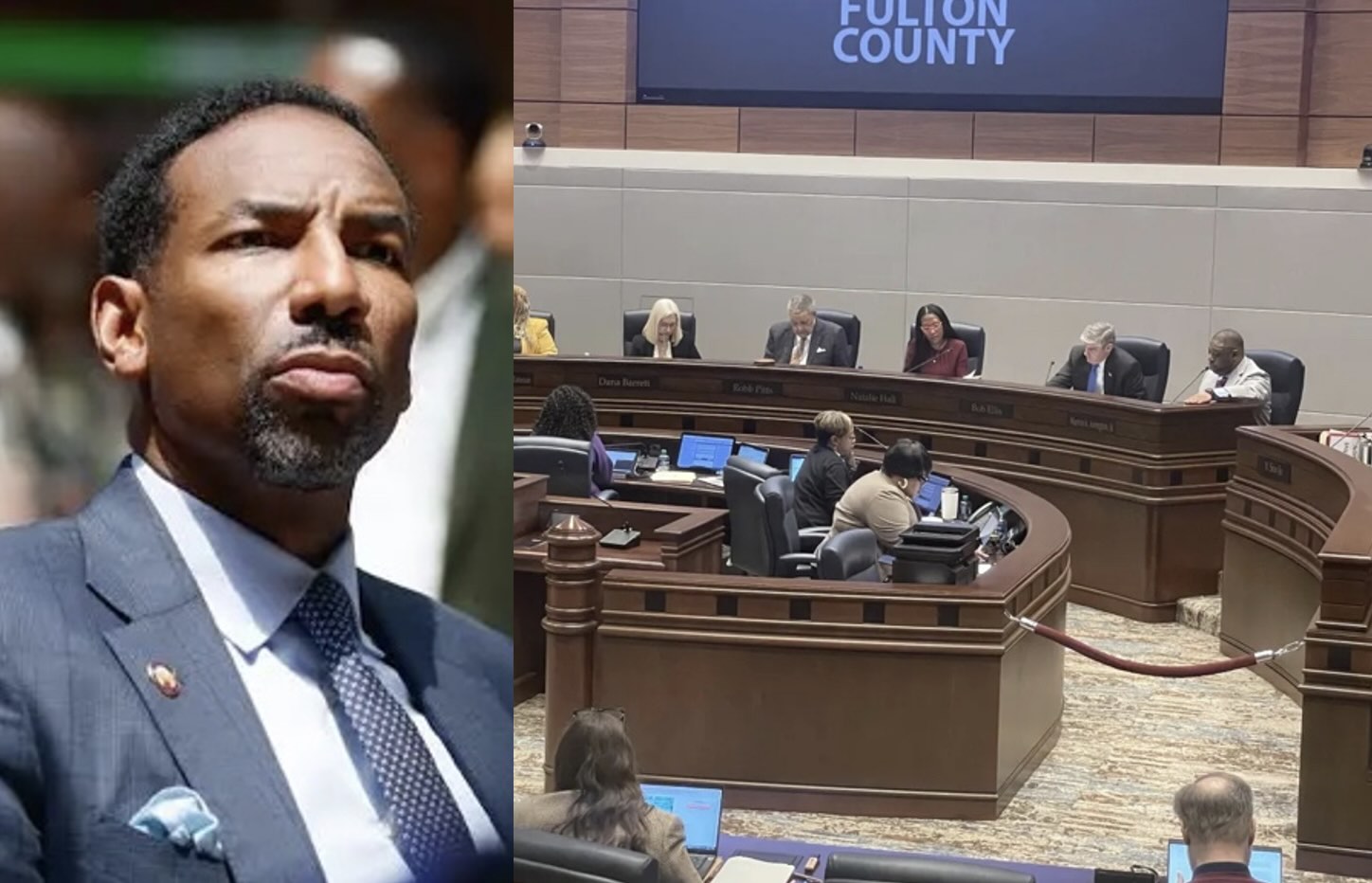
Photo: Mayor Andre Dickens (left) and Fulton County Board of Commissioners (right) | Emerald Book Image
In the battle for the soul of Atlanta's future, one question highlights the deep divide: is it better to invest in people or in prison cells? The answer, it seems, depends entirely on which side of the county line you stand. Over the past year, a profound conflict has unfolded between the City of Atlanta and Fulton County, revealing a fundamental disagreement on how to address public safety, poverty, and the staggering cost of incarceration.
On one side, Mayor Andre Dickens has unveiled an ambitious $5.5 billion Neighborhood Reinvestment Initiative (NRI), a comprehensive plan to tackle the root causes of crime and poverty through affordable housing, healthcare, and economic development in historically neglected communities. On the other, the Fulton County Board of Commissioners is authorizing up to $1.36 billion in debt financing to construct a new "special purpose" jail facility and renovate the notoriously dangerous Rice Street Jail. The conflict is not just about money, but a clash of philosophies: addressing systemic issues versus managing their symptoms.
The most visible flashpoint is the fate of the Atlanta City Detention Center (ACDC). Once slated to be transformed into a "Center for Equity, Wellness, and Freedom," the city reversed course and considered leasing it to Fulton County to alleviate overcrowding. Fulton County has now formalized a $56.5 million offer to buy the jail outright. Activists with coalitions like "Community Over Cages" strongly oppose the sale, arguing it would solidify the county's carceral footprint and undermine decades of work towards decarceration.
The Case for Community Investment
Proponents of community reinvestment argue that direct investments in housing, mental health, and job training address the socioeconomic drivers of crime. A vast body of criminological research supports this "justice reinvestment" model, showing that stable housing dramatically reduces recidivism, and that youth programs are far more effective at preventing crime than building more jail cells. Mayor Dickens's plan would allocate $1.3 billion to build or preserve 20,000 affordable housing units and $170 million specifically for healthcare and food access—services that criminologists argue are the true "public safety" infrastructure.
- Housing & Health: The plan invests $1.3 billion in affordable housing and $170 million in healthcare and food access, directly targeting the root causes of poverty-driven crime.
- Economic Opportunity: $88 million in commercial development grants would support minority-owned businesses and create living-wage jobs, providing alternatives to the illegal economy.
- Underutilized Alternatives: The city and county jointly funded a Center for Diversion Services, but it remains severely underused as police continue to route individuals into the jail system rather than to care.
However, the path to these investments is blocked. The mayor’s $5.5 billion plan hinges on extending Tax Allocation Districts (TADs), which freeze future property tax growth. Because a single property owner pays taxes to the city, the county, and the school system, the city needs permission from Fulton County and Atlanta Public Schools (APS) to use their share of the tax revenue. Fulton County voted 4-1 to reject the extension, arguing that losing billions in future revenue would cripple their ability to fund court systems and public health. The plan's fate now rests with the APS Board of Education, which is delaying a vote as it calculates the potential loss of $2 to $4 billion to its own budget.
Fulton County's $1.36 Billion Jail Plan
While the mayor's plan struggles for funding, Fulton County is moving full-speed ahead with one of the largest public works projects in its history. The Jail Capital Improvement Program is a three-phase, multi-billion-dollar carceral expansion designed to address an active humanitarian and legal crisis at the Rice Street jail, which is under a Department of Justice investigation due to overcrowding, violence, and unconstitutional conditions.
- A New "Special Purpose" Facility ($734M): A brand-new, 1,800-bed facility designed to house the most vulnerable populations, including those with severe mental illness and medical needs.
- Rice Street Renovation ($489M): A massive, phased modernization of the existing jail towers, addressing failing infrastructure like fire alarms, cell doors, and plumbing.
- Immediate Housing ($140M): Funds to secure off-site temporary beds to prevent dangerous overcrowding during the decade-long construction process.
County officials argue that the project is a non-negotiable, short-term solution to an immediate crisis. They are terrified of being held in contempt of court or having the federal government take over their budget. From their perspective, building a safer "cage" is the only way to fulfill their baseline legal duty to house the massive pretrial population—a population that has grown due to systemic court backlogs and a lack of community resources to divert them.
Yet, critics argue that spending over a billion dollars on carceral infrastructure is a fiscally irresponsible response to a problem of their own making. The cost of housing a single inmate can range from $35,000 to over $70,000 per year. In contrast, providing that same person with community-based supportive housing and mental health counseling costs a fraction of that. By refusing to invest in the community, the county is locking taxpayers into a self-perpetuating cycle of debt and incarceration.
A Tale of Two Counties
The policy choices in Fulton County stand in stark contrast to its neighbor, DeKalb County. While Fulton builds a $1.36 billion carceral complex, DeKalb has capped its jail improvements at $51.8 million—just enough to fix broken locks, roofs, and toilets. Instead of borrowing billions for prison beds, DeKalb invested its political capital in a $155 million Housing Bond Program to create or preserve 10,000 affordable homes, alongside direct government property purchases for transitional housing.
This comparison reveals the root of the problem: a failure in political will and intergovernmental cooperation. The system is trapped in a loop of managing consequences rather than preventing them. Short election cycles incentivize "concrete" solutions over "concept" solutions that take years to yield results. The fear of immediate liability over federal and legal scrutiny pushes officials to "fix" the jail crisis today, even if it means destroying the community's future tomorrow. The ultimate question, as local advocates and the mayor's office have pointed out, is what kind of city Atlanta wants to be: one that builds its future on community wellness, or one that builds it on cages.
No Ads. By Us. For Us.
This article was made possible by readers like you. We hope it inspired you to support Emerald Book, so we can continue producing content like this.
We will never show you ads, sell your data, or require a subscription to consume our content. Your gift helps us keep the truth accessible.
Click the Support button to give a gift of any amount today.
Thank you for making this work possible.