

Emerald Pages
◆
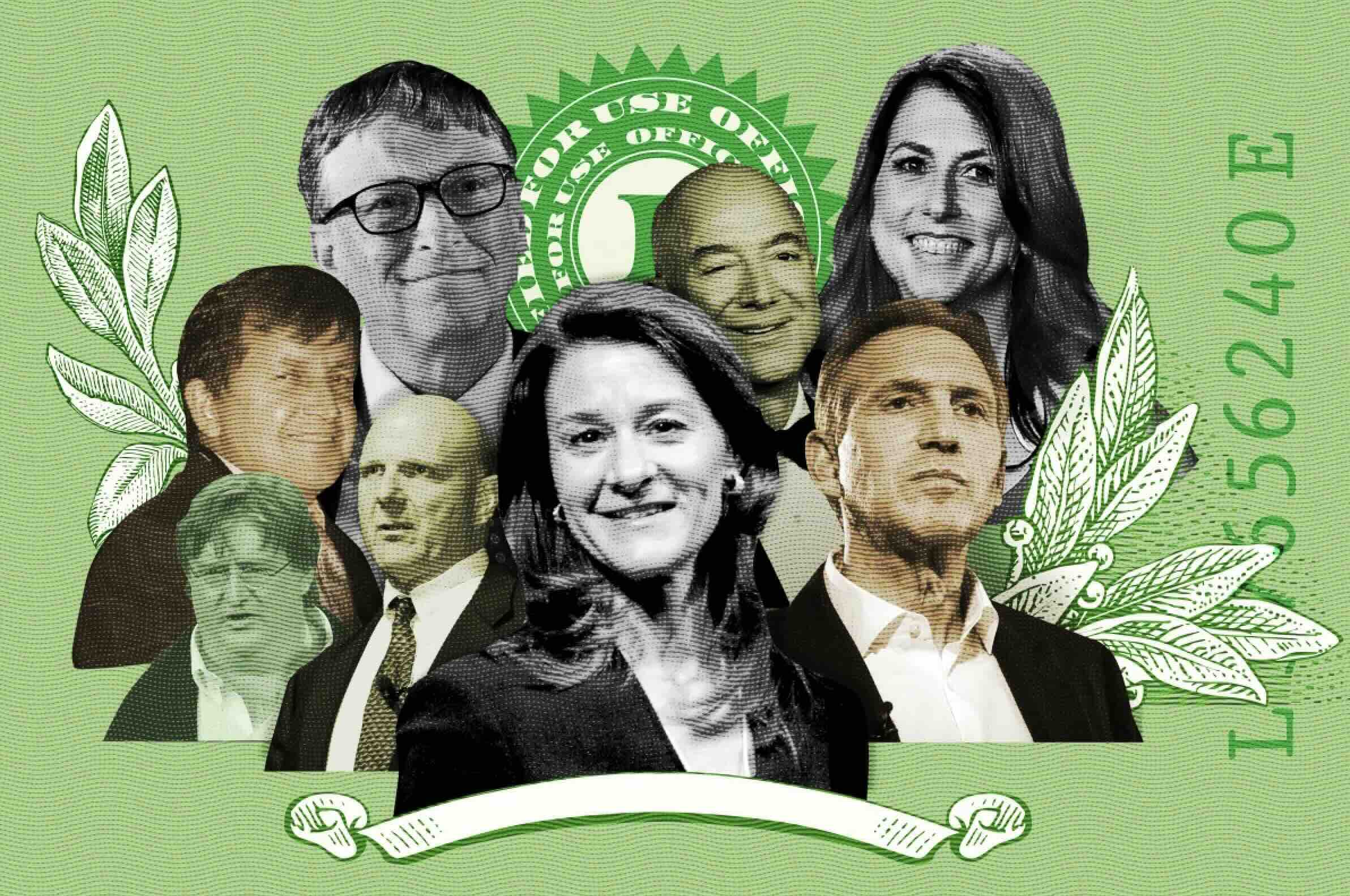
Photo: Seattle Met
E conomies are not driven by the amount of money that exists, but by how fast that money moves. This fundamental principle, known as the velocity of money, is the lifeblood of a healthy society. When a dollar changes hands from a consumer to a business, to a worker, and back to a consumer, it generates economic growth, creates jobs, and funds innovation. However, there is an insidious and mathematically guaranteed way to slow this entire system down: concentrating a highly disproportionate share of that wealth in the hands of the ultra-rich.
At its core, this slowdown is not about ideology; it's just arithmetic. The economic engine relies on a principle known as the diminishing marginal propensity to consume (MPC). For a middle-class family, an extra dollar is immediately spent on rent, groceries, healthcare, or car repairs—their MPC is near 0.85 to 0.95. For a billionaire, an extra thousand dollars is nearly all saved or invested in stagnant assets because their consumption needs are already fully met; their MPC plummets to 0.05 to 0.10.
When national income shifts heavily toward those with a low MPC, aggregate demand drops. Businesses see fewer customers, and in turn, pull back on hiring and expansion. This creates a self-reinforcing cycle of stagnation. By prioritizing the extraction of wealth over its circulation, we are effectively pouring massive amounts of the economy's fuel into a static reservoir where it no longer powers the engine.
When money is hoarded at the top, it stops circulating. The same total amount of money exists in the economy, but it's no longer changing hands at the same speed. A dollar that sits in a billionaire's portfolio doesn't pay a worker's salary, doesn't buy groceries, and doesn't keep a small business afloat.
The Wages Circulation Breakdown
Perhaps the clearest illustration of this slowdown is the breakdown of wage circulation. In a balanced economy, wages are the fuel that keeps money moving in a continuous, self-reinforcing circle: businesses pay high wages, workers spend immensely, and the resulting surge in business revenues funds further wages.
However, when a corporation generates $100 million in excess profit and uses it for stock buybacks and executive bonuses instead of raising worker wages, the circular flow breaks. The money is sent to the top, where it hits a dead end in financial portfolios. Meanwhile, the 1,000 workers with stagnant wages face rising costs, forcing them to cut spending on local businesses. The result is a sharp decline in aggregate demand, causing local businesses to lose customers and, ultimately, the economy to slow.
- Healthy Economy: Businesses pay high wages → Workers spend on goods/services → Business revenues surge → More hiring and investment.
- Stagnant Economy: Businesses divert profits to top → Wealth hoarded in static accounts → Worker wages stagnate → Aggregate demand craters, slowing growth.
- The Math: One billionaire hoarding $100 million does far less for the economy than 2,000 middle-class families spending a $50,000 salary back into their local communities.
This is the "leaky bucket" analogy in practice. When money is hoarded, it's like a massive leak in the economic pipe. Huge amounts of cash exit the active cycle and pool into static reservoirs, causing the pressure to drop and the flow to slow.
The Real-World Consequences
When a society's wealth concentrates and the middle class shrinks, the economy fundamentally changes what it produces, often leading to a crisis in affordability.
For instance, as the number of ultra-wealthy grew over the last decade, developers shifted their focus. Instead of building affordable starter homes, it became far more profitable to construct luxury estates and high-end condos. This supply shift forced middle- and lower-income families to spend 40% to 50% of their paychecks on housing, leaving little for local businesses, restaurants, and retail. The money trapped in high housing costs stalls the broader consumer economy.
Similarly, corporations pivot to "premiumization," producing high-priced goods exclusively for the rich. Automakers discontinue affordable models to focus on luxury SUVs, and theme parks expand premium "skip-the-line" passes. This prices the average consumer out of the market, contracting total economic volume and grinding momentum to a halt.
The Tragedy of the Commons
This raises a crucial question: why do the rich and corporations act in ways that damage the very economy they rely on? The answer lies in a concept known as the Tragedy of the Commons. Meaning, only common folk feel the pain the wealthy create. What makes sense for an individual business (freezing wages to maximize profit) is disastrous for the economy as a whole when everyone does it simultaneously. No single corporation wants to be the only one paying higher wages while its competitors cheat. To avoid this, they all freeze wages, collectively destroying the consumer base.
Furthermore, the system is designed to reward individual extraction. A CEO is incentivized to boost short-term stock prices via cost-cutting and buybacks, even if this kills long-term demand. Their massive bonus is tied to the immediate stock ticker, not the health of the economy five years from now.
Because the ultra-rich are insulated from the consequences of a slowing economy (private security, healthcare, and schools), they feel no personal pain from the structural damage they help create. This is why market forces alone cannot fix this problem; the market cannot resolve a Tragedy of the Commons on its own.
The Solution: Forcing Circulation
This is where progressive taxation and wage policies become not just beneficial, but necessary. These are not tools of punishment but mathematical mechanisms to force locked-up capital back into active circulation.
Historically, high top marginal tax rates (over 70% in the post-WWII era) functionally forced corporations to reinvest profits into worker wages and new factories rather than paying out personal income, which would be heavily taxed. This resolved the "free-rider" problem by creating a centralized baseline for the commons.
While supply-siders warn that excessive taxation can stifle innovation and cause capital flight, many economists and policy analysts argue that the immediate damage caused by current levels of severe wealth stagnation far outweighs these theoretical risks. When we look at the record levels of corporate cash reserves coupled with stagnant wages, the bottleneck is clearly a lack of customer demand, not a lack of investor capital.
Ultimately, prioritizing profit at the expense of wages treats the economy like an extraction mine rather than an ecosystem. Eventually, the mine runs dry because consumers run out of money to keep the system fueled. To restore balance, societies must step in with regulations, forced circulation, and structural reform to ensure that the velocity of money—the lifeblood of the economy—continues to flow.
No Ads. By Us. For Us.
This article was made possible by readers like you. We hope it inspired you to support Emerald Book, so we can continue producing content like this.
We will never show you ads, sell your data, or require a subscription to consume our content. Your gift helps us keep the truth accessible.
Click the Support button to give a gift of any amount today.
Thank you for making this work possible.