

Emerald Pages
◆
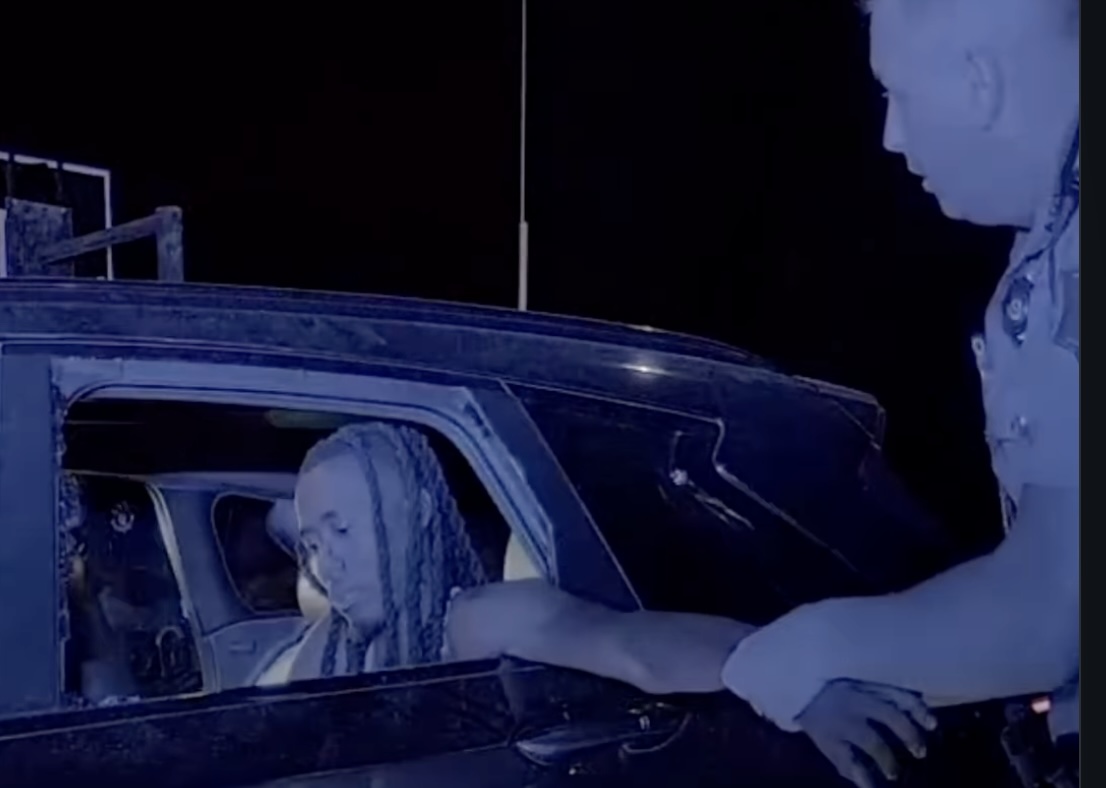
Photo: NEA Report
T he ongoing handling of recent Arkansas State Police cases perfectly illustrates how viral moments feed directly into the trap of desensitization and exhaustion. Two separate, deeply distressing videos involving Arkansas State Troopers are actively circulating on social media feeds, exposing the brutal reality of state violence while simultaneously being weaponized by algorithmic systems to suppress the very mobilization these videos should inspire.
The Case of Tedrick Washington: Viral dashcam and bystander footage shows an Arkansas State Trooper breaking an SUV's rear window, grabbing a 23-year-old Black man named Tedrick Washington by his dreadlocks to violently yank him out of the vehicle, and punching him in the face. The footage is visceral, immediate, and deeply traumatizing to witness.
The Case of Alisa Hackett: Just weeks prior, another viral Arkansas State Police video emerged showing Trooper Moisses Arellano throwing an 18-year-old Black girl, Alisa Hackett, to the ground during a traffic stop and repeatedly punching her in the face with a closed fist. The brutality is undeniable.
When videos like these enter the social media ecosystem, the corporate mechanics of the attention economy immediately take over. The platforms convert a community's urgent civil rights crisis into a tool for engagement, treating real human suffering as high-velocity data to be packaged, distributed, and monetized.
How the Algorithm Flattens the Brutality
To these platforms, the footage of Tedrick Washington being yanked by his hair or Alisa Hackett being punched is treated purely as high-velocity data. The algorithm detects that Black users are stopping, rewatching, and commenting out of sheer horror, anger, and communal concern. The machine instantly reads this collective trauma as "high demand" and aggressively pushes the video to the top of more Black users' feeds — often making it the very first thing they see when they open the app.
This is not an accident. It is the deliberate outcome of an engagement model that prioritizes high-arousal emotions — outrage, shock, and fear — because they drive the most comments, shares, and watch time. The algorithm does not care if it captures attention through a civil rights crisis or a meme; both actions generate the exact same ad revenue. The communal crisis becomes a monetizable data point.
Immediate Context Collapse and Trivialization
Because the platform's primary goal is to prevent the user from closing the app out of pure emotional burnout, the feed is engineered to act as a shock absorber. Right underneath the disturbing footage of a trooper using a closed fist on an 18-year-old or pulling a man by his dreadlocks, the algorithm seamlessly inserts the dancing cat, the laughing baby, and AI slop. This rapid-fire sequence sends a damaging message to the subconscious: it teaches the brain that graphic state violence against Black bodies is just standard, everyday "content" to be consumed and scrolled past.
- Context Collapse: The removal of boundaries between serious news and entertainment forces the brain to rapidly switch between grief, amusement, and confusion.
- Trivialization: By packaging violence identically to memes, the algorithm signals that the trauma is disposable entertainment rather than a crisis demanding action.
- Emotional Whiplash: The rapid shift from horror to humor creates psychological disorientation, preventing the user from processing what they just witnessed.
Deepening the Exhaustion and Desensitization
This cycle creates a severe double-bind for the community. On one hand, sharing these videos is necessary to expose the truth, hire civil rights attorneys, and pressure groups like the Arkansas Legislative Black Caucus to demand accountability. The ability to document and broadcast instances of state violence has been a crucial tool for justice in the digital age.
On the other hand, forcing users to process severe violence immediately alongside trivial digital noise causes profound emotional exhaustion. To protect itself from this whiplash, the mind builds up a layer of numbness. This desensitization is not a lack of caring; it is the wear and tear of a system that forces human beings to consume their own community's survival struggles as daily entertainment.
This is the concrete reality of the trap: the platforms take real, urgent instances of injustice and package them into an addictive, unregulated infinite scroll drug. It actively drains the Black community's emotional reserves, turning valid political outrage into passive, exhausted scrolling while the platform continues to generate ad revenue from the traffic.
The Suppression of Mobilization
The ultimate effect of this engineered cycle is the suppression of sustained, effective mobilization. Real political organizing requires focus, long-term planning, and deep community trust. The engineered feed destroys all three. By constantly hitting users with a "trauma-to-trivia" loop, the platform keeps the brain in a state of permanent cognitive exhaustion. You cannot easily organize a sustained movement when your attention span is being fragmented every 15 seconds.
The algorithm creates a community of exhausted onlookers rather than organized participants. When massive waves of online anger flare up and then die down just as quickly when the next viral trend hits, those in power know they can simply wait it out. The platforms function like a pressure-release valve for society: they allow marginalized communities to vent their intense grief and anger in a controlled digital space where it does not immediately threaten corporate profits or systemic power structures.
Breaking the Trap
Breaking out of a trap engineered by multi-billion-dollar corporations requires a deliberate shift from passive consumption to active curation. When a graphic video appears, swipe away within five seconds — the algorithm tracks milliseconds, and leaving immediately signals that the content is a failure. Go into your settings and mute keywords like "police," "shot," and names of victims to force a mechanical block on your feed. Never open social media during the first hour of your day, allowing your brain to stabilize naturally. Move your news consumption off the infinite scroll to dedicated, human-vetted sources like Black-owned newspapers and independent journalists. When mobilization is needed, shift conversations to encrypted group chats or physical spaces where algorithms cannot track or exhaust organizers. And intentionally seek out content that highlights Black joy and everyday life to prevent your identity from being flattened into a constant crisis.
What the Companies Must Be Forced to Do
To stop this at the root, tech companies must be legally and structurally forced to change. Because their business model prioritizes engagement over human safety, they will only change if governments and courts treat their algorithms like hazardous consumer products.
Regulators should mandate chronological feeds as the default, removing the AI's ability to push violent content to the top of your screen. Companies should be barred from using algorithms that mix trauma with entertainment to induce addiction, and forced to separate news and entertainment into distinct tabs.
Laws like Section 230 must be reformed so companies can be sued for their recommendation engines. If an algorithm deliberately amplifies racial trauma to drive ad revenue, the company should be liable for the psychological harm it causes.
Platforms should be forced to implement circuit breakers that stop graphic violence from going viral until human moderators can apply warnings. No user should see a person being brutalized without an opaque blur and a prompt asking if they wish to view it.
Independent audits must legally require companies to prove their systems are not disproportionately feeding violent imagery to marginalized communities based on race. Companies should also be forced to invest in diverse, well-compensated human moderation teams trained in cultural dynamics and trauma.
These structural changes would dismantle the attention economy's ability to exploit racial trauma for profit. By forcing platforms to separate news from entertainment, add friction to viral violence, and accept legal liability for algorithmic harm, we can reclaim our digital spaces and protect the community's mental health and capacity to mobilize.
No Ads. By Us. For Us.
This article was made possible by readers like you. We hope it inspired you to support Emerald Book, so we can continue producing content like this.
We will never show you ads, sell your data, or require a subscription to consume our content. Your gift helps us keep the truth accessible.
Click the Support button to give a gift of any amount today.
Thank you for making this work possible.