

Emerald Pages
◆
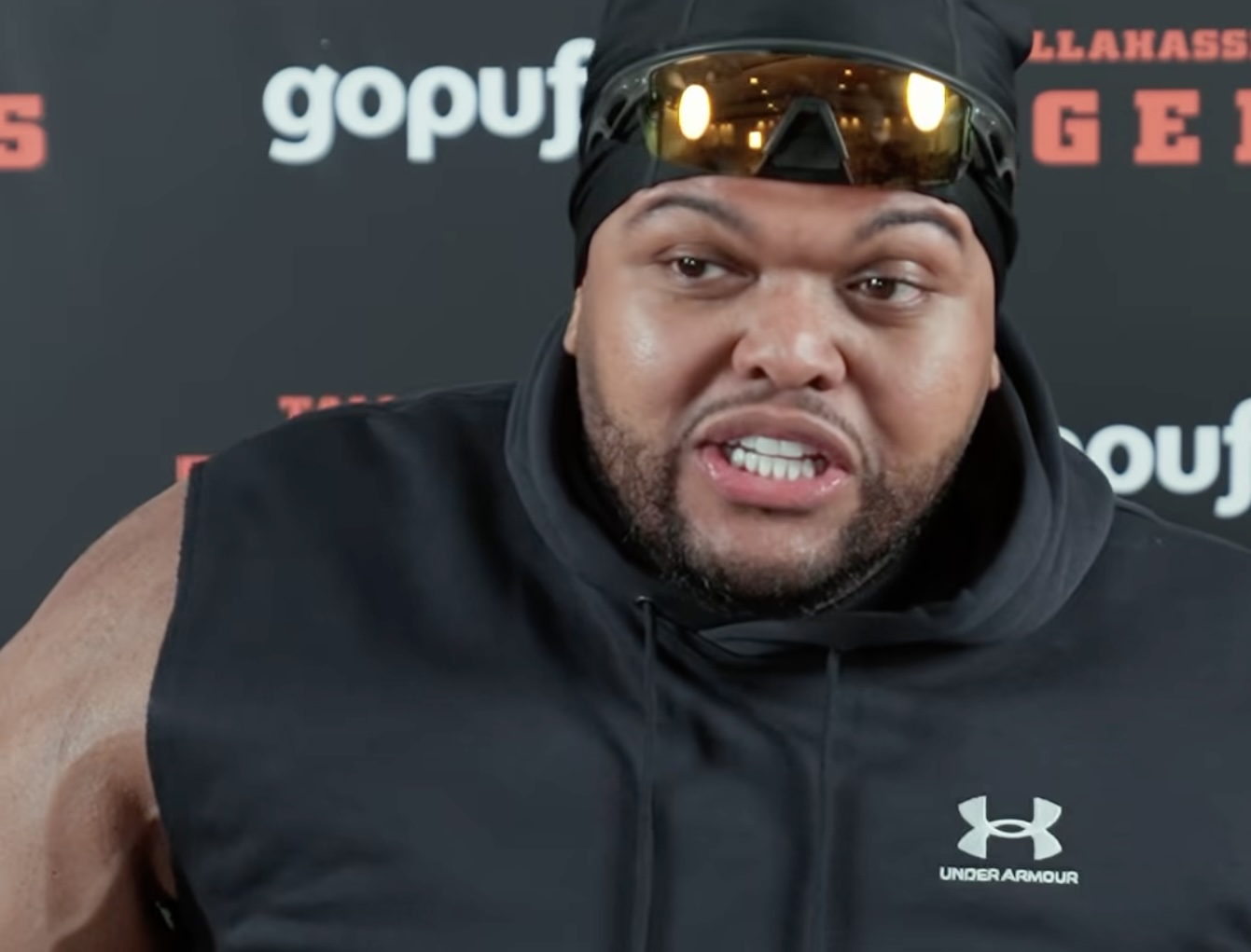
Photo: Druski | Facebook
Comedian and social media personality Druski released a viral satirical skit titled "ATHLETES GET C0NCUSSI0NS & LOSE THEIR MINDS"—and the internet erupted. The high-production sketch follows a fictional running back named Ray Price, who, after taking a brutal helmet-to-helmet hit, exhibits erratic and bizarre behaviors: leading police on a 10‑mile chase in a gold Ferrari, banging his head against a locker, and completely forgetting his own football career during a press conference. It was dark humor at its most provocative.
But the timing was explosive. The same week Druski dropped the video, a landmark study published in The BMJ revealed that at least 24.5% of former NFL players develop Chronic Traumatic Encephalopathy (CTE)—with estimates ranging as high as 97.7% when accounting for selection bias. The skit didn't just go viral; it collided head‑on with a scientific bombshell, forcing a national reckoning over whether football's most devastating injury has become acceptable punchline material.
The backlash was immediate and fierce. T.J. Ward, the former Denver Broncos Super Bowl‑winning safety, blasted the video on a podcast, getting emotional as he compared mocking CTE to joking about cancer or dementia. Michael Redd, the former NBA All‑Star, publicly called out Druski on X, acknowledging his comedic talent but firmly stating that CTE is a terrifying reality that should not be turned into a joke. Even as some fans defended the skit as dark humor that succeeded in bringing mainstream attention to a severe medical issue, the sports world was divided.
The Unbreakable Bond: Why CTE Is Inherent to Football
What Druski's skit inadvertently exposed—and what the new study confirms—is that CTE is not a freak accident. It is an inherent, unavoidable consequence of the physics of football. The disease is driven by thousands of subclinical "micro‑traumas," not just the violent, helmet‑to‑helmet collisions that make highlight reels. A lineman can take 1,000 to 1,500 low‑level impacts every season from routine blocking, often without a single diagnosed concussion.
Medical experts at Boston University and the Concussion Legacy Foundation have long argued that the key term is "non‑concussive impacts." These are hits that don't cause immediate symptoms but shake the brain just as violently. The physical mechanism is governed by Newton's First Law: when a player's head stops abruptly, their fluid‑cushioned brain continues moving, slamming against the internal walls of the skull. Rotational acceleration—the twisting motion from angled tackles—creates a "shearing" effect that tears microscopic nerve fibers, releasing toxic tau proteins that clump and kill brain cells over time.
The Flawed Physics of Safety
The NFL's strategy of engineering "safer" helmets is fundamentally misguided. Neurologists use the "car crash" analogy: a padded bumper protects the outer shell but does nothing to stop the driver inside from flying forward. Similarly, modern helmets cannot tether the brain in place. They can prevent skull fractures, but they cannot stop the brain from sloshing and twisting inside the skull. This is why a player can follow every concussion protocol perfectly and still develop CTE.
- 1 in 4 minimum: The new study analyzed 1,712 former players and concluded at least 25% of all NFL players develop CTE—a catastrophic baseline.
- Up to 97.7%: Because CTE can only be diagnosed after death, and families are more likely to donate brains of symptomatic players, the true prevalence is estimated much higher.
- 93% brain bank rate: Of the former players whose families chose to donate their brains, a staggering 93.2% tested positive for CTE.
- 20% no concussions: Approximately 20% of athletes diagnosed with CTE never had a single documented concussion in their lives.
This reality completely breaks the NFL's current safety model. You can penalize helmet‑to‑helmet hits, ban targeting, and mandate softer outer caps, but you cannot eliminate the physics of momentum. The cumulative head impact exposure (CHIE) is the primary driver of risk—every year a person plays tackle football increases their chance of developing CTE exponentially. The NFL is simply the destination where the bill for a lifetime of football finally comes due.
The Existential Crisis of American Football
The uncomfortable truth is that the things that cause CTE are the exact things that make football compelling. To truly "solve" CTE, you would have to eliminate the three‑point stance, ban all contested catches, and blow the whistle on any tackle that drives a player to the ground. Such changes would turn the sport into flag football, stripping away the physicality that underpins its massive $20 billion annual revenue. The NFL is trapped in a brutal paradox: if they fix the science, they kill the entertainment.
The NFL has known this for years. When Dr. Bennet Omalu first published his findings on CTE in 2005, the league demanded he retract his research. The 2015 concussion settlement capped liability for CTE‑related deaths to those who died before April 22, 2015—a legal cutoff that proves they knew future studies would confirm the disease's prevalence. Today, they pivot to managing optics, funding helmet competitions and imposing suspension rules for dangerous tackles, subtly shifting blame onto "illegal hits" rather than admitting that the basic physics of football is what damages the brain.
So where does that leave us? Druski's skit—whether intentionally or not—succeeded in bringing massive mainstream attention to a conversation many had stopped having. But as former players like T.J. Ward and Michael Redd have argued, the price of that attention is a painful one. The disease is real, it is fatal, and it is inextricably linked to a sport that millions of Americans love. The question is no longer whether football causes CTE. The question is whether we, as a society, are willing to accept that cost for the sake of entertainment.
No Ads. By Us. For Us.
This article was made possible by readers like you. We hope it inspired you to support Emerald Book, so we can continue producing content like this.
We will never show you ads, sell your data, or require a subscription to consume our content. Your gift helps us keep the truth accessible.
Click the Support button to give a gift of any amount today.
Thank you for making this work possible.