

Emerald Pages
◆
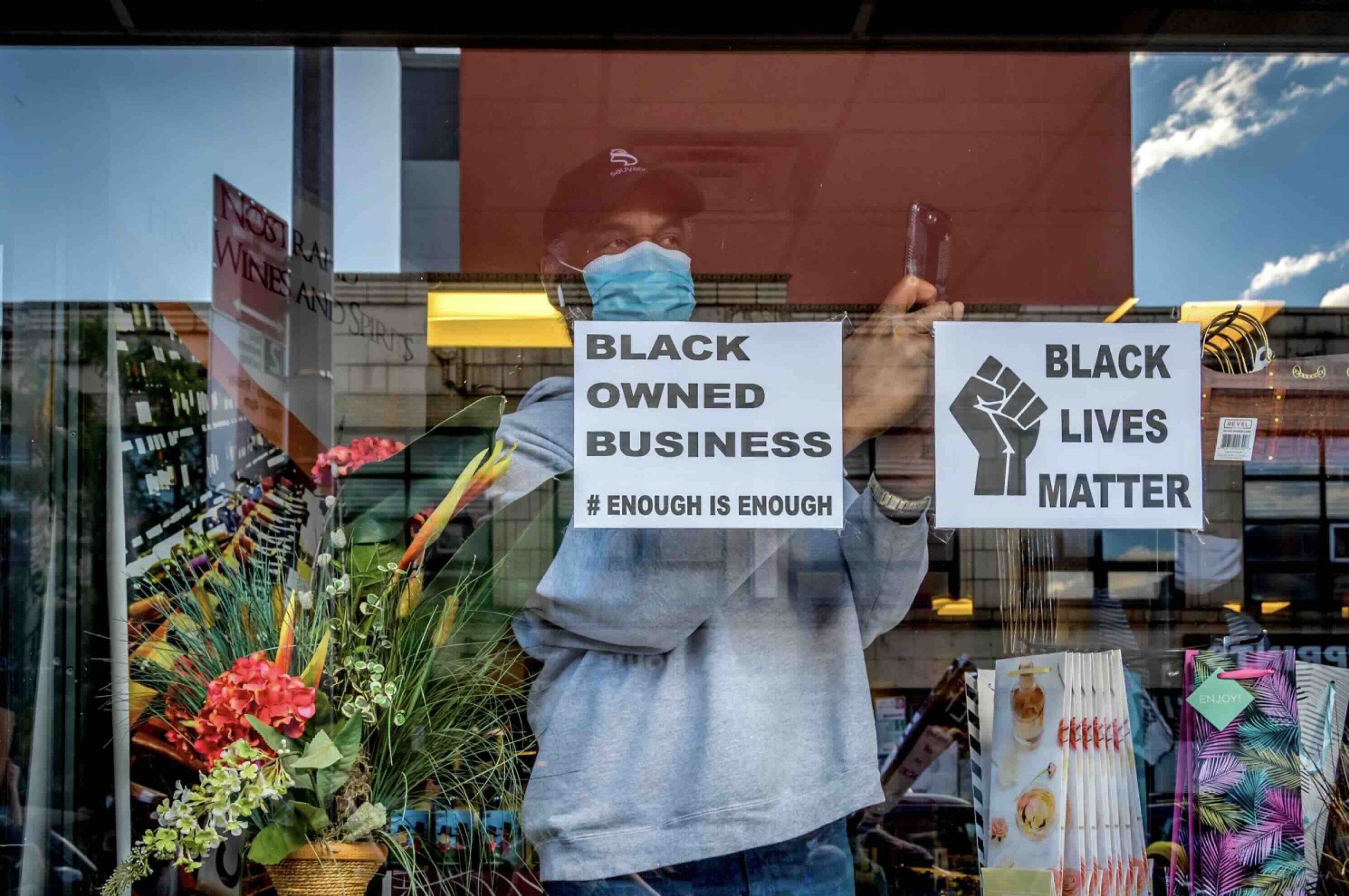
Photo: Erik McGregor | Getty Images
The Trump administration's latest wave of tariffs, which just went into effect following the collapse of trade negotiations with Canada, has created a sharply divided economic landscape. On one side, a small pool of massive corporations are reaping billions in financial benefits—either through targeted tariff refunds or reduced foreign competition. On the other, Black-owned businesses are facing a structural crisis, with many forced into a "Black recession" as operating costs skyrocket and community consumer bases tighten their budgets. This isn't an accidental side effect; it is the result of a policy framework that benefits the ultra-wealthy and well-connected while systematically oppressing independent minority entrepreneurs.
The economic data is stark. As the administration enacted sweeping 50% tariffs on roughly $20 billion to $28 billion worth of Canadian goods, the immediate winners were domestic heavy industry and multinational retail giants. However, for the 52% of Black-owned businesses reporting declining sales directly due to tariff disruptions, these policies are pushing them to cut staff or face outright closure. The "dollar-for-dollar" retaliation from Canada, set to begin September 8, 2026, only adds another layer of uncertainty that large corporations are equipped to handle, while small shops are left scrambling.
A Tale of Two Outcomes: Corporate Winners
The primary beneficiaries of this trade policy are not the American consumer or the average worker, but a select group of ultra-large corporations that have the infrastructure to absorb, contest, and even profit from the chaos of tariffs. Following the February 2026 Supreme Court ruling that struck down tariffs enacted under emergency powers, the government was forced to pay out $100 billion in certified refunds to major corporations that successfully navigated the legal labyrinth.
This financial windfall has been staggering. Walmart, the single biggest beneficiary, received a $2.9 billion check. Target secured $994 million, Amazon took in $600 million, and Ford Motor Company recorded a $1.3 billion tariff benefit. In a stark demonstration of the system's bias, economists like those at the Cato Institute have noted that while these behemoths' legal departments effectively secured refunds with interest, the government has contested small business class-actions, forcing mom-and-pop shops to pay legal fees that frequently outprice the refund itself.
Beyond these one-time refunds, domestic industrial giants like Nucor (NUE) and Steel Dynamics (STLD) are seeing their stocks surge by 49% and 34% year-to-date, respectively. The 50% tariffs on Canadian goods, which explicitly exclude major commodities like crude oil and primary steel, were designed to protect these domestic producers, giving them an insulated market and record order backlogs. As one analysis noted, these companies benefit from long-term market dominance secured by keeping foreign competitors locked out.
The Oppression of Black-Owned Businesses
While corporate America celebrates, Black entrepreneurs are on the front lines of a different economic reality. The systemic racial wealth gap means the average Black entrepreneur starts with significantly less personal or family capital than their white peers. When U.S. Customs demands sudden, unexpected six-figure tariff payments at the port before releasing inventory, these business owners rarely have the cash reserves to absorb the hit.
This cash-flow crisis is compounded by a dangerous financing trap. Blocked from traditional bank lending, Black owners are frequently forced onto high-interest emergency merchant loans, directly compounding their debt. The data from the Joint Center for Political and Economic Studies confirms that this is pushing many into what economists are calling a "Black recession," where operating overhead skyrockets just as their community-reliant consumer base faces its own economic pressures.
- The Beauty Sector: Most specialized Black hair and beauty products rely on imports from Vietnam and China. Under recent tariff regimes, the cost of synthetic hair packages has increased by $100 and glue prices have doubled, devastating small beauty supply shops.
- Food & Hospitality: Independent Black-owned restaurants and coffee shops operate on razor-thin margins. Tariff-driven price spikes on imported coffee beans and specialized seasonings force owners into a corner.
- The Double-Squeeze: As tariffs act as a consumption tax, inflation leaves local communities with less disposable income. Roughly 80% of Black consumers have reported cutting back on non-essential spending, starving community-reliant storefronts of necessary revenue.
The Intersection of Giving and Getting
A troubling aspect of this policy is the correlation between corporate political donations and financial windfalls. The companies that donated most heavily to Trump-aligned initiatives are the same ones reaping the greatest benefits. Ford Motor Company, which donated $1 million to Trump's inaugural fund, subsequently booked that massive $1.3 billion tariff benefit. Amazon, another $1 million donor, secured a $600 million clawback. Walmart, which has a long history of PAC giving, captured the single largest corporate handout of the trade war.
This is a reflection of a policy environment where access and legal infrastructure translate directly into profit. As a Citizens for Responsibility and Ethics in Washington (CREW) analysis highlighted, these companies are investing heavily in the political figures who craft the policies that either protect their market share or award them massive, court-mandated checks.
The Legal Cat-and-Mouse Game
The administration's ability to enact these tariffs despite a Supreme Court ruling against them is itself a testament to the power of legal infrastructure that benefits the well-heeled. When the Supreme Court struck down the broad use of the International Emergency Economic Powers Act (IEEPA) as unconstitutional, the administration simply pivoted to other, older laws like Section 338 of the Tariff Act of 1930 for the Canadian tariffs and Section 301 of the Trade Act of 1974 for the broader global duties.
For a small business, navigating these overlapping and shifting regimes is a regulatory nightmare that requires costly third-party customs brokers. For a Fortune 500 company, it's just another line item for their internal trade departments—a cost they can easily absorb while they wait for the next multi-billion dollar refund. The result is a system where the law itself, through its complexity, structurally favors the wealthy.
Breaking the Cycle: A Path Forward
The standard playbook for small businesses has failed. Trying to negotiate with foreign vendors to split tariff costs often fails because small businesses lack volume. Diversifying away from high-tariff countries was nearly impossible last year as alternative factories were booked by multi-billion-dollar corporations. But a shift is occurring.
Independent businesses are now forming regional buying cooperatives, pooling their money to match the buying power of a larger distributor. Community Development Financial Institutions (CDFIs) are establishing specific, low-interest "Tariff Relief" micro-loans to help businesses cover port-of-entry taxes without destroying their credit. For Black entrepreneurs, organizations like the National Black Chamber of Commerce (NBCC) and the Minority Business Development Agency (MBDA) are offering regulatory guidance and supply-chain advisory services to help pivot away from high-tariff jurisdictions.
The question is not whether these tariffs work—economists agree they do not, as last year's tariffs slowed GDP growth to 2.2% and cost 75,000 manufacturing jobs. The question is how long the American public will tolerate a system that hands billions to the ultra-wealthy while systematically crushing the dreams of independent, Black entrepreneurs.
No Ads. By Us. For Us.
This article was made possible by readers like you. We hope it inspired you to support Emerald Book, so we can continue producing content like this.
We will never show you ads, sell your data, or require a subscription to consume our content. Your gift helps us keep the truth accessible.
Click the Support button to give a gift of any amount today.
Thank you for making this work possible.