

Emerald Pages
◆
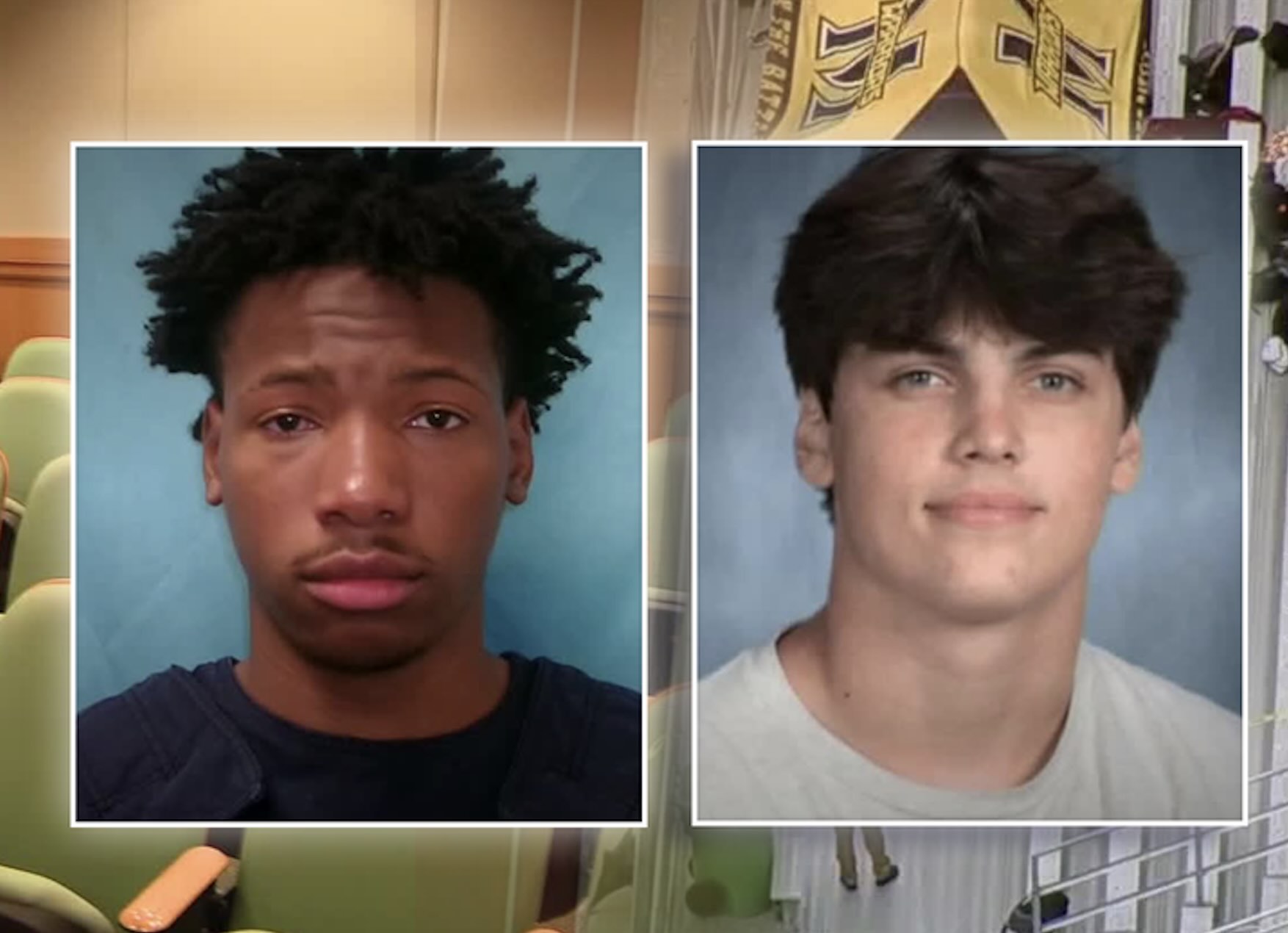
Photo: Recap of the Karmelo Anthony trial | FOX 7
For months, the legal narrative surrounding Karmelo Anthony was defined by a single, damning characterization: that he was a "passive aggressor"—a teenager who deliberately "baited" his own victim into a deadly confrontation. The prosecution's theory was that by remaining seated and refusing to leave a rival school's tent, Anthony was laying a trap, waiting for an excuse to use the 3.5-inch folding knife he had brought to the track meet. However, newly unsealed evidence from the August 2026 retrial hearing systematically dismantled this narrative, revealing a far more complex context that was deliberately hidden from the original jury through what attorneys now describe as a catastrophic "gentleman's agreement."
The revelation that prosecutors and the original defense team operated under an informal, off-the-record handshake deal sent shockwaves through the legal community. This clandestine arrangement blocked a 75-page dossier of severe character evidence about both Anthony and the victim, Austin Metcalf, from ever reaching the jury. The unsealed documents paint a picture of a confrontation that was not a simple case of trespassing and overreaction, but a potential powder keg of racial animus, documented violence, and psychological intimidation—all of which was kept strictly confidential until the August 2026 hearings.
The two-day hearing revealed deeply troubling background reports that both the original prosecutors and defense attorneys kept from the jury. Lead trial attorney Mike Howard testified that they made this informal agreement to keep these files out to "turn down the temperature" on an already highly polarized, racially tense case. The jury never heard the following details:
Austin Metcalf's File: Court documents showed that the 17-year-old victim had a history of fighting and using racist language. He had previously been sentenced to 12 months of probation after being caught spray-painting violent graffiti that included a racial slur along with phrases like "KKK Kill all Black people" and "Heil Hitler." Videos of him using racist language were also introduced during the motion.
Karmelo Anthony's File: Prosecutors had compiled a 75-page character report on Anthony. It included a text message where he fantasized about stabbing someone and licking blood off the blade. It also detailed a fixation with knives and guns, alongside a high school stalking accusation reported by a former girlfriend. The defense's new appellate team argued that this agreement backfired—Anthony chose not to testify because he mistakenly believed taking the stand would allow prosecutors to weaponize his 75-page file to impeach his character.
Central to the prosecution's original case was the idea that Anthony was the primary instigator. Student witnesses testified that Anthony was asked to leave the team tent roughly 15 times, and he refused with taunts like "Make me" and "I'm not leaving, f* you all." However, the new evidence reframes this scenario entirely. The defense now argues that this relentless pressure, coming from a group of athletes and led by a teenager with a history of racialized hostility, was not a peaceful request but an act of intimidation—a "verbal swarming" designed to corner and provoke a single, outnumbered individual.
A History of Violence and Hate
The most explosive new evidence concerns Austin Metcalf. Anthony's defense team presented a 75-page dossier documenting over 50 incidents of violent behavior or racial animus linked to Austin Metcalf and his twin brother, Hunter. Former defense attorney Mike Howard reviewed a previously sealed juvenile offense report and body-camera footage showing that the Metcalf twins had been arrested for spray-painting hate speech, including the phrases "KKK Kill all Black people" and "Heil Hitler," along with an upside-down cross and the N-word. The brothers received one year of probation for the incident.
The defense also highlighted a text exchange between Austin Metcalf and another student at a separate track meet. The student texted Metcalf that an "Edgar"—a derogatory slang term used to describe a young, ghetto Hispanic male—was "talking wild" behind their bench. Metcalf allegedly responded that the student should "kill" him. Anthony's appellate lawyer argued this text mirrored the eventual stabbing, showcasing Metcalf's propensity for proposed violence against minority students sitting behind him.
The Prosecution's Counter-Evidence
Prosecutors countered by introducing digital evidence seized from Anthony's devices to prove he was equally prone to bigotry and targeted hatred. Investigators extracted a note saved on Anthony's phone that featured a long, explicit list of disturbing racial tropes and slurs targeting Black, white, and Hispanic individuals. They also unveiled phone messages, school disciplinary files, and Apple notes where Anthony allegedly displayed an "obsession with fighting," including an October 2024 text about stabbing someone and licking blood from the blade, threats to kill his girlfriend, a video pointing a gun at a house, jokes about shooting up a school, and a racist rant. In separate text threads reviewed during the hearing, prosecutors showed that Anthony explicitly typed, "I hate gay ppl." Prosecutors argued he was actively "spoiling for a fight" the day of the stabbing.
The Fallacy of the 'Passive Aggressor'
The original trial successfully convinced the jury that Anthony's physical passivity was a calculated ploy. Under Texas law, issuing a defensive warning like Anthony's text-corroborated line—"Touch me and see what happens"—can be legally interpreted as provocation rather than an attempt to de-escalate. The court also ruled the team tent a "private space," giving Metcalf the legal right to use minor physical force to remove a "trespasser." And because Metcalf was unarmed and utilized a non-lethal two-handed shove to eject him, the law dictated that Anthony introducing a knife was a disproportionate response.
However, the new evidence suggests this interpretation was built on a foundation of ignorance. The defense argues that Anthony was a minority teenager cornered in a hostile environment. His "obsession" with fighting, as presented by the prosecution, is reframed as a coping mechanism for navigating a world he perceived as racially charged. When he was surrounded by a rival team, his internal alarm was already primed; he wasn't looking for a fight, he was expecting one.
The 'Gentleman's Agreement' and the Chess Club Trap
The reason this evidence was hidden from the jury comes down to a high-stakes, strategic gamble known as a "gentleman's agreement." Before the trial began, the original defense team and the Collin County prosecution team made an informal handshake deal. The defense knew that if they brought up Metcalf's history of racist graffiti and bullying, the prosecution would retaliate by showing Anthony's violent digital footprint. The prosecution knew that if Metcalf's dossier came to light, it would undermine their portrait of him as an innocent victim. Both teams agreed to try the case solely based on what happened under the tent that day, treating both boys as clean-slate teenagers.
The arrangement worked until the second-to-last day of the trial, when Anthony was prepared to take the stand. Defense attorney Mike Howard made a brief mention that Anthony was involved in a school chess club. The prosecution claimed this violated the agreement by trying to paint Anthony as a "good kid." They declared the deal dead and announced that if Anthony took the stand, they would unleash his entire text history of violent and bigoted rants onto the record. Judge Roach gave the defense just 10 minutes to make a choice. Believing he could no longer get a fair shake, Anthony decided not to testify in his own defense.
Because Anthony never took the stand, the jury never heard his perspective, yet they also never heard about Metcalf's history of racialized bullying. They only saw an obstinate boy who refused to leave a tent and stabbed an athlete after a single push. Anthony's new appellate lawyers are arguing this entire informal agreement was structural sabotage that violated his constitutional right to a fair trial.
Reframing the Fear
The defense argues that even if Anthony's phone notes showed he was a troubled kid obsessed with conflict, that exact mental state means he would perceive a 15-time verbal escalation from a known bully not as a minor dispute, but as an imminent, life-threatening mob attack. For a minority teenager who perceives his surroundings as hostile or racially charged, a hyper-fixation on fighting and weapons is often a coping mechanism for fear rather than a desire to initiate violence.
The physical reality of the situation also supports this narrative. Anthony was notably smaller than the athletes confronting him. He was a single individual sitting down, physically lower than and entirely surrounded by a group of larger peers. In self-defense law, physical disparity is a major factor in determining whether a person's fear of severe bodily harm is reasonable. In many jurisdictions, if a person genuinely believes their life is in danger, but their reaction is deemed excessive, it is called imperfect self-defense, which can downgrade a charge from Murder to Manslaughter. By hiding Anthony's true internal state of mind and Metcalf's true history of hostility, the jury was completely blocked from considering this middle ground.
Systemic Fallout and the Denial
The revelation of these suppressed records ignited widespread public debate. Activists pointed out that the initial trial lacked a jury of Anthony's peers, noting that the only three Black potential jurors—who were all educators—were struck from the panel by prosecutors. Civil rights groups publicly criticized the original defense team's decision to enter a "gentleman's agreement," arguing that telling Black communities to "keep their emotions down" while hiding years of documented racism from a jury inherently compromised a fair trial.
The original trial judge, John Roach, was officially recused and removed from the case after giving a post-trial media interview where he stated the jury "got it right," raising concerns about his impartiality. Retired Judge Michael Chitty was appointed to preside over the post-trial motion.
On Saturday, August 22, 2026, Judge Chitty officially denied Anthony's request for a new trial. After reviewing testimonies regarding the handling of the original trial, Chitty ruled that the original proceedings were fair and that the conviction should stand. Anthony, who was found guilty of first-degree murder in June 2026 and is currently serving a 35-year prison sentence, now faces an uphill battle.
The new defense team had argued that the "gentleman's agreement" backfired catastrophically. They claimed Anthony chose not to testify because he believed taking the stand would allow prosecutors to weaponize his 75-page file to impeach his character. They also cited the judge's recusal as evidence of bias. While Judge Roach was successfully removed from the appeals process, Judge Chitty ultimately concluded that these factors did not rise to the level of constitutional violation requiring a new trial.
The Road Ahead: Appeal Strategy
With the motion for a new trial officially denied at the county level, Anthony's legal team must now move past local district courts and shift to the state appellate system. The defense will file a formal appellate brief with the Texas Court of Appeals.
The core arguments will focus heavily on constitutional violations rather than just the evidence agreement. They plan to argue Sixth Amendment violations regarding his right to a public trial, noting that public courtroom access and overflow rooms were restricted due to undocumented "security threats." They will also cite his forced absence from several off-the-record pre-trial conferences.
The appeals court will not hold a new trial or hear live witnesses. Instead, a panel of judges will review transcripts of the original June trial and this week's motion hearings to determine if legal errors compromised the fairness of his conviction. If successful, Anthony could receive a new trial—or potentially have his conviction overturned entirely.
The defense maintains that forcing a jury to judge Anthony's actions without understanding his perspective as a young Black teenager in that specific environment made a fair verdict impossible. The "passive aggressor" label is a nonsensical conclusion when viewed against the backdrop of a documented history of racial bullying and an aggressive, 15-time demand for him to leave. With the case now heading to the appellate level, the legal community is watching closely to see if a higher court will acknowledge these systemic factors—or if a conviction built on a flawed narrative will stand.
No Ads. By Us. For Us.
This article was made possible by readers like you. We hope it inspired you to support Emerald Book, so we can continue producing content like this.
We will never show you ads, sell your data, or require a subscription to consume our content. Your gift helps us keep the truth accessible.
Click the Support button to give a gift of any amount today.
Thank you for making this work possible.