

Emerald Pages
◆
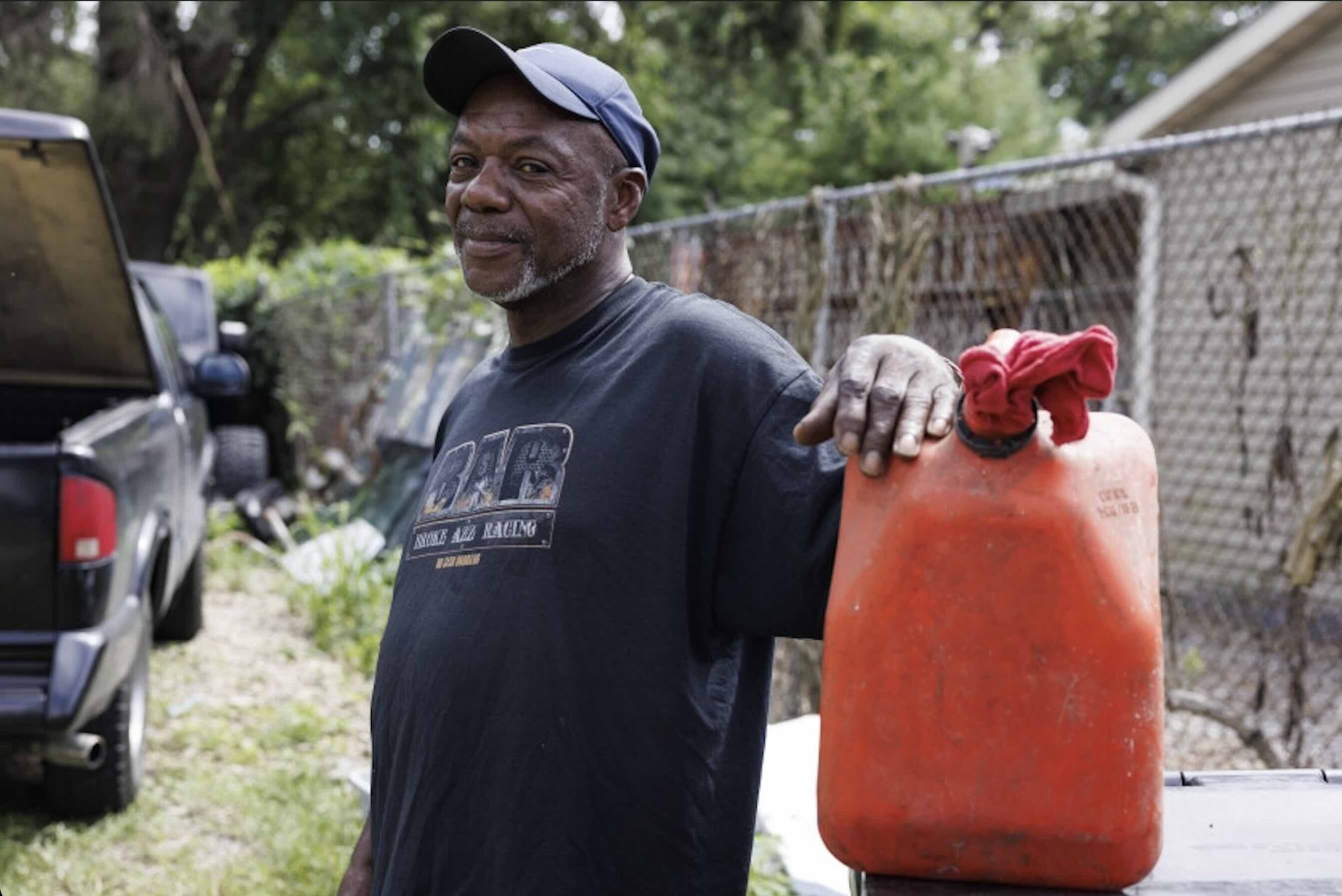
Photo: Anthony Vazquez | Sun-Times
For over a week, the city of Gary, Indiana, has been plunged into darkness. A devastating derecho on August 11, 2026, with straight-line winds reaching 99 mph—equivalent to a Category 2 hurricane—and confirmed tornadoes in nearby towns, knocked out power to over 370,000 customers across Northern Indiana. While the storm was historic, the reason Gary—the state's only majority-Black city—remains one of the hardest-hit and last to be restored is not just a matter of weather. It is a matter of history, systemic neglect, and a long-failed infrastructure that was not built to withstand such a storm.
As of August 20, more than 21,000 residents in Gary remain without electricity, representing roughly one-third of all remaining outages in the NIPSCO service area. Out of the original 301,000 customers knocked offline (which grew to 370,000 due to subsequent storms), NIPSCO has restored power to roughly 306,500 customers. The remaining 63,500 outages are spread across the region, but Gary—a city that is nearly 78% Black—holds the largest single cluster of unresolved outages. Meanwhile, neighboring towns like Munster (85% White), Highland (82% White), Dyer (87% White), and Portage (81% White) have also suffered significant damage but have seen varying levels of restoration. The disparity, however, has sparked intense frustration and cries of environmental injustice from community leaders and residents who see the situation as a clear example of how decades of underinvestment have left a Black community uniquely vulnerable.
The core of the problem lies in the infrastructure itself. Gary's electrical grid is old, consisting almost entirely of above-ground power lines that snake through neighborhoods lined with massive, decades-old oak trees. For years, residents and city officials have raised concerns about NIPSCO's failure to adequately trim trees and maintain the lines. When the historic winds hit, these neglected trees were toppled like dominoes, ripping down miles of wiring and snapping an estimated 300 standard utility poles and 44 massive steel transmission towers. NIPSCO executives have publicly admitted that the damage is so severe that the electric grid is not being repaired, but essentially completely rebuilt—a task requiring over 2,500 utility workers from across the country working 16-hour shifts.
A History of Disinvestment and Neglect
This infrastructural fragility is a direct result of Gary's economic decline and systemic neglect. Following the collapse of the local steel industry, the city lost a massive portion of its tax base, leaving it with fewer resources to modernize its municipal systems. While wealthier, predominantly white suburbs were able to invest in more resilient, modern underground infrastructure, Gary's outdated above-ground systems were left to decay. This created a "disaster response gap," where lower-income, minority communities are left to bear the brunt of extreme weather events with no safety net.
- Demographic Reality: Gary's population is roughly 78% Black, making it the only majority-Black city in Indiana. Of the 21,000 residents still without power, an estimated 16,000 to 17,800 are Black.
- Economic Vulnerability: The city has an estimated poverty rate of around 30%, leaving many families unable to afford generators, hotel stays, or to absorb the financial blow of hundreds of dollars in spoiled groceries.
- Infrastructure Decay: NIPSCO neglected routine tree-trimming and limb maintenance along Gary's alleyways and main corridors for years. When straight-line winds hit, mature trees that should have been managed were easily pulled down, destroying poles and pulling lines directly into the ground.
- Restoration Timeline: NIPSCO's restoration plan has left Gary's residents as the "last in line," with a projected restoration date of August 25, 2026, at 11:59 PM—a full two weeks after the storm. This is the final deadline for the entire region, but Gary is the primary city tethered to that date.
The frustration among Gary residents is palpable. Many are angry that they are paying high utility bills for a system that is failing them. Local homeowners have noted that despite NIPSCO repeatedly asking for and receiving rate increases, the actual reliability of the service has not improved. In a deeply frustrating irony, residents reported that their $600 monthly NIPSCO bills arrived exactly on time while they were sitting in the dark throwing away hundreds of dollars in spoiled groceries. "We have no gas, no restaurants," one resident told a local news outlet. The perception of a double standard is heightened by the fact that NIPSCO was able to restore power to many suburban areas more quickly during the first 48 to 72 hours.
NIPSCO has denied that race or income factored into their restoration timeline, stating that repairs are prioritized based on the hierarchy of the grid—fixing high-voltage transmission lines and substations first before moving into localized neighborhoods. However, local leaders and civil rights groups, including the Gary NAACP, have called for a full investigation into systemic infrastructure neglect. They argue that the company's failure to maintain the grid and invest in modern, underground lines has made Gary uniquely susceptible to catastrophic outages. Mayor Eddie Melton and local community leaders have stated that while the immediate focus is getting the lights turned back on by the August 25 deadline, the city will push for an aggressive structural investigation into NIPSCO once the immediate emergency ends.
The Human Toll and Public Health Crisis
The current situation is a public health crisis. The lack of power has forced the Gary Community School Corporation to close schools, creating critical risks for children and the elderly who depend on medical equipment like oxygen concentrators and breathing machines. Emergency food supplies are exhausted, with local mobile food pantries running out of supplies and residents being forced to travel across state lines for basic necessities like ice and fuel. Widespread blackouts have left neighborhoods completely dark at night, raising community safety and security concerns.
The shooting incident on August 14, 2026, when a NIPSCO utility vehicle was struck by gunfire, added further delays. While no workers were injured, crews had to wait for Indiana State Police and local law enforcement to secure the areas before safely resuming repairs, costing critical time in the restoration effort.
The Path Forward: Accountability and Rebuilding
As the city waits for its power to be restored, the conversation is already shifting to accountability. Community leaders are demanding that NIPSCO legally commit to burying lines underground, expanding its tree-trimming budgets, and upgrading the physical infrastructure so a single storm never paralyzes the city again. The events of August 2026 have laid bare the consequences of decades of neglect, and for the residents of Gary, Indiana, the darkness is a stark reminder that for too long, their city has been left behind.
Local leaders have made it clear that simply patching the grid back to its fragile, pre-storm state is unacceptable. The rebuilding effort is split into two phases: Phase 1 is the current emergency rebuild to get the lights back on by August 25. Phase 2 will be a multi-month political and engineering battle to bury lines underground, modernize substations, and execute a comprehensive city-wide tree-trimming initiative to clear out structural threats that were neglected for decades. The city is also demanding that NIPSCO legally commit to these upgrades and that the Indiana Utility Regulatory Commission (IURC) hold the company accountable.
No Ads. By Us. For Us.
This article was made possible by readers like you. We hope it inspired you to support Emerald Book, so we can continue producing content like this.
We will never show you ads, sell your data, or require a subscription to consume our content. Your gift helps us keep the truth accessible.
Click the Support button to give a gift of any amount today.
Thank you for making this work possible.