

Emerald Pages
◆
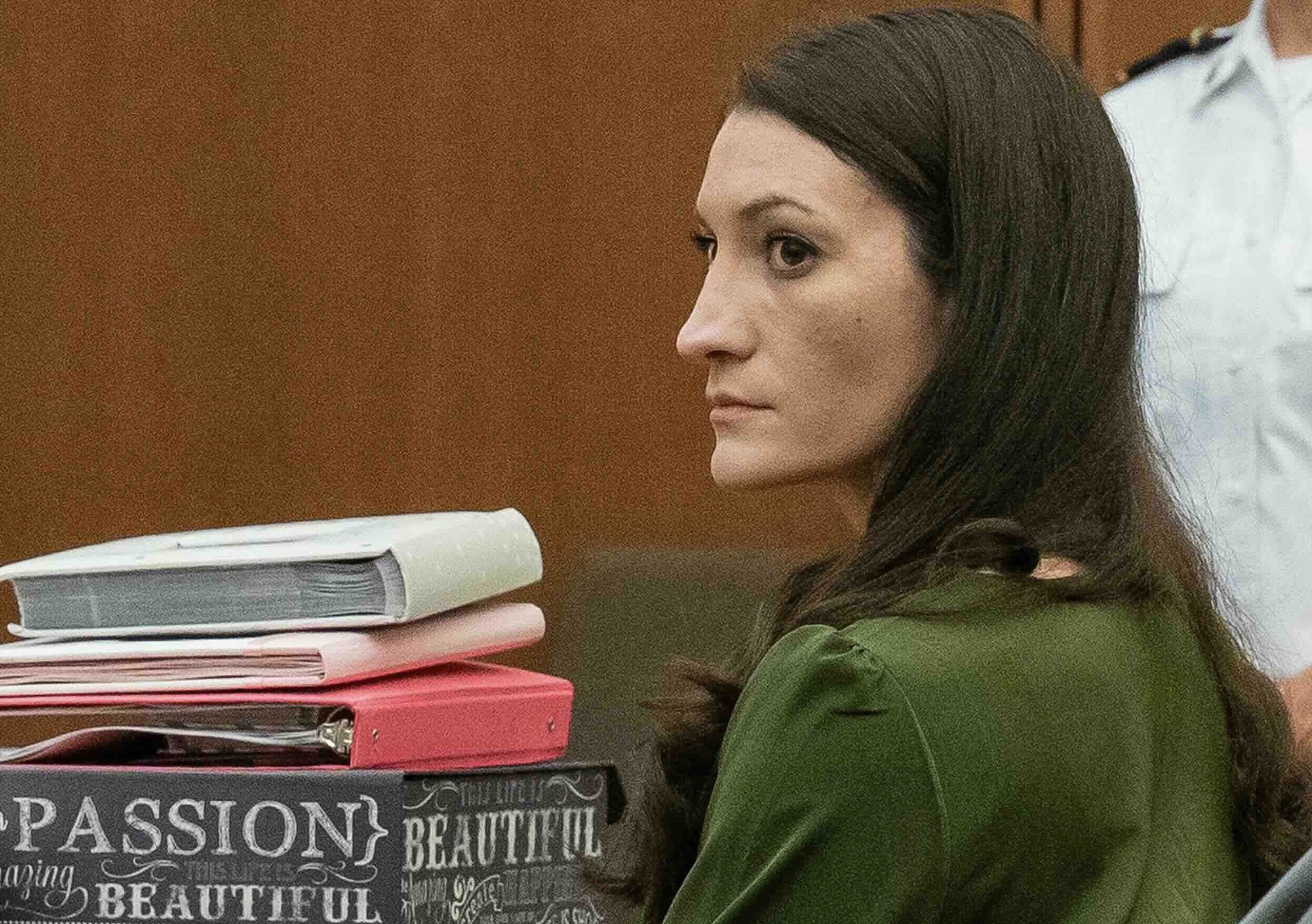
Photo: Amanda Sabga | AP
The question, in the wake of the Lindsay Clancy trial, is as jarring as it is simple: How has a mother accused of killing her three children managed to generate nearly $2 million in public donations? The answer lies in a perfect storm of media sympathy, a husband's public forgiveness, and a collective fear of a failing healthcare system. Yet, buried beneath this financial outpouring is a more unsettling question: Why has no Black woman ever received this same level of support?
The Clancy case has become a cultural touchstone, with two major fundraisers exceeding $1.7 million. The first, launched in January 2023 shortly after the tragedy, raised over $1 million from nearly 16,000 donors to help her husband, Patrick Clancy, cover funeral services, medical bills, and legal support. The second, created in August 2026 by a third-party TikTok creator with over 100,000 followers, has already surpassed $920,000 on its way to a $2 million goal for her parents, Mike and Paula Musgrove, who depleted their lifetime savings after relocating to support their daughter through the multi-week trial.
This financial outpouring is a definitive example of "implicit bias" in action, where a white, middle-class, suburban mother is instinctively viewed through the lens of a medical tragedy, while Black women experiencing identical psychiatric breaks are met with criminalization and societal indifference.
The 'Good Mother' Myth and the Face of Empathy
The success of the Clancy fundraisers hinges on a specific psychological trigger: the "systemic failure" narrative. As a labor and delivery nurse who begged for help from six different doctors and was prescribed 13 different psychiatric medications in the months leading up to the tragedy, Clancy fits the profile of a "fundamentally good person who suffered a medical tragedy." Her husband's public statement forgiving her—declaring that the woman who committed the crimes was not the "real Lindsay," but rather an empty shell consumed by severe postpartum psychosis—transformed the narrative from a standard murder case into a collective grieving process. This profoundly influenced donors who wanted to support him financially while aligning with his perspective on her illness.
This level of empathy is a privilege that has not been extended to Black women. When a Black mother experiences the exact same symptoms of postpartum psychosis, the narrative collapses from a health crisis into a "calculated crime" or, as seen in the case of Latarsha Sanders, a "ritualistic" act of violence. The prosecution in Sanders' case, tried by the same Plymouth County District Attorney and the same judge, Judge William Sullivan, who is presiding over the Clancy trial, successfully framed her actions as malicious. In a prejudicial error, Judge Sullivan blocked thousands of pages of her psychiatric records from the jury—records that later proved she suffered from "undetected and untreated paranoid schizophrenia for decades." She was convicted of first-degree murder and sentenced to life in prison without the possibility of parole. It took until August 6, 2026, for the Massachusetts Supreme Judicial Court to unanimously vacate her conviction and order a new trial, ruling that withholding her medical history denied her a fair chance to present her insanity defense.
The Insanity Defense: A Legal Path Paved in Gold
The legal and financial machinery required to mount a successful insanity defense is immense. In Massachusetts, the legal definition of an insanity defense—framed as a lack of criminal responsibility—requires the defense to convince the jury that due to a severe mental disease or defect, the defendant lacked the substantial capacity to appreciate the wrongfulness of her conduct or conform her behavior to the law at the exact moment of the crimes. It requires hundreds of thousands of dollars for independent forensic psychologists, neurologists, and a private legal team to build a paper trail of medical history that proves this.
Lindsay Clancy's attorney, Kevin Reddington, is arguing that a severe medical failure and a sudden psychiatric break—including command hallucinations where she reportedly heard a male voice ordering her to kill her children—made her entirely unaware of the wrongfulness of her actions. Defense experts, including psychologist Dr. Paul Zeizel, testified that Clancy was suffering from bipolar disorder with postpartum psychosis, a condition that induces profound detachment from reality.
- The White Defendant's Advantage: White women, like Andrea Yates, who drowned her five children in Texas, have successfully used the insanity defense with the backing of national women's organizations and legal defense funds that poured resources into ensuring top-tier forensic psychologists. Yates was ultimately acquitted by reason of insanity in her 2006 retrial.
- The Black Defendant's Reality: Black women, such as Latarsha Sanders, are forced to rely on underfunded public defenders who lack the budget to hire top-tier experts. This lack of resources, combined with a deep bias in the healthcare system that dismisses their symptoms, leaves them without the medical records needed to prove their case to a skeptical jury. Prosecutors are statistically more likely to frame a Black mother's psychiatric break as a calculated, malicious crime, often telling juries the defendant is just playing a "crazy card."
- The Statistical Divide: While the insanity plea is raised in less than 1% of felony cases nationwide, it fails roughly 75% of the time. Studies show that when a Black defendant presents the exact same symptoms of severe psychosis as a white defendant, jurors are statistically far more likely to reject the insanity defense and vote "Guilty." Researchers concluded that societal stereotypes overlaying Black individuals with "dangerousness" or "inherent criminality" cause juries to view a Black person's psychiatric break as a calculated threat rather than a medical emergency.
Rare Exceptions That Prove the Rule
While Black women have occasionally been found not guilty by reason of insanity, these cases are rare and come with a heavy cost. In June 2026, a Miami-Dade judge found Precious Bland not guilty by reason of insanity for the 2021 drowning of her 15-month-old daughter and the attempted murder of her family. Evidence proved Bland suffered a severe, sudden psychotic break linked to COVID-19, leaving her entirely detached from reality. Body camera footage captured her screaming about the end of the world, believing she was saving her family.
However, unlike white defendants who are often transferred immediately to comfortable medical care, Bland spent three and a half years sitting in a county jail just awaiting her trial. While she was ultimately acquitted and released from jail rather than being institutionalized indefinitely, she remains under heavily restricted, court-ordered psychiatric supervision. Oubria Green, a Black woman in Washington D.C. found not guilty by reason of insanity in 2005 for drowning her 7-month-old son, also faced a long, drawn-out process before being committed to a psychiatric hospital. These rare exceptions prove that the path to a medical acquittal for Black women exists, but it is paved with far greater obstacles and significantly less financial and societal support.
A Legacy of Criminalization
The systemic bias against Black women in these tragedies is not just anecdotal; it is rooted in data. The dehumanization of Black mothers is a direct pipeline to the criminal justice system. Organizations like the Maternal Mental Health Leadership Alliance (MMHLA) report that Black women have a significantly higher risk of developing maternal mental health disorders. However, they are drastically less likely to be screened, diagnosed, or treated due to a lack of culturally competent screening tools, systemic racism, and a historic distrust of medical institutions.
The contrast is stark. On one side, you have a white mother who can access the resources to build an aggressive medical defense and generate $2 million in public support. On the other, a Black mother battling the same condition faces a system designed to label her a "dangerous criminal" without the resources to prove otherwise. The evidence is clear: the public is willing to open its wallets to humanize the white mother in a mental health crisis, while entirely denying that same empathy and financial backing to Black women. As the Clancy trial moves toward closing arguments, this $2 million divide stands as a testament to a justice system that remains deeply unequal.
No Ads. By Us. For Us.
This article was made possible by readers like you. We hope it inspired you to support Emerald Book, so we can continue producing content like this.
We will never show you ads, sell your data, or require a subscription to consume our content. Your gift helps us keep the truth accessible.
Click the Support button to give a gift of any amount today.
Thank you for making this work possible.