

Emerald Pages
◆
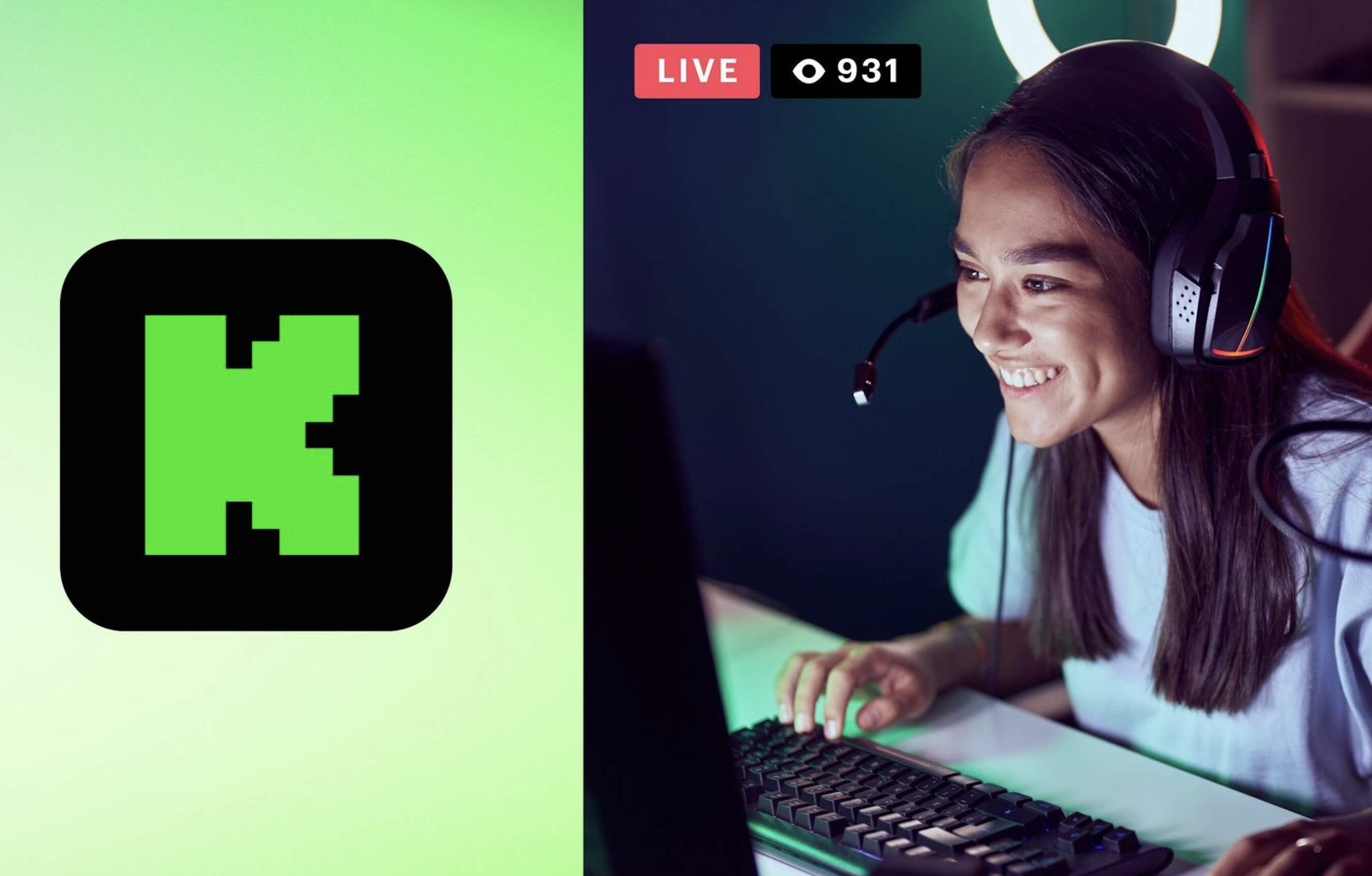
Photo: Restream
I n an era where conventional wisdom dictates that the average young adult has the attention span of a goldfish, a new digital behemoth is proving the narrative dead wrong. Kick, the Australian livestreaming platform launched in late 2022, has not only captured the attention of a generation but has held it, often for five, six, or even eight hours at a time. As of 2026, the platform has officially crossed over 100 million total registered users, adding 39 million users in 2025 alone and another 27 million in the first half of 2026.
While traditional networks panic over falling viewer retention and the rise of 30-second TikTok clips, Kick routinely sees between 200,000 to over 600,000 live concurrent viewers glued to a single broadcast. These are not passive viewers; they are an active, interactive community that debunks the corporate myth of a broken, distracted youth. The platform's young audience—over 80% of users are between 18 and 34 years old—demonstrates that the issue was never attention span, but rather content quality.
At the heart of Kick's meteoric rise is the "Interactive Feedback Loop." Creators like xQc (Félix Lengyel) and Adin Ross treat an audience of 100,000 like an instrument, dynamically changing their content based on chat reactions, donations, and real-time events. They micro-manage their broadcasts to prevent drop-off by shifting focus every 30 to 45 minutes—moving from casual "Just Chatting" segments to high-stakes gaming, surprise guests, and unfiltered IRL (In Real Life) content. This unpredictable, unscripted environment creates a "slot-machine" appeal: viewers stay locked in because at any second, a donation or a chaotic moment could derail the broadcast and create internet history, making them feel like part of an exclusive club.
Record-Breaking Viewership
The scale of Kick's audience is staggering. While the platform regularly draws hundreds of thousands of concurrent viewers, its top events have shattered the million-viewer barrier—proving that individual streamers can command audiences that rival or exceed major television networks.
Colombian streaming star Luis Fernando Villa Álvarez, better known as WestCol, holds the crown for the largest viewership record on Kick. During his Stream Fighters 4 event—an influencer-led boxing and music showcase held at the Coliseo Medplus arena in Bogotá, Colombia—WestCol's personal channel alone pulled in a historic 4 million peak concurrent viewers, representing roughly 85% of the total traffic on the website during the event. Fueled by the boxing matches, Kick reached an all-time sitewide high of 4.6 million concurrent viewers, briefly beating out both Twitch and YouTube Gaming in global traffic.
The 95% Revolution: How Kick Pays Its Creators
The technical engine driving this engagement is Kick's creator-first business model, spearheaded by a staggering 95/5 subscription payout split. Unlike Twitch, which typically takes a 50% cut of a $4.99 subscription (meaning the creator keeps only $2.50), Kick allows the creator to keep $4.75. Even Twitch's premium "Partner Plus" program maxes out at a 70/30 split, which is still far below Kick's offering. This has pulled top talent from across the internet, who then deliver massive audiences to the platform. To put it in perspective, a popular creator with 10,000 active subscribers can earn roughly $47,400 per month—$568,800 annually—purely from subscriptions.
But how does Kick afford this when taking only 5% doesn't cover the massive server and bandwidth costs? The platform is heavily bankrolled by the billionaires behind Stake.com, one of the largest online crypto casinos in the world. Kick operates as a "loss leader"—a marketing funnel that drives millions of users toward the lucrative gambling sections of its parent company's business. While Stake.com generates an estimated several billion dollars in annual revenue, Kick is intentionally designed not to be independently profitable in its early stages, with co-founder Eddie Craven openly acknowledging this strategy.
- The 95/5 Split: Creators keep 95% of subscription revenue, far out-earning the 50/50 split of competitors. A $5 subscription yields $4.75 for the creator.
- The Creator Incentive Program (KCIP): Qualifying streamers are paid a flat hourly wage ranging between $16 and $32 per hour, acting as a "salary" for broadcasters who maintain high engagement and viewership.
- Massive Scale Contracts: Top creators like xQc signed a historic $100 million deal over two years, while Adin Ross earns between $33,000 and $50,000 per hour streamed, netting roughly $5 to $7.5 million monthly from his base contract alone.
The Generation of 'Second-Screen' Viewers
The true genius of Kick lies in its understanding of how young people consume media. Instead of requiring active, focused sitting, live streams are consumed as interactive background noise or ambient media. A viewer might keep an Adin Ross or xQc broadcast running on a second monitor for four straight hours while studying, completing assignments, or playing video games. The length of the stream isn't a deterrent; it's an asset—functioning as a virtual "third space" where they can hang out, co-exist, and feel a sense of social presence. Sociologists note that physical third spaces have largely vanished for this generation, and live streams serve as a digital replacement.
This behavior has profound implications for the so-called "Short-Form Fallacy." According to a Google viewership report, 59% of Gen Z users watch short-form clips specifically to discover creators they will later watch in long-form. Young audiences use short-form video as a discovery filter, and once they find a topic or personality they like, they switch to marathon viewing. Platforms like Kick prove that the digital attention economy isn't shrinking—it is fragmenting into two extremes: micro-doses of quick dopamine clips, and massive, multi-hour community deep-dives where authenticity trumps polished production.
The Demographics: Young, Male, and Engaged
The numbers paint a clear picture of who is driving this phenomenon. Kick's audience is overwhelmingly comprised of young men, with a stark gender skew that sets it apart from competitors. While Twitch maintains a roughly 65% male and 35% female viewer base, Kick's traffic is 74.37% male and only 25.63% female. When cross-referenced with the age metrics—where 67.3% of the entire site is between 18 and 34 years old—it confirms that the core audience is almost exclusively young men. This demographic is drawn to the platform's top creators (virtually all of whom are young men), its lax content moderation which has made it a sanctuary for controversial internet figures, and its heavy promotion of crypto gambling streams that historically market heavily to this exact profile.
The Psychology of Retention: Shared Trauma, FOMO, and AI Resistance
Because these streams are massive and completely unscripted, they cultivate intense tribal loyalty. If a crazy, unhinged moment happens live at 2:00 AM, the 150,000 people watching feel like they are part of an exclusive club. They develop highly specific inside jokes, memes, and community vocabulary. This shared culture transforms the broadcast from a simple video into a shared cultural event. Viewers refuse to close the tab because they suffer from intense FOMO (Fear Of Missing Out)—they want to be there to witness internet history as it happens. This is the power of "shared trauma" and inside jokes: the community bonds over the unpredictability of the live format.
This is also why live streaming is fundamentally immune to the synthetic content crisis plaguing traditional social media. The current era of social media is facing severe user fatigue due to a deluge of AI-generated images, bots, and heavily optimized clickbait. You cannot fake a live, unscripted five-hour walk through a city or an interactive Q&A session. As traditional platforms lose user trust due to synthetic automation, "human-made authenticity" is becoming the most valuable asset on the internet. Live streams are the ultimate proof of human connection, making platforms like Kick a refuge from the "AI slop" overrunning traditional feeds.
The platform's official launch of "Kick Ads" in 2026 has introduced a new dynamic. Viewers now encounter in-stream commercials, but a paid monthly subscription to a specific channel bypasses these ads. The ad revenue is being used to further scale creator monetization, and the platform's partnership with Google allows brands to programmatically buy ad space targeting Gen Z and Millennial audiences. However, the real advertising power remains in organic endorsements—when a top creator holds 200,000 viewers for four hours while casually drinking a specific energy drink, that carries immense psychological weight.
No Ads. By Us. For Us.
This article was made possible by readers like you. We hope it inspired you to support Emerald Book, so we can continue producing content like this.
We will never show you ads, sell your data, or require a subscription to consume our content. Your gift helps us keep the truth accessible.
Click the Support button to give a gift of any amount today.
Thank you for making this work possible.