

Emerald Pages
◆
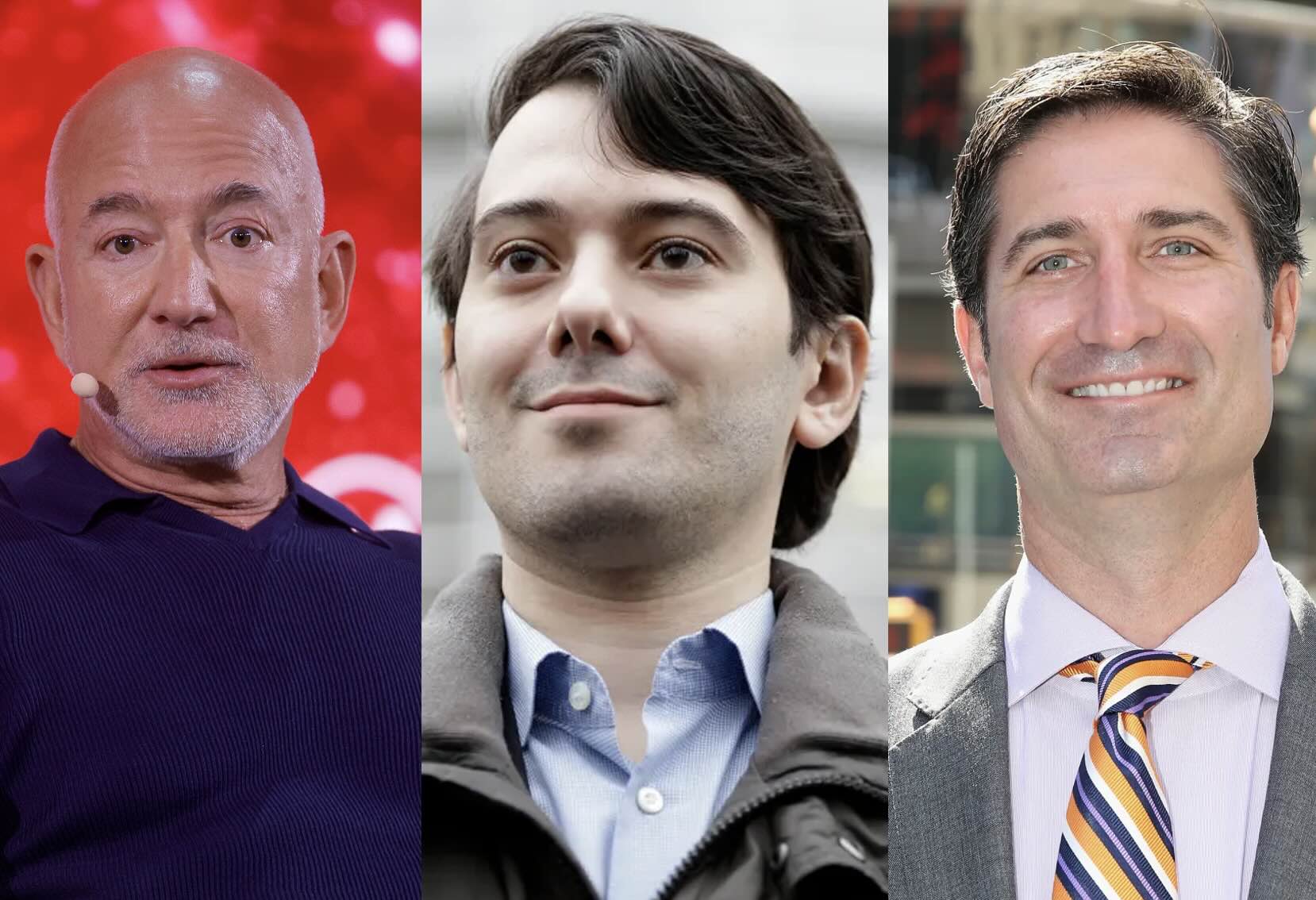
Photo: Emerald Book Image
T he numbers are so staggering they almost seem abstract. In 2025, Tesla CEO Elon Musk's performance-linked stock option plan resulted in a pay ratio of roughly 2.5 million-to-1 relative to his company's median worker. This means that for every single dollar earned by a typical Tesla employee, the CEO's compensation package added the equivalent of $2.5 million to his wealth. This is not a story about greed; it's a story about structural ruthlessness so potent that it makes the ruthlessness of a real gangster seem, by comparison, small-time.
On a cultural level, we are conditioned to view gangsters as the ultimate villains—violent, ruthless, and a direct threat to society. But a closer look at the mathematics of corporate power reveals a more uncomfortable truth: the modern CEO, insulated by law, shielded by bureaucracy, and operating at a global scale, can inflict a magnitude of harm that dwarfs the local operations of any criminal syndicate. This isn't a moral equivalence; it is a cold, hard comparison of scale, impact, and calculated indifference.
The Math of Exploitation: 1,000x and Beyond
The first dimension where corporate ruthlessness outpaces street crime is in the sheer scale of economic exploitation. While a gangster might extort a local shopkeeper for a few thousand dollars a month, a corporate CEO can preside over a system that systematically extracts wealth from hundreds of thousands of employees.
The federal Dodd-Frank Act requires companies to disclose their CEO-to-worker pay ratios. The 2025 average for the S&P 500, excluding extreme outliers, sits at 312-to-1. However, dozens of major corporations regularly cross the 1,000:1 threshold. Companies like Walmart, McDonald's, and Chipotle consistently post ratios over 1,000:1 because their business model relies on millions of part-time, low-wage workers who earn a fraction of executive packages.
This is not merely a disparity; it is a deliberate structure of financial engineering. As the data reveals, since 1978, S&P 500 CEO compensation has climbed by over 1,000%, while inflation-adjusted wages for the typical American worker grew by less than 20% over that same period. The gangster's extortion is crude; the CEO's wealth extraction is a finely tuned, legal, and institutionally protected machine.
Case Studies in Corporate Ruthlessness
To understand how this abstract math translates into real-world harm, we must look at the architects of this system. Three individuals highlight three different versions of modern corporate power, each demonstrating how the system allows for the amassing of billions or manipulation of markets in ways that standard laws protect, even when the human outcome feels entirely cold and ruthless.
Jeff Bezos (Amazon)
Jeff Bezos stepped down as Amazon's CEO in 2021 to become Executive Chairman, but his legacy defines the ultimate modern wealth gap. The ruthlessness of Bezos's empire is systemic. He built an unprecedented infrastructure that completely reshaped global retail. Under his leadership, Amazon was criticized for grueling warehouse conditions, algorithmic management that tracked employees' bathroom breaks, and aggressive union-busting tactics.
The wealth paradox is staggering: Bezos's official base salary was historically modest (under $90,000 a year). However, because he owned a massive portion of Amazon stock, his net worth exploded past $200 billion. This allowed a single man to accumulate enough wealth to fund a private space program, while thousands of his full-time warehouse workers were so underpaid that they relied on federal food stamps to survive. The ruthlessness here is systemic: a single man's wealth accumulation is directly enabled by the low-wage labor of an army of workers.
Brian Niccol (Starbucks)
While Bezos represents the wealth of a founder, Brian Niccol, the current Chairman and CEO of Starbucks, represents the absolute apex of the executive-to-worker pay divide. According to labor tracking data from the AFL-CIO Executive Paywatch report, Niccol's total initial executive package reached roughly $95.8 million, while the median annual pay for a part-time Starbucks barista hovered around $14,674.
This calculated a staggering 6,666-to-1 pay ratio, the widest gap among all S&P 500 companies. A typical barista earning below the federal poverty line would have to work for more than six millennia to earn what their CEO was awarded in stock and signing bonuses over a single annual cycle. This is a board of directors paying an executive thousands of times more than a front-line employee just to execute corporate restructuring, while that employee struggles to afford basic necessities.
Martin Shkreli ("Pharma Bro")
Martin Shkreli is a unique case because he did what other pharmaceutical CEOs do, but he refused to use the polite language that sanitizes corporate greed. As CEO of Turing Pharmaceuticals, Shkreli acquired the exclusive rights to Daraprim, a life-saving medication used by AIDS and cancer patients. He immediately jacked the price up by 5,000%, from $13.50 to $750 per pill.
Other pharmaceutical companies routinely raise drug prices quietly behind closed doors. Shkreli went on social media, smirked, and openly told journalists that his only regret was that he didn't raise the price higher to maximize profit. He exposed the raw, predatory calculation of the medical industry without the standard public relations shield.
The legal irony is damning: Shkreli was ultimately sent to federal prison for seven years—but not for price-gouging sick patients. The price hike was entirely legal. He went to prison because he committed securities fraud and lied to his wealthy Wall Street investors. The system protected the capital, not the patients. This proves that the system will tolerate extreme cruelty toward consumers, but will immediately throw an executive in handcuffs if they cheat other wealthy financiers.
Killing by Spreadsheet: The Cost of Doing Business
The case studies above illustrate how the system extracts wealth, but the most damning evidence of this mathematical ruthlessness is how corporations handle human life itself. A gangster's violence is targeted and personal; they choose exactly who to hurt. A ruthless CEO, by contrast, conducts a cold, statistical calculation.
Consider the infamous Ford Pinto case, where executives discovered a design flaw that caused fuel tanks to explode in rear-end collisions. They performed a cost-benefit analysis and concluded that paying out settlements for burn victims and deaths ($20 million) would be cheaper than fixing the design flaw ($11 per car). This process, known as "statistical negligence," is a routine part of modern business. It is the mechanical, emotionless calculation of human life as an "acceptable loss" on a spreadsheet, a far purer and more detached form of ruthlessness than a crime of passion.
- Ford Pinto: Calculated that paying for burn victims' deaths was cheaper than a $11-per-car safety fix.
- Boeing 737 Max: Design flaws and rushed production led to 346 deaths; executives received golden parachutes instead of prison time.
- Opioid Crisis (Purdue Pharma): Aggressive marketing of OxyContin contributed to hundreds of thousands of deaths; executives faced fines, not murder charges.
This is the essence of corporate violence. The CEO does not pull the trigger; they just sign a memo that makes the trigger-pulling a financially optimal decision. The victims suffer quietly, miles away from the boardroom, their lives reduced to a line item on a balance sheet.
The Shield of Immunity vs. The Risk of the Streets
The final, and perhaps most profound, demonstration of this inequality in ruthlessness is the concept of personal risk. A gangster faces extreme personal danger every day. They risk being shot by rivals, betrayed by allies, or hunted down by federal law enforcement. They pay for their ruthlessness with their lives or decades in maximum-security prisons.
The corporate executive faces almost zero physical or personal asset risk. The legal system is built to protect them through two key doctrines:
- The Corporate Veil: The law treats the corporation as a separate legal "person." If the company does something terrible, the company is sued or fined. The CEO's personal wealth, freedom, and assets are legally shielded behind this veil.
- The Business Judgment Rule: Courts rarely second-guess the purely financial decisions of corporate executives. Unless prosecutors can prove a CEO explicitly intended to cause harm, it is classified as corporate negligence, not a violent crime.
When a CEO ruins a company, presides over a structural disaster, or manipulates prices, they are rarely indicted personally. Instead, the board frequently pays them a multi-million-dollar "golden parachute" severance package just to step down quietly. They sleep safely in guarded estates, completely insulated from the poverty, violence, and friction their decisions create.
A System Built on Ruthlessness
These three figures illustrate why the system feels so deeply broken to the public:
- Bezos shows how the system rewards a founder with billions while regular workers face hyper-monitored, low-wage conditions.
- Niccol shows a board paying an executive thousands of times more than a front-line employee just to execute corporate restructuring.
- Shkreli proved that the system will tolerate extreme cruelty toward consumers, but will immediately throw an executive in handcuffs if they cheat other wealthy financiers.
This isn't a story of just a few bad apples. It is a systemic issue built into the very DNA of modern capitalism. The shift to performance-based stock options, the legal mandate of shareholder primacy, and the decline of union power have created an environment where the rich get richer at a scale that makes the spoils of organized crime look like pocket change.
The distinction is stark: a gangster's power relies on the threat of immediate, physical violence. A CEO's power relies on the structural violence of a system that is legal, invisible, and infinitely more devastating in its aggregate impact. The gangster is a local predator; the executive is a global architect of a system that treats human life and labor as an expense to be minimized. In the cold, hard math of human suffering, the gangster doesn't even come close.
No Ads. By Us. For Us.
This article was made possible by readers like you. We hope it inspired you to support Emerald Book, so we can continue producing content like this.
We will never show you ads, sell your data, or require a subscription to consume our content. Your gift helps us keep the truth accessible.
Click the Support button to give a gift of any amount today.
Thank you for making this work possible.