

Emerald Pages
◆
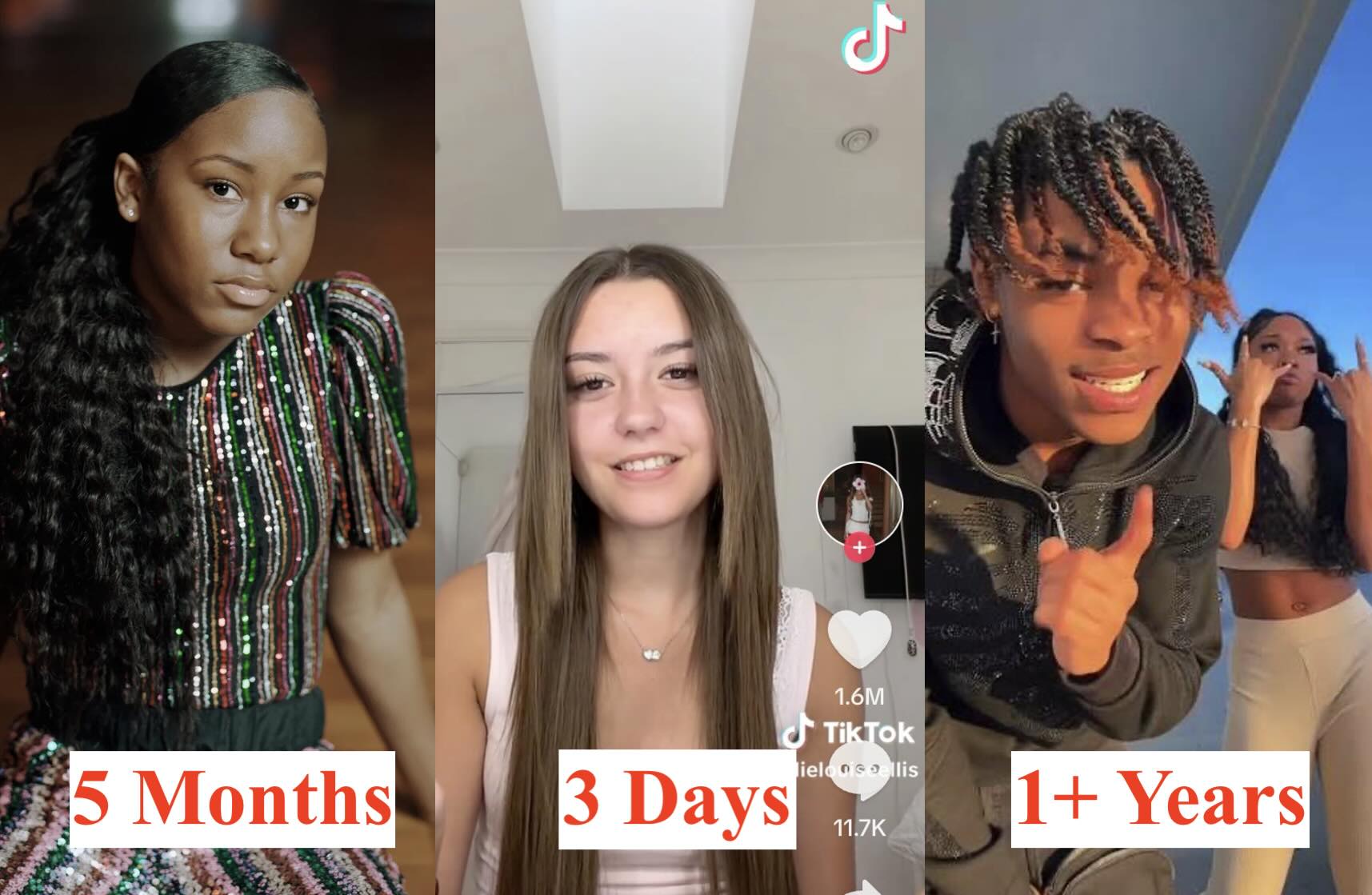
Photo: How Long to 400K Followers on TikTok | Emerald Book Image
I n August 2026, a 16-year-old British girl named Ellie Ellis did something that millions of aspiring creators dream of: she became an overnight internet sensation. Within just 72 hours of posting her first video, she amassed over 400,000 followers on TikTok, and each of her subsequent eight videos crossed the two-million-view mark. The online world was baffled. Commenters and pundits alike asked the same question: "Why her?" She had done "nothing at all." Her videos were simple, unscripted Get Ready With Me (GRWM) makeup routines, filmed with basic lighting in her bedroom.
The public's confusion is understandable. It points to a persistent myth that still clings to the digital age: the idea that virality is organic—a mysterious, democratic reward for talent or luck. The story of Ellie Ellis, however, completely exposes this myth. Her meteoric rise was not a happy accident, nor was it a reflection of a new star being discovered. It was a transparent example of a manufactured trend, a phenomenon where the platform's recommendation engine—and the corporate objectives behind it—is the sole author of fame. By dissecting exactly how the algorithm interacted with her content, we can see that virality is not a natural phenomenon. It is an engineered corporate product.
The mechanics behind Ellie's success are a cold, mathematical process driven by positive feedback loops and micro-cohort conversion metrics. It begins with the "seed pool" phase. When a new user posts a video, TikTok tests it on a tiny, randomized audience of 100 to 500 people. In her first video, Ellie was disarmingly humble, stating she wasn't expecting anyone to see it because she had only six followers. For the initial viewers, this vulnerability was a psychological hook. They didn't swipe away. The algorithm recorded a near-100% viewer retention rate for those crucial first few seconds, instantly flagging her content as a hyper-efficient attention trap. This triggered an automatic escalation to the next tier of viewers, and then the next, and the next.
The second critical mechanism was the watch-time multiplier. Most viral TikToks are 7 to 15 seconds long. Ellie's first video was roughly four minutes. The algorithm heavily prioritizes total watch time and completion rate. While a 10-second video generates a certain amount of traffic, a four-minute video that millions of people watch to the end generates a massive volume of watch-time data. Because viewers sat through her entire makeup routine, the algorithm interpreted this as a masterclass in user retention and violently pushed her content to the global "For You" page, racking up over 8.9 million views on that single post.
The Demographic Blueprint as a Code Variable
The final piece of the puzzle is demographic targeting. Social media algorithms are programmed to achieve specific business goals: maximizing user retention and ensuring content is "brand-safe" for advertisers. A young, white female creator posting a generic, non-controversial beauty routine fits the exact corporate demographic profile that global advertisers are eager to sponsor. The algorithm doesn't need to guess if her content is safe; the system is structurally biased to recognize this demographic and content type as a "universal baseline."
This is where the myth of the "right moment" falls apart. Ellie didn't create a trend; she simply uploaded a video that perfectly matched the exact demographic and content criteria that the algorithm's internal dials were already tuned to amplify that week. The platform's engineers can, and do, adjust the "weight" of specific content tags to boost sectors like beauty and lifestyle to compete for ad revenue. She was the ideal payload for a delivery system that corporate engineers had already built.
- The "Seed Pool" Hook: Her vulnerability triggered a near-100% early retention rate, telling the algorithm the video was an attention trap.
- The Watch-Time Multiplier: A four-minute video watched to completion generated massive watch-time data, forcing an aggressive distribution push.
- The Demographic Fit: Her content perfectly matched the "brand-safe," advertiser-friendly profile that the algorithm is tuned to reward.
The Algorithm is Not Neutral
The contrast between Ellie's effortless rise and the experiences of many other creators reveals the ugly underbelly of this system. The algorithm is a massive digital amplifier that favors content requiring zero cultural friction. This is evidenced by data showing that Black creators face systematic throttling. Peer-reviewed research has found that automated AI moderation systems suspend Black content creators 50% more frequently than their white peers. Furthermore, natural language processing filters routinely misinterpret African American Vernacular English (AAVE) as "aggressive" or "offensive," flagging standard intra-community dialogue for removal and restricting reach before human review can intervene.
The math reveals that the algorithmic "lottery" is rigged. While a white teen can upload an unedited video and trigger global distribution based on "neutral appeal," a Black creator trying to replicate the same format is statistically forced through rigid moderation tiers, keyword filters, and demographic isolation zones that throttle their growth. This proves that the algorithm is not a neutral, objective meritocracy. It acts as a massive digital amplifier that systematically pushes certain demographics into immediate virality while quietly constraining others.
Years of Grinding vs. 72 Hours of "Nothing"
Perhaps the most damning evidence of engineered virality is the stark contrast in time and effort it takes for Black creators to reach the same 400,000-follower milestone that Ellie achieved in three days of posting unedited makeup routines. Numerous Black pioneers and trendsetters spent years meticulously grinding, innovating, and fighting algorithmic suppression to gain the exact same follower count that white creators routinely hit in a matter of hours. These Black creators didn't do "nothing"—they invented the very sounds, dances, aesthetics, and formats that built the platform, yet they were systematically throttled while trying to scale.
Consider Jalaiah Harmon, the creator of the "Renegade" dance, arguably the single most important viral trend that launched TikTok into mainstream global pop culture. Jalaiah spent months completely uncredited and invisible while her choreography was copied by white creators who gained tens of millions of followers overnight. It took an extensive, public, mainstream media pressure campaign for her to finally get her name recognized and slowly cross the 400k follower mark. Similarly, Mya Nicole Johnson and Chris Cotter, the choreographers behind the viral "Up" dance, saw their original videos suppressed by the algorithm while white creators performing their steps were boosted to massive audiences. They had to spend years fighting for basic digital attribution just to build up a sustainable audience.
The pattern extends to educational and lifestyle creators. Ziggi Tyler, an incredibly sharp creative, took years to break past 400,000 followers. His growth was repeatedly choked because he publicly exposed that TikTok's automated Creator Marketplace code was explicitly flagging the word "Black" as inappropriate content while passing the word "White" instantly. Every time he spoke up about this, his views were heavily throttled. Eunice Wani, a beauty and lifestyle creator who posted highly polished, creative styling videos, spent years building a community while dealing with severe shadowbanning. The moment she used her platform to call out racist comments in her feed, the algorithm completely hid her videos from the "For You" page, killing her growth trajectory.
Even globally recognized figures like Marques Brownlee (MKBHD), one of the absolute best technology reviewers on earth, faced this structural barrier. Unlike white lifestyle creators who hit the lottery in days, it took Marques years of relentless, hyper-polished daily video production and massive financial investments into camera gear to slowly grind his way to his first few hundred thousand followers, navigating platforms that routinely favor Eurocentric content. Lynae Vanee, a brilliant creator producing the highly acclaimed "Parking Lot Pimpin" social commentary series, creates deeply engaging, culturally vital educational videos. Because she speaks directly about systemic racism and Black history, her content routinely hits the "Topic-Based Suppression" filter. She has spent years meticulously building her platform, brick-by-brick, while constantly having to bypass algorithmic throttling and shadowbans that suppress her reaching the exact Black audiences she speaks to.
| Metric | The "Standard" Prototype (Ellie Ellis) | Black Cultural Creators |
|---|---|---|
| Time to 400k+ Followers | 3 Days | Years |
| Content Effort | Zero editing, 4-minute unscripted makeup | Original choreography, scriptwriting, heavy editing |
| AI Filter Status | "Universal Baseline" (Zero friction) | Flagged for AAVE, topics, or demographic restriction |
This comparison highlights that the "Right Demographic" acts as an invisible accelerator. A white teenager is handed an audience of hundreds of thousands for a completely generic daily task, while the Black creators who invent the platform's trends are forced to work for years just to claw their way to the exact same baseline. The algorithm is not neutral—it is a corporate tool engineered to reward certain demographics and throttle others.
"GodMode" and the Musk Tweak
The ultimate proof that virality is engineered, however, lies not with TikTok's algorithm, but with the actions of a tech mogul. When Elon Musk purchased Twitter (now X), he was frustrated by declining engagement on his posts. His reaction was not to create better content, but to change the code. When a tweet from Joe Biden outperformed his own during the 2023 Super Bowl, Musk reportedly flew back to the Bay Area and had his cousin mobilize an emergency team of 80 engineers. They were given an ultimatum: fix his engagement or lose their jobs.
By Monday morning, a code change was deployed that artificially boosted his tweets by a factor of 1,000, entirely bypassing the standard quality filters. Investigative reporting from Platformer and The Verge revealed that the platform's recommendation engine contained an internal mechanism often referred to as "GodMode" or "Preferred Mode." The algorithm was hardcoded to ensure that even if a user explicitly did not follow Elon Musk, his tweets would bypass their filters and dominate their "For You" tab. When an algorithm forces one specific human onto the screen of every active user globally, it creates a massive psychological funnel. Millions of new or casual users click "follow" simply because his face is the default setting of the app. This is how he artificially vaulted past Barack Obama to become the most-followed account on the platform.
Whether it is TikTok selecting an unedited video of a teenage girl, or a tech billionaire adjusting code to ensure his own jokes get more views than the President, the lesson is identical: Users do not find content. The algorithm chooses the content, builds the audience, and hands out fame based on internal business metrics. The entire ecosystem of social media attention is controlled by invisible corporate valves. Because the platform controls the metrics—views, likes, shares, and followers—they can manufacture the appearance of a massive public movement or an overnight sensation out of thin air. They feed the content to a heavily optimized, hyper-targeted audience to generate instant engagement, and then market that engagement back to the public as a "natural trend."
Ellie's sudden fame is a perfect case study of this corporate engineering. It exposes the fact that the "digital town square" is entirely artificial. Users are not discovering organic human talent; they are being fed highly calculated, demographically optimized content packages designed by tech companies to maximize ad dollars and control human attention. Virality isn't real. It's just a metric handed out by a corporate algorithm—and that algorithm is anything but fair.
No Ads. By Us. For Us.
This article was made possible by readers like you. We hope it inspired you to support Emerald Book, so we can continue producing content like this.
We will never show you ads, sell your data, or require a subscription to consume our content. Your gift helps us keep the truth accessible.
Click the Support button to give a gift of any amount today.
Thank you for making this work possible.