

Emerald Pages
◆
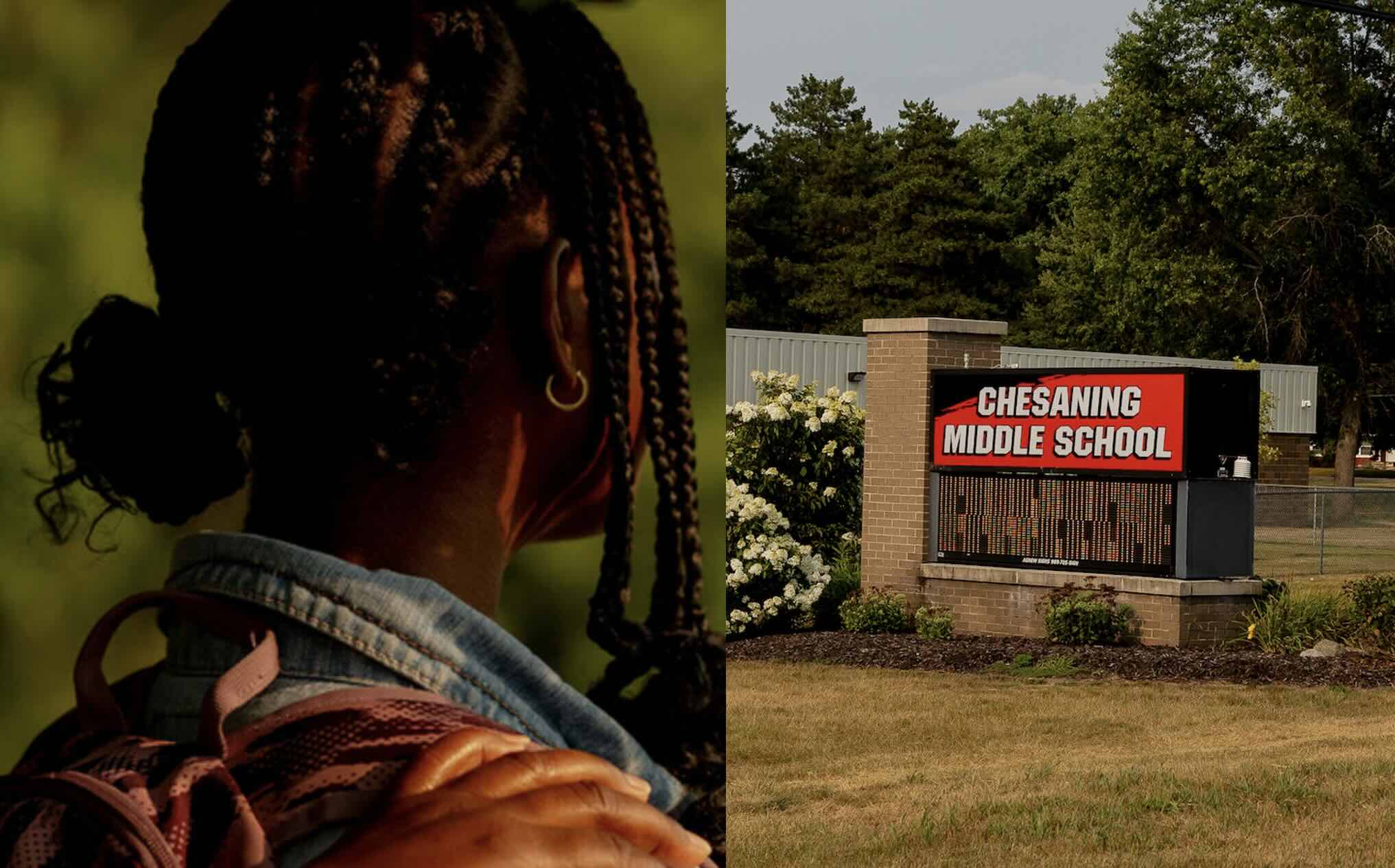
Photo: The Washington Post
In the small, predominantly white town of Chesaning, Michigan, a fifth-grade girl found herself at the center of a nightmare that would expose the true priorities of the Trump administration's Department of Education. As the only Black student in her grade at Chesaning Middle School in 2024, she was subjected to a relentless barrage of racial slurs and dehumanizing taunts that would break most adults. She was called the n-word and a "monkey" on the school bus. Following a Black History Month lesson on slavery, a White classmate told her, "Hey slave, where are your tools so you can get back to working?" When school officials failed to stop the ongoing harassment, the student's mother filed a formal complaint with the federal government, prompting the U.S. Department of Education's Office for Civil Rights (OCR) to open an investigation—a probe that would soon become a central focus of a Washington Post investigation detailing how the administration's policy shifts impacted student civil rights complaints.
For a time, the wheels of justice began to turn. In early January 2025, federal officials entered active settlement negotiations with the school district. But following Donald Trump's return to the White House, that progress came to a sudden, grinding halt. The administration slashed OCR staff by more than half, shuttered seven of its 12 regional offices—including the Cleveland office directly responsible for overseeing the Chesaning case—and indefinitely froze thousands of pending investigations. The Chesaning case was left in legal limbo. An attorney representing Chesaning Union Schools stated that the district "categorically denies" the harassment, though they declined to provide specifics due to privacy laws. Superintendent Mike McGough expressed frustration with the OCR freeze, stating that the sudden shutdown prevented the school district from defending itself or reaching a fair, equitable resolution.
The administration's justification for these cuts and freezes is rooted in a desire to shift the agency's focus away from what it calls "micro-managing" local school districts and toward what it defines as more pressing legal matters. The new priorities for the OCR include investigating schools that allow transgender athletes to compete in women's sports, probing universities with race-conscious scholarship programs, and looking into campus free speech issues—topics that are statistically minuscule but generate massive social media engagement.
The Numbers Don't Lie: Virality vs. Pervasive Harm
The statistical disparity between the administration's new priorities and the cases it abandoned is stark and revealing. Federal records and independent tracking consistently show that thousands of complaints are filed annually regarding racial, sexual, and disability-based harassment in K-12 schools and universities. In 2024 alone, the OCR finalized 25 racial harassment resolution agreements. Under the Trump administration in 2025 and 2026, that number has dropped to just three settlement agreements involving racial harassment, with zero for sexual harassment or violence.
By contrast, statistical surveys demonstrate that transgender women competing in female sports categories represent a tiny fraction of one percent of all student-athletes nationwide. Yet the administration has poured its limited OCR resources into investigating this issue, redirecting investigators away from thousands of active racial abuse cases to pursue legally contested interpretations of Title IX that affect virtually no one. Similarly, policies regarding race-conscious scholarships or admissions criteria directly impact a relatively small subset of institutions and applicants compared to the millions of students navigating daily school environments where racism and harassment remain pervasive problems.
- Documented Harm: Thousands of racial and sexual harassment complaints are filed annually. Under the Trump administration, these cases remain frozen, leaving children unprotected.
- Manufactured Crises: Issues like transgender athletes in sports affect less than 1% of students—a statistically insignificant number compared to the pervasive harm of daily racial abuse.
- Disproportionate Response: The administration has redirected a federal civil rights agency to chase social media controversies while documented civil rights violations go unaddressed.
- Clear Legal Violations: Racial slurs and abuse are undisputed violations of Title VI of the Civil Rights Act. The administration's new priorities rely on novel, contested interpretations of existing law.
These aren't abstract numbers. Each frozen investigation represents a real child—like the fifth-grade girl at Chesaning—whose safety was sacrificed so the administration could score political points online. The administration's defenders argue that these high-profile actions are about confronting systemic cultural and legal shifts they believe are profoundly wrong. However, this argument collapses under the weight of the data, which reveals a clear pattern of prioritizing media-friendly battles over the enforcement of clear, existing civil rights protections.
The Legal Reality: Choosing to Ignore the Law
The administration's actions represent not a change in the law, but a deliberate choice to stop enforcing it. Title VI of the Civil Rights Act of 1964 remains in effect, legally obligating schools that receive federal funding to provide an environment free from racial harassment. However, the law requires the Department of Education to actively investigate complaints to force a school to change. When the administration freezes those investigations, it creates an enforcement gap, leaving families with no federal recourse.
The administration has gone further than simply freezing cases. The U.S. Department of Education formally stripped the OCR of its ability to use "disparate impact" analysis, prohibiting investigators from using demographic data—such as high suspension rates among Black students—to prove systemic racial discrimination. The administration explicitly stated that using data to enforce "equity" prevents teachers from keeping classrooms safe. Assistant Secretary for Civil Rights Kimberly Richey framed the rollback as a victory for local authority, stating that a child is "more than a number in a data set." But this logic conveniently ignores that data is often the only way to prove systemic discrimination—a tool that the administration has now taken away from civil rights investigators.
The administration also announced a plan to transfer much of the OCR's remaining duties directly to the U.S. Department of Justice, as part of a larger effort to hollow out and eventually eliminate the Department of Education entirely. Unlike the OCR, which is legally obligated to review every complaint filed, the Justice Department operates on a system where attorneys selectively choose which high-profile cases to pursue—ensuring that the vast majority of civil rights complaints will never see the light of day.
This is not a neutral administrative shift. It is a deliberate choice to prioritize a political narrative over the safety of children. By freezing the case of the young girl in Chesaning, the administration sends a clear message to school districts across the country: the federal government will not intervene to protect Black children from racism. This is a direct abdication of responsibility, a symptom of white supremacy in action, where the comfort and perceived grievances of the dominant group are prioritized over the tangible trauma of a marginalized child.
A Symptom of White Supremacy and Control
From the perspective of critical race theorists, civil rights attorneys, and intersectional advocates, these policy shifts are not a neutral debate about priorities, but a systemic exercise of power designed to protect existing hierarchies. The administration's defenders rely on a strict interpretation of the Fourteenth Amendment, arguing that the Constitution prohibits any classification by race, regardless of intent. They view race-conscious programs as reverse discrimination that violates the principle of individual merit.
However, this "colorblind" framework ignores the compounding structural disadvantages that still exist in America. Race-conscious scholarships were explicitly created to counter generations of systemic exclusion, redlining, and unequal funding in Black communities. Treating the system as "colorblind" effectively locks inequality in place under the guise of fairness. Similarly, while the First Amendment does not provide a legal exception for "hate speech," public universities can and must regulate speech that crosses the line into true threats, incitement to violence, or severe targeted harassment that creates a hostile learning environment. The conflict arises when administrations label discriminatory rhetoric as protected "free speech," while students and faculty experience it as a direct threat to their physical and educational safety.
Less than 0.44% of high school athletes are transgender, with transgender girls in women's sports making up an even smaller fraction of that number. Race-conscious scholarships were designed to remedy clear racial disparities. Hate speech is not free speech, and universities have every right to not allow it. Yet the administration treats these issues as national emergencies while allowing children to be terrorized in their own classrooms—a clear sign of racism by the department created to fight racism.
No Ads. By Us. For Us.
This article was made possible by readers like you. We hope it inspired you to support Emerald Book, so we can continue producing content like this.
We will never show you ads, sell your data, or require a subscription to consume our content. Your gift helps us keep the truth accessible.
Click the Support button to give a gift of any amount today.
Thank you for making this work possible.