

Emerald Pages
◆
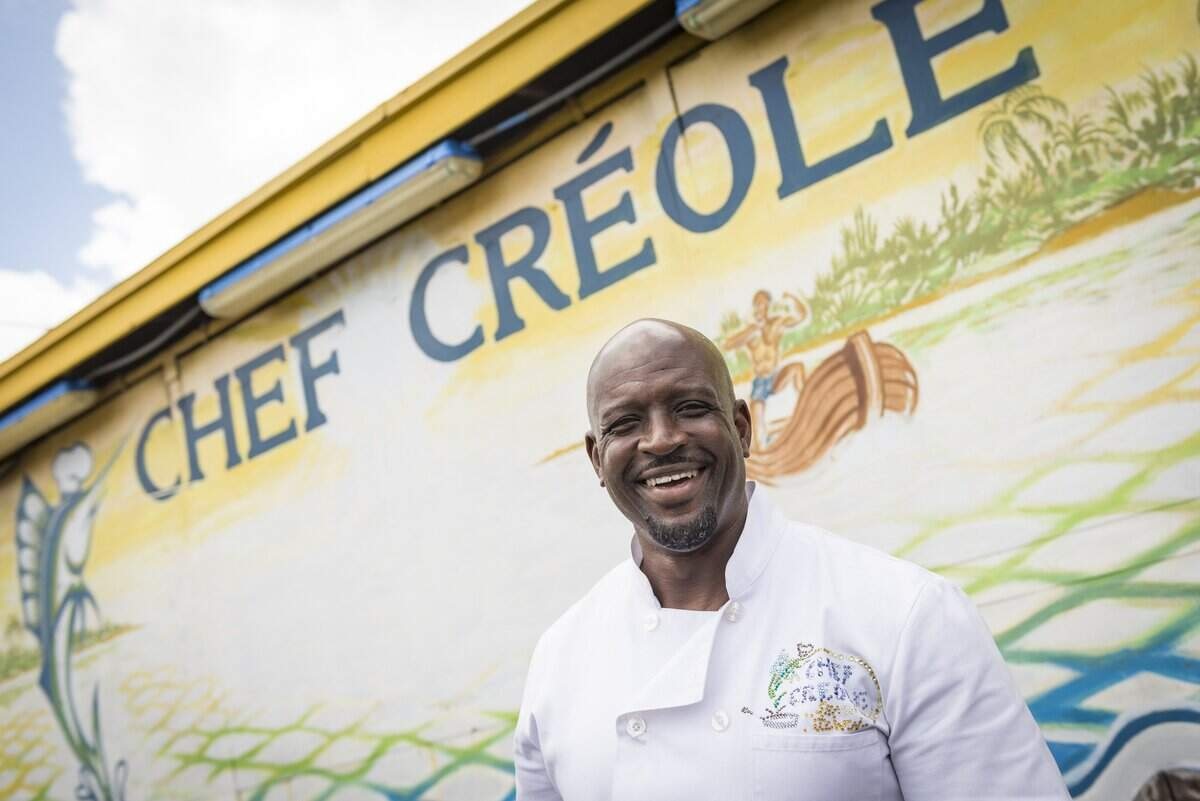
Photo: Miami Herald
It is the kind of irony that would be comedic if it weren't so devastating. Wilkinson "Ken" Sejour, a Bahamian immigrant who built a successful restaurant empire in Miami, voted for Donald Trump. He was born in the Bahamas to Haitian parents before moving to Miami in the 1970s, making him an immigrant himself. Over three decades, he built Chef Creole into a local cultural institution with seven locations across South Florida. He voted for Trump hoping for a better business climate, lower taxes, and economic growth. Instead, he became the poster child for a political miscalculation that has seen his entire management team—Haitian immigrants protected by the Temporary Protected Status (TPS) program—forced to leave the country.
The expiration of TPS for Haitians, a policy Trump championed on the campaign trail, has directly crippled Sejour's restaurant chain. In a series of emotional interviews, the owner has publicly lamented the loss of his staff and now openly regrets his vote. "I can't support a candidate that is having this ripple negative effect on our community, on our economy," he told WPLG Local 10. But while his story has drawn some sympathy, it has also sparked fierce backlash from the very community he serves—and from economists who see his situation as a textbook case of a business owner refusing to pay market wages.
The frustration felt by onlookers—particularly in the Haitian-American community—stems from a simple fact: Donald Trump repeatedly campaigned on ending TPS and enacting mass deportations. He said he wanted to deport "probably 15 million and maybe as many as 20 million" people. The policies were not hidden. Yet Sejour, like many other business owners and immigrant families, fell victim to the "exception bias"—a psychological phenomenon where people believe harsh policies will only apply to "other" people, not to their own legal, tax-paying employees or family members. Critics online have widely compared Sejour's situation to the "leopards eating people's faces" meme, a phrase used when someone votes for a candidate who promises cruel policies, only to be shocked when those exact policies negatively affect them.
The Management Exodus
When TPS protections for over 350,000 Haitians expired in August 2026, Sejour's business was hit immediately. His entire management team—every manager across all seven of his restaurant locations—left due to the legal changes. Many of these managers had worked for him for years, and he had previously described his workplace culture as treating employees "like family."
The loss extended beyond management. Sejour told the Miami Herald that even employees with legal status were afraid to come to work due to fear of ICE raids. In one incident, ICE incorrectly detained a Hispanic man passing by one of his restaurants, causing further panic in the community. With his management team gone and neighborhood customers staying away out of fear, Sejour publicly stated he will likely have to close two of his locations.
The remaining hourly employees have had to step up to take over managerial duties, a situation that is unsustainable for a seven-restaurant operation. Sejour admitted that his labor costs, which typically account for 23.5% of his business expenses, will have to jump to 27% or 28% to attract new staff. He acknowledged that the only way to pay those higher wages is to raise menu prices, meaning his customers will ultimately bear the cost of his political miscalculation.
His 'Americans Don't Want to Work' Claim
In his interviews, Sejour echoed a common refrain among business owners facing staffing shortages: "Americans don't want to work." He claimed that local applicants are not "tearing his door down" to fill the positions left by his departing immigrant managers. However, there's a glaring omission in his argument: the wage he is offering.
Public records do not show the exact hourly rate Sejour pays his line cooks, cashiers, or former managers. He has never posted a position with a salary anywhere. Community critics have pointed out that Chef Creole historically relied on word-of-mouth hiring within immigrant communities rather than transparent, publicly priced job listings. The only public salary information available is for supervisory roles, which were listed at $22.00 to $25.00 per hour—but entry-level kitchen help, the bulk of his workforce, never received similar public pricing.
To understand what Chef Creole employees likely make, we have to look at the broader regional industry data for Miami-Dade County. Florida's mandatory minimum wage is on a fixed legal track to reach $15.00 per hour by September 30, 2026. Fast-casual and independent Caribbean restaurants in the area traditionally hover right at or slightly above this baseline for entry-level kitchen and counter help. However, Miami is consistently ranked as one of the most expensive metropolitan areas in the United States, driven heavily by skyrocketing housing costs.
A single adult with no children needs to earn significantly more than Florida's minimum wage just to cover basic necessities like rent, food, and transportation in Miami-Dade County. Native-born workers who face these steep living costs cannot afford to accept sub-living-wage positions. By claiming "Americans don't want to work," Sejour shifts the blame from his own pricing structure onto the work ethic of the local populace. The reality is that workers do want to work; they just choose to sell their labor to employers who pay enough to live on.
Critics argue that Sejour's business thrived precisely because immigrant laborers on TPS were willing to accept intense kitchen conditions at lower rates than native-born workers. Immigrant workers, particularly those on TPS, often operate under different economic pressures: they face systemic barriers, language hurdles, and discrimination that restrict their employment options. Employers frequently leverage the vulnerable status of immigrant communities to maintain lower labor costs, knowing these workers have fewer avenues to complain. When that workforce vanished due to a policy he voted for, Sejour was left with a choice: raise wages to attract local talent or go out of business. His public complaints suggest he prefers the latter.
A Pattern of Self-Inflicted Wounds
Ken Sejour is far from alone. His story is part of a broader pattern of Trump voters experiencing direct, negative consequences from the immigration policies they supported. Social scientists and political analysts refer to this as "voter mismatch" or the "exceptions gap," where individuals support a strict nationwide policy but believe their own family, friends, or employees will be seen as "the good ones" and spared.
- John Gannon (Texas): In August 2026, the 75-year-old lifelong Republican made national headlines after his 45-year-old Venezuelan fiancée, Yasmin Suarez Reyes, was swarmed and detained by eight ICE agents at George Bush Intercontinental Airport. She had an active, pending asylum case. Gannon told CBS News: "I voted for Trump... Go pick the criminals up. Leave the family members alone. They are picking up law-abiding citizens. They're destroying families, jobs."
- Martín Verdi and Débora Rey (North Carolina): These naturalized U.S. citizens originally from Argentina enthusiastically backed Trump's hardline immigration platform. Their world was upended when their green card-holding son was unexpectedly detained by ICE for deportation. They told the Atlanta Journal-Constitution they felt entirely deceived, explaining they believed the administration would only target undocumented individuals with violent criminal records, not long-term legal residents.
- Elena Conde (Florida): A Cuban immigrant living in Miami, Conde's family voted for Trump. Her husband attended what he thought was a routine ICE appointment and was abruptly detained for deportation. Left alone to care for her infant and toddler, Conde publicly stated, "They used us."
- Industry-Wide Crises: Thousands of entrepreneurs in the construction, hospitality, and agriculture sectors are watching their stable workforces vanish. The Associated Builders and Contractors have described the current landscape as "chaotic," as long-term, highly productive tradesmen face sudden deportation or opt to self-deport out of sheer fear.
Polls from late 2025 and mid-2026 indicate that nearly 16% to 20% of Hispanic Trump voters express second thoughts as local neighbors, airport workers, and family members continue to be swept into detention centers. The Department of Homeland Security confirmed that ICE airport arrests surged dramatically, targeting unsuspecting travelers with expired temporary visas or pending immigration paperwork.
In each of these cases, voters assumed that the administration's focus would be strictly on "criminals," not their own family or employees. This is not a new phenomenon. During Trump's first term (2017–2021), similar stories emerged: an Indiana restaurant owner and Trump voter made national headlines when her husband, an undocumented immigrant with no criminal record who had lived in the U.S. for 20 years, was suddenly deported. She publicly stated she thought Trump would only deport "bad hombres," not her husband.
Ken Sejour's story is particularly poignant because, as an immigrant himself, he should have been aware of the fragility of the legal statuses held by his staff. The TPS protections that allowed his managers to work were always temporary. By voting for a candidate who promised to end them, he effectively voted to destabilize his own company. Now, facing the consequences, he claims to regret his choice. But for the community he represents and the critics watching from afar, the stupidity is palpable. The evidence of this outcome was available for anyone willing to look.
In the end, the story of Chef Creole is not just about one business owner's regret. It is a microcosm of a broader political reality: when voters support policies without considering how those policies might affect their own lives, they risk becoming cautionary tales. And as immigration enforcement continues to ramp up, there will be thousands more stories like Sejour's—people who voted for the leopard, only to be shocked when it ate their face.
No Ads. By Us. For Us.
This article was made possible by readers like you. We hope it inspired you to support Emerald Book, so we can continue producing content like this.
We will never show you ads, sell your data, or require a subscription to consume our content. Your gift helps us keep the truth accessible.
Click the Support button to give a gift of any amount today.
Thank you for making this work possible.