

Emerald Pages
◆
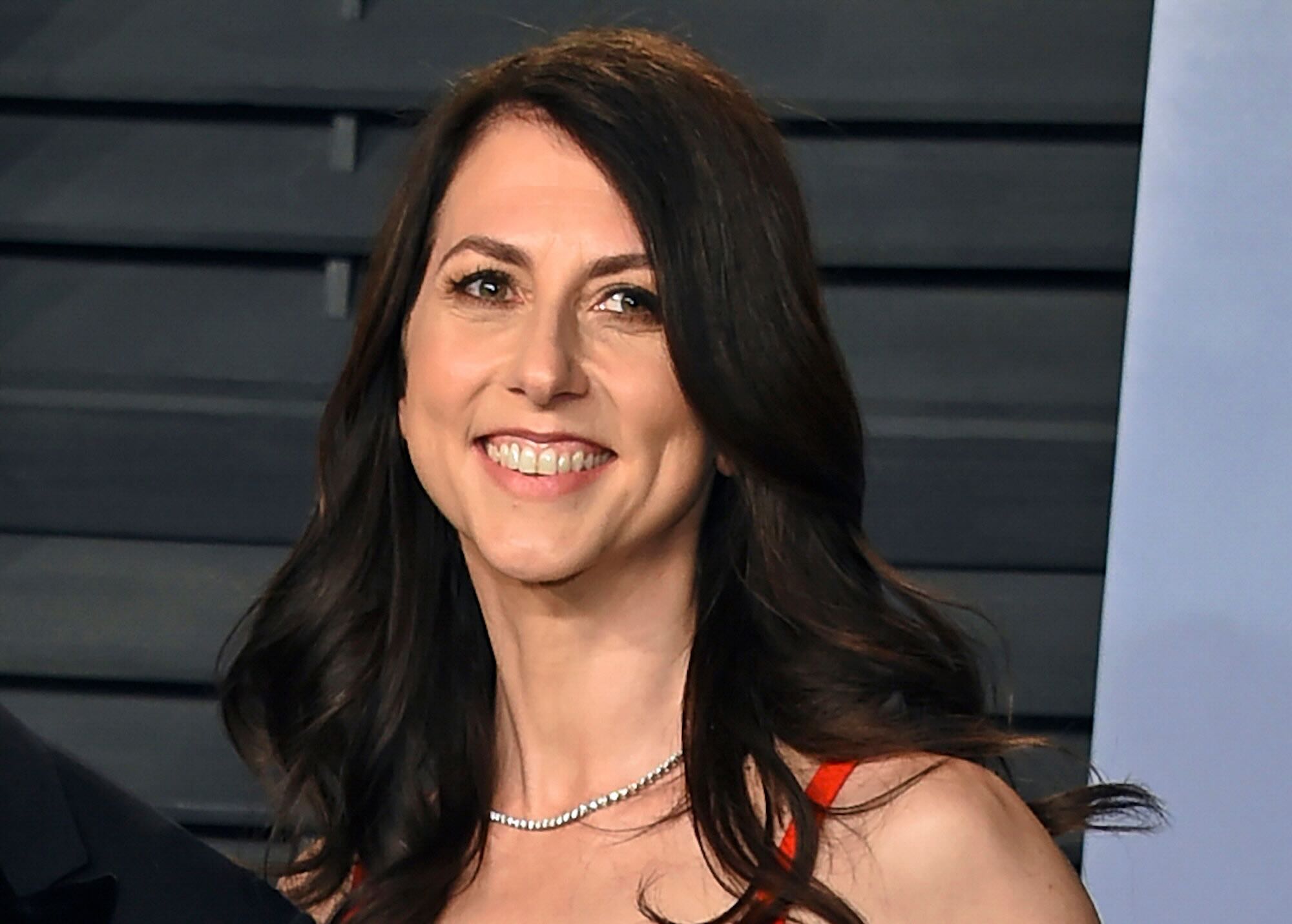
Photo: Dia Dipasupil | Getty Images
In 2019, MacKenzie Scott walked away from her divorce with Jeff Bezos holding a 4% stake in Amazon, worth roughly $36 billion. Within days, she signed the Giving Pledge, vowing to give away at least half her wealth. She has since disbursed over $26 billion to thousands of organizations, earning global praise as a revolutionary philanthropist. Her philosophy is simple: she has a "disproportionate amount of money to share" and wants to empty her "safe" until it is gone. Yet, as of August 2026, her net worth hovers between $31 billion and $40 billion. She is, statistically, wealthier today than she was the day she began her mission. This is the hidden economics of philanthropy—a machine where the wealthy buy immense tax benefits and a saintly public image while the systemic structures that create society's biggest problems remain utterly intact.
Scott's methodology is undeniably different from the old guard. She does not demand her name on buildings, she offers "unrestricted" gifts that allow charities to spend money as they see fit, and she uses a quiet team of researchers to identify organizations without flashy press releases. This "trust-based" approach has won her adoration from the nonprofit sector, which has long been strangled by the bureaucratic red tape of traditional foundations. However, a critical examination of the mathematics reveals that these stylistic differences are a distraction from a much more profound truth: the system has not changed, and her generosity is a paradox that ultimately reinforces the status quo.
The $0 Tax Bill: How the System Rewards the Rich
Perhaps the most revealing aspect of Scott's philanthropy is not how much she gives, but how she gives it. She does not write cash checks from a checking account. Instead, she transfers her actual appreciated Amazon stock shares directly to charities and Donor-Advised Funds (DAFs). This single structural choice grants her two massive financial advantages that effectively allow her to pay $0 in taxes on billions of dollars.
First: Bypassing Capital Gains Taxes. If Scott had sold $26 billion worth of Amazon stock on the open market, she would have owed billions in federal and state capital gains taxes on the stock's appreciation. By transferring the shares directly to nonprofits, she pays $0 in taxes on that growth. The charity receives the stock and can sell it tax-free. The public treasury receives nothing.
Second: Massive Income Tax Deductions. The IRS allows donors to deduct the full fair-market value of donated stock against their annual income. This effectively shields her from paying heavy federal taxes on any income or separate stock sales she triggers during the year. For a fortune of this scale, these deductions wipe out nearly all tax liability. She is, in essence, redirecting money that could have funded public schools, infrastructure, and healthcare into her own private distribution network—while receiving public praise for her "generosity."
This is the "tax alpha" strategy at its finest: she avoids billions in taxes, the charities get the money, and the American public foots the bill for the lost revenue.
The "Tax Alpha" Shield
Scott's image as a selfless humanitarian is burnished by the fact that she doesn't just write checks; she donates appreciated stock. This is the ultimate "tax alpha" strategy. By transferring Amazon shares directly to nonprofits or Donor-Advised Funds (DAFs), she bypasses capital gains taxes entirely. If she had sold that $26 billion in stock, she would have owed billions in federal taxes. By donating it, she pays $0 in taxes on that growth.
Furthermore, the IRS allows donors to deduct the full fair-market value of donated stock against their annual income. This effectively shields her from paying heavy federal taxes on any income or separate stock sales she triggers during the year. The general public ends up losing out on billions in tax revenue—revenue that could have been allocated democratically—while Scott enjoys a flawless reputation and massive social influence.
Even more strategically, Scott uses Donor-Advised Funds (DAFs) to move massive sums out of her personal name instantly to claim the upfront tax benefits, while taking her time to distribute the funds to specific charities later. This keeps her giving fast and entirely private until she chooses to publish it on her registry, Yield Giving. The money leaves her taxable estate immediately, but she retains advisory privileges over where it eventually goes—a legal structure that maximizes tax savings while minimizing personal liability.
- The Illusion of Sacrifice: Traditional charity requires giving up something of value. For Scott, donating billions does not change her lifestyle. There is no material difference between having $20 billion and $40 billion; both provide functionally infinite purchasing power. She pays $0 in taxes on billions in stock appreciation, effectively making the public the silent partner in her giving.
- The Power of the Gatekeeper: Even with her "trust-based" giving, Scott and her private advisors still decide which causes live and which die. This is unaccountable private power that replaces democratic processes. The tax deductions she claims further deplete public coffers, concentrating decision-making power in the hands of a single unelected individual.
- The Bandage Effect: Philanthropy acts as a pressure valve. By funding food banks and legal aid, it relieves just enough pressure from the bottom of society to prevent systemic collapse and deflect demands for real reform, like wealth taxes or corporate regulations. Meanwhile, the tax code ensures that the wealthy retain their fortunes while appearing virtuous.
A Vanity Game in a Better Suit
Critics argue that the distinction between Scott's giving and the "traditional" model is largely aesthetic. While other billionaires demand their names on hospital wings, Scott waves away the praise. But the foundational mechanics and systemic results remain the same. Whether a billionaire is a micromanager or a hands-off donor, the underlying power dynamic does not change. The system remains deeply undemocratic.
Even the much-praised "no application process"—where charities cannot apply for her money and instead receive it out of the blue—is itself an exercise in unaccountable power. She and her private advisory team decide which organizations receive life-changing sums and which are bypassed entirely. There is no public vote, no open competition, and no transparency in how those initial decisions are made. The lack of an application process does not democratize the giving; it simply removes the illusion of accessibility.
Ultimately, even Scott's massive donations are a drop in the ocean compared to the actual cost of running a society. For context, the U.S. federal government spent over $6.7 trillion in a single fiscal year. A single state's annual budget for public education regularly dwarfs the entire net worth of the world's richest individuals. Private wealth simply lacks the scale to replace state-level systemic failures. It cannot rewrite the tax code, alter labor laws, or reverse global economic shifts. And as long as the tax code rewards stock donations with $0 capital gains liability, the wealthy will continue to use philanthropy as a tax shelter rather than a genuine redistribution mechanism.
The Verdict
So, is MacKenzie Scott a hero or a symbol of a broken system? The answer is both. To a local homeless shelter that suddenly receives an unannounced $10 million check, she is a miracle. That money means immediate raises for social workers, expanded beds, and years of financial survival. These tangible benefits cannot be dismissed.
However, to an economist, she is a symptom of the disease. Her philanthropy, no matter how humble in style, is a self-serving circle of reputation laundering and tax management that maintains the status quo. She remains a multi-billionaire because the global financial system is designed to protect and multiply large pools of capital, regardless of the good intentions of the owner. She pays $0 in taxes on billions in stock appreciation, effectively making the public the silent partner in her giving. Until the laws are changed, the structures of taxation are reformed, and democracy is restored to the allocation of public resources, philanthropy will remain what it has always been: a calculated game that makes the rich feel good while leaving the poor to depend on their mercy.
No Ads. By Us. For Us.
This article was made possible by readers like you. We hope it inspired you to support Emerald Book, so we can continue producing content like this.
We will never show you ads, sell your data, or require a subscription to consume our content. Your gift helps us keep the truth accessible.
Click the Support button to give a gift of any amount today.
Thank you for making this work possible.