

Emerald Pages
◆
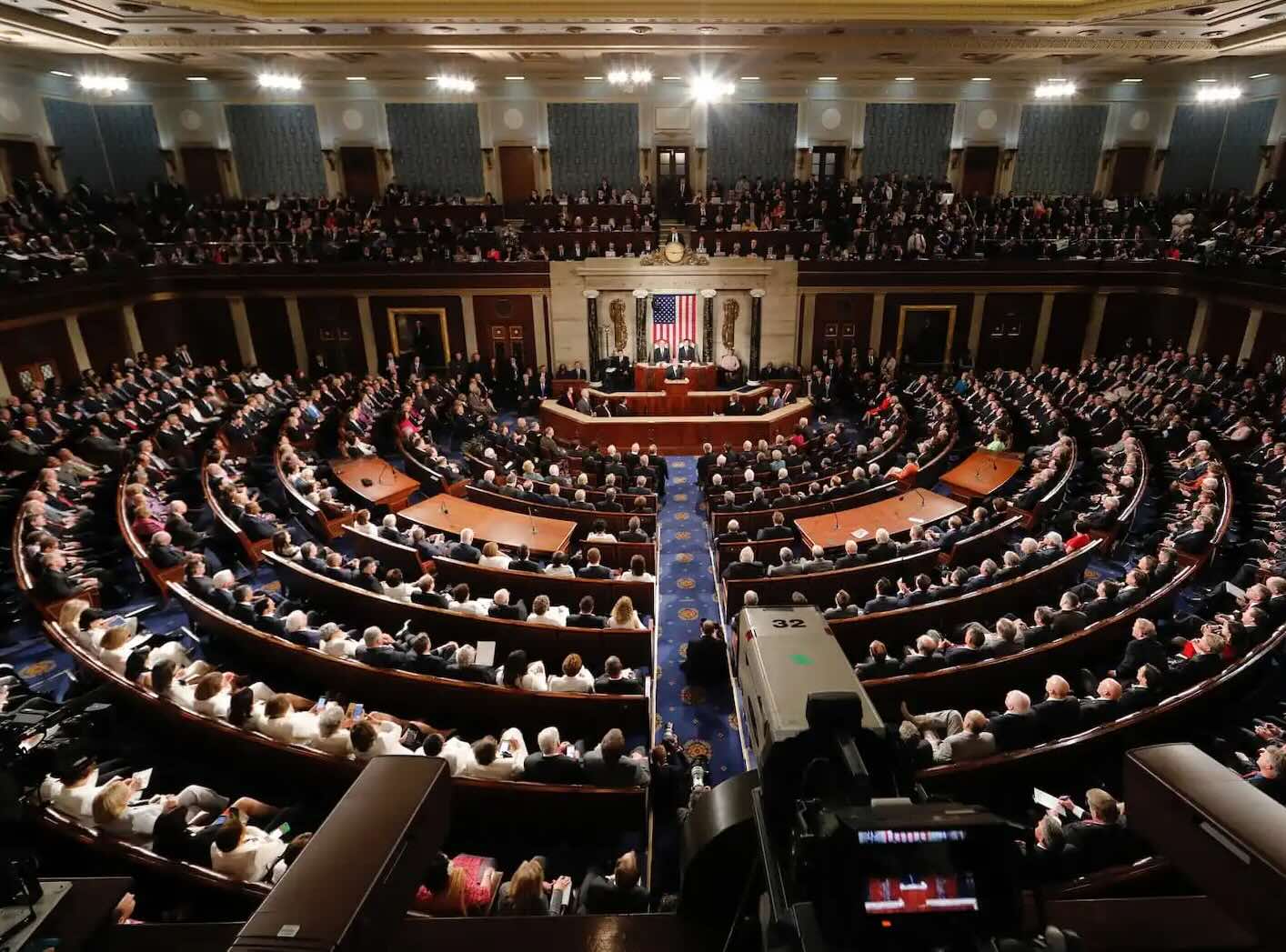
Photo: Jim Bourg | Reuters
In a nation founded on the principle of "government of the people, by the people, for the people," a stark and uncomfortable reality has taken hold: the people's servants are staggeringly wealthier than the people themselves. Today, the average member of the U.S. Congress is a millionaire, and a select few are billionaires who command fortunes that rival the GDPs of small nations. This isn't a bug in the system; it's a feature of a political structure that has evolved to favor the already affluent.
The data is irrefutable. According to financial disclosures and analyses from watchdogs like OpenSecrets, over half of the U.S. Congress has a net worth exceeding $1 million. The U.S. Senate, often dubbed the "Millionaires Club," features at least 73 out of 100 members who are millionaires, with the average senator's net worth sitting at nearly $2.9 million. This stands in stark contrast to the median wealth of a typical American household, which hovers around $192,000. The gap is not just wide; it is a chasm that defines the priorities and perspectives of those who write our laws.
At the very top of this pyramid sit the billionaires, individuals whose wealth is so immense that the $174,000 congressional salary is an afterthought—often donated to charity or refused outright. This list includes Illinois Governor J.B. Pritzker, whose estimated net worth of $3.4 billion comes from the Hyatt Hotels fortune, and President Donald Trump, whose net worth has skyrocketed to an estimated $6.5 billion to $7.6 billion, driven largely by an aggressive pivot into cryptocurrency. They are joined in the upper echelons by the likes of North Dakota Governor Doug Burgum (~$1.1B), Pennsylvania Senator Dave McCormick (~$1.1B), and West Virginia Senator Jim Justice (~$1B).
Trump's Crypto Revolution
Recent federal financial disclosures have pulled back the curtain on how dramatically Donald Trump's fortune has shifted. A 927-page mandatory disclosure filed with the Office of Government Ethics reveals that cryptocurrency is now his single biggest profit driver, far outpacing his traditional real estate and golf holdings.
- The Crypto Windfall: Trump generated over $1.2 billion to $1.4 billion from cryptocurrency ventures in a single year alone.
- Meme Coin Royalties: He reported pulling in roughly $635 million in licensing fees and royalties from "Celebration Coins" tied to the $TRUMP meme coin.
- World Liberty Financial: His family-backed decentralized finance (DeFi) project brought in over $500 million from token sales and corporate backing, which includes a highly publicized equity deal with an investment firm tied to the UAE.
This massive influx of digital asset revenue, alongside surges in his other holdings, has pushed his overall estimated net worth to anywhere between $6.5 billion and $7.6 billion, making him one of the wealthiest presidents in American history while actively serving in office.
The Billionaire Surge: A New Class of Civil Servants
The presence of billionaires in public office is not an anomaly; it is a growing trend. The U.S. Senate now boasts three distinct billionaires on its floor simultaneously. These individuals often bypass traditional fundraising networks by writing multi-million dollar checks to their own campaigns, immediately dominating local television and digital advertising. This "self-funding" power creates a massive barrier to entry for candidates without vast personal wealth, effectively locking out teachers, nurses, and small business owners from running for higher office.
| Politician | Office | Party | Est. Net Worth | Primary Source of Wealth |
|---|---|---|---|---|
| Donald Trump | U.S. President | Republican | $6.5B – $7.6B | Crypto, Real Estate, Media |
| J.B. Pritzker | Governor of Illinois | Democrat | $3.4B – $3.9B | Hyatt Hotels, Venture Capital |
| Doug Burgum | Governor of North Dakota | Republican | ~$1.1B | Great Plains Software (sold to Microsoft) |
| Dave McCormick | U.S. Senator (PA) | Republican | $1.0B – $1.2B | Bridgewater Associates (Hedge Fund) |
| Jim Justice | U.S. Senator (WV) | Republican | $450M – $600M | Coal, Agriculture, The Greenbrier Resort |
Pelosi's True Net Worth: The "She-Wolf of Wall Street"
While broad public estimates often conservatively quote Nancy Pelosi's wealth around $100 million to $250 million, active stock market trackers tell a much larger story. Data from Quiver Quantitative's Congress Tracker places her tracked household net worth at around $250 million to $255 million, though overall portfolio models that account for asset growth over the last decade stretch her household investment value significantly higher.
Her wealth took a minor $8 million hit due to California real estate depreciation, but her tech portfolio kept her incredibly wealthy. Her household heavily exercises high-upside call options in dominant blue-chip tech stocks. For example, her massive Alphabet (Google) stake alone is worth over $18 million, yielding massive returns alongside high-flying 2025–2026 tech investments like Nvidia and Amazon.
When Pelosi entered Congress in 1987, her net worth was substantial but modest compared to today. This explosive growth is largely credited to the highly successful stock options and tech investments executed by her husband, Paul Pelosi, earning her the moniker "She-Wolf of Wall Street" among financial trackers.
While the wealthiest politicians argue that their financial independence makes them "unbought" and immune to the influence of special interests, the reality is far more complex. Critics contend that holding office allows the ultra-wealthy to protect the very systems that made them rich. By sitting on committees that regulate their own industries—such as energy, healthcare, or finance—they can influence tax codes and regulations that save their families and donors hundreds of millions of dollars.
Did They Get Rich in Office or Before?
A crucial question arises: are politicians building their fortunes while in office, or are they bringing their wealth with them? The answer is overwhelmingly the latter. Virtually all of the richest politicians entered public office already extraordinarily wealthy.
- J.B. Pritzker: Already a billionaire heir to the Hyatt fortune and co-founder of a massive venture capital firm.
- Doug Burgum: Already a billionaire after selling Great Plains Software to Microsoft for $1.1 billion in 2001.
- Rick Scott: Already worth hundreds of millions as the founder of Columbia/HCA, the largest private healthcare provider in the country.
However, wealth can grow substantially while in office. Nancy Pelosi's net worth has multiplied dramatically, and Donald Trump's wealth has seen explosive growth during his second term, driven primarily by cryptocurrency ventures.
The Conflict of Interest Dilemma
The central irony of this arrangement is that these "civil servants" are writing the rules for the very industries they are invested in. The potential for conflict of interest is not just theoretical; it is baked into the system.
Lawmakers sit on committees overseeing technology, healthcare, energy, and banking while simultaneously owning millions of dollars of stock in companies like Apple, Pfizer, and ExxonMobil. The Stop Trading on Congressional Knowledge (STOCK) Act was passed in 2012 to curb insider trading, but its enforcement is notoriously weak, with penalties as trivial as a $200 fine for late disclosure. This effectively legalizes a system where politicians can profit from non-public information.
The Representation Gap and the Failure of Democracy
This overrepresentation of wealth leads to a fundamental breakdown in democratic ideals. When over half of Congress is composed of millionaires, the lived experiences of the average American—living paycheck to paycheck, struggling with medical debt, or worrying about rent—are entirely alien to them. This gap directly influences which bills get prioritized and which are ignored.
Political scientists often describe the U.S. not as a representative democracy, but as a "plutocracy" or "wealthocracy." The structural mechanics of the electoral system solidify this reality. Landmark rulings like Citizens United v. FEC have designated political spending as protected speech, allowing for unlimited, untraceable "dark money" from billionaires and corporations to flood elections.
The result is a self-perpetuating cycle: the cost of running for office is so high that only the wealthy or those with connections to the wealthy can compete. Once in power, they pass laws and regulations that protect and enhance the wealth of the donor class, further entrenching their own position and silencing the voices of the working class.
The Squeeze on Ordinary Americans
This concentration of wealth at the top of government doesn't just create conflicts of interest—it actively leaves everyone else worse off. When the people writing the laws are insulated from economic hardship, they are structurally disinclined to address it. The result is a system that consistently favors capital over labor, profits over people, and the rich over the rest.
- Stagnant Wages: While political wealth has exploded, the federal minimum wage has remained at $7.25 since 2009—the longest period without an increase in history. In that time, politicians' net worths have grown exponentially.
- Health Care Debt: With politicians invested heavily in pharmaceutical and insurance companies, there is little incentive to implement meaningful cost controls. Medical debt remains the leading cause of bankruptcy in America.
- Housing Crisis: Real estate investments form the backbone of many political fortunes. This creates a powerful incentive to keep home prices high at the expense of affordable housing, leaving millions of renters and first-time buyers priced out of the market.
- The Stock Market Priority: When politicians have millions in the market, their focus naturally shifts to policies that boost stock prices—like corporate tax cuts and deregulation—rather than policies that boost wages or worker protections.
The numbers are stark: while the wealthiest 10% of Congress holds more than three times the combined wealth of the remaining 90%, the bottom 50% of Americans collectively own just 2.5% of the nation's wealth. A government run by millionaires and billionarians doesn't just fail to represent the people—it actively works against their economic interests. The policies that make politicians richer are precisely the policies that squeeze everyone else.
A Crisis of Legitimacy
The American public is acutely aware of this crisis. Polls consistently show that over 80% of voters favor limits on congressional stock trading. There is a growing, bipartisan movement to ban members of Congress and their spouses from owning individual stocks and to force them to use blind funds instead.
The pursuit of power by the ultra-wealthy, cloaked in the language of public service, is the defining political issue of our time. It erodes trust in institutions, exacerbates inequality, and ensures that the government serves the interests of the few at the expense of the many. For a democracy to function, it must be staffed by representatives who understand the people they serve. As long as we have a government run by millionaires for millionaires, that ideal will remain a distant, unfulfilled promise—and ordinary Americans will continue to bear the cost.
No Ads. By Us. For Us.
This article was made possible by readers like you. We hope it inspired you to support Emerald Book, so we can continue producing content like this.
We will never show you ads, sell your data, or require a subscription to consume our content. Your gift helps us keep the truth accessible.
Click the Support button to give a gift of any amount today.
Thank you for making this work possible.